By Cajetan Osisioma

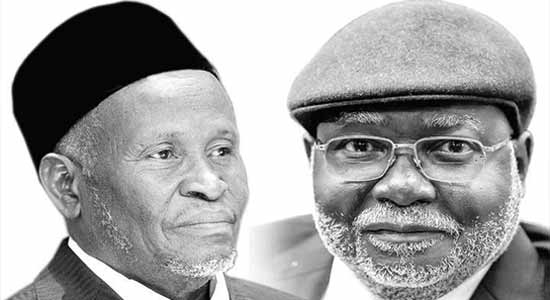
On Monday, 27th June 2022, Nigerians woke up with the news of the sudden resignation of the Chief Justice of Nigeria (CJN), the Honourable Justice Tanko Ibrahim Mohammad. The head of the Nigerian judiciary cited ill-health as the reason for his resignation. Thus, following the vacuum created, the President of the Federal Republic of Nigeria, acting in line with the provisions of section 231(4) of the 1999 Constitution of the Federal Republic of Nigeria (as amended) (“the Constitution”) immediately appointed and subsequently swore-in the next in rank to the outgone CJN, the Honourable Justice Olukayode Ariwoola, as the Acting Chief Justice of Nigeria, pending the appointment of the substantive CJN. By the provisions of section 231(5) of the Constitution, the President, upon the recommendation of the National Judicial Council (NJC), is expected to appoint a substantive CJN within a period of three months from 27th June 2022. This situation has once again brought to the fore, the need to revisit the extant provisions of the Constitution vis-à-vis the appointment of judges, especially the heads of courts, with a view to comprehensively reforming the entire judiciary in Nigeria.
Presently and in line with the provisions of the Constitution, the executive has an almost absolute control in the appointment of judges and heads of the judiciary in Nigeria. This has impacted negatively on the Nigerian judiciary. There is, therefore, the urgent need for a comprehensive restructure and reform of the judiciary in Nigeria. The executive needs to be completely removed from the control, in any manner, of the activities of the judiciary in Nigeria for any guarantee of an effective, independent, autonomous, and impartial judiciary. A situation where the executive is involved and practically controls the appointment of judicial officers (especially the heads of our courts) as well as the activities and running of the judiciary, does not augur well for an impartial judiciary. This results in the ugly situations where these heads of courts go caps in hand before the executive begging for funds to run their courts. The saying that “he who pays the piper calls for the tune” often becomes the case in our judiciary, thereby frustrating the ideal concept of the independence, autonomy, and impartiality of our courts and judicial officers. There is, therefore, no better time for a comprehensive reform of the judiciary in Nigeria than now that the National Assembly is embarking on the review of the Constitution.
The current practice whereby the President (at the federal level) and the Governors (at the State level) appoint heads of our courts, including the CJN, should be stopped. Also, the current practice whereby they appoint heads of courts in acting capacity subject to confirmation as substantive heads of courts or outright appointment of substantive heads, must be discouraged and immediately put to an end. This is one of the means used by the executive to control the judiciary and judicial officers. It has, therefore, become imperative to consider the following proposals:
Internalization and Institutionalization of Appointments of Heads of Courts
There is the urgent need for the internalization and institutionalization of appointments of heads of courts, both at the State and Federal levels. A retiring head of court should be succeeded automatically by the most senior judge of the court (next in rank) in a substantive role. This will put an end to the current practice whereby the executive appoints heads of courts in acting capacity, thereby using the means to control the judiciary, and almost rendering this third arm of government as a toothless bulldog that only barks but hardly bites. This should be so even when the succeeding most senior judge has few months to retire. The retiring head of court shall swear-in the incoming head of court. Where, however, the next head of court is taking over as a result of the death, incapacitation, or removal from office of the immediate past head of court, the Clerk of the National Assembly or the Clerk of the State House of Assembly (as the case may be) shall swear-in the next head of court and the swearing-in ceremony shall be performed at the headquarters of the court in question. Thus, there is the need to put an end to the current practice whereby the incoming head of court, and, indeed, all other judges, are sworn-in by the executive at the government houses. This is because, in line with the age long principle of separation of powers, the inauguration and swearing-in ceremonies of the president, governors, and members of the legislative houses do not take place at our courts. Why then must the inauguration and swearing-in of members of the judiciary take place at the executive chambers of the president and governors? This must be discontinued immediately.
Total Removal of the Executives from the Appointment of Judicial Officers
Sequel to the above is the need for the total removal of the executive from the appointment of judicial officers. Currently, the executive wields absolute powers in the appointment of judges and other judicial officers. This must be discouraged. It is my proposal that the power to appoint judges of the superior courts of records should exclusively vest in the Federal Judicial Service Commission (FJSC) or State Judicial Service Commissions (SJSC) (as the case may be) and the National Judicial Council (NJC). The FJSC or SJSC (as the case may be) should recommend the appointment of judges to the NJC for approval, and the Senate or the State House of Assembly (as the case may be) shall confirm such appointments. After the confirmation by the Senate or State House of Assembly, the appointed judges should be sworn-in by the Chief Justice of Nigeria, heads of courts, or any other senior judicial officer.
At the State level, appointment of judicial officers of the lower bench (magistrates and presidents/chairmen of Customary Courts/Area Courts) should be the exclusive responsibility of the SJSC and the head of the State court shall swear-in the appointed junior judicial officers.
Meanwhile, there is need for uniformity in such appointments throughout the Federation. All the candidates for any judicial offices must be subjected to highly competitive examinations, tests, and interviews. In order to ensure fair play, candidates of a particular State should be examined, tested, and interviewed by a different SJSC to be appointed by the President of the Nigerian Bar Association, without the prior knowledge of the concerned SJSC.
Approval for Removal of Judges from Office by the Executives
The current practice whereby the approval of the executive is first sought for the removal of judges who have been recommended for dismissal or compulsory retirement by the NJC should be discouraged. This also gives the executive an unfettered control over the judiciary. The NJC should be the sole and exclusive authority for the removal of judges. No further recommendations should be made to the executive seeking their approval for the removal or dismissal of any judge. Where the NJC finds any judicial officer guilty of any offence, it should dismiss such officer immediately without recourse to the executive.
Financial Autonomy of the Judiciary
The importance of financial autonomy for our judiciary cannot be over-emphasized. This has been a major problem bedeviling the independence, autonomy, and impartiality of the judiciary in Nigeria. About 80% of the problems of the judiciary in Nigeria is a result of lack of financial autonomy. The current situation where State Governors, sometimes, buy official vehicles and share to the judges in their States, does not augur well for the independence and impartiality of the courts. And, in many instances, they do this as though they are doing some favour to the judges. There have been instances where State Governors starved heads of courts in their States of funds to run the courts because they did not do their biddings. The only way out of this ugly situation is a workable institutionalization of financial autonomy for the judiciary at all levels in Nigeria as proposed below:
- Preparation of Annual Budgets by Heads of Courts
The heads of courts in Nigeria should be granted the Constitutional powers to prepare their annual budgets for submission to the legislative arm. The budgets presented to the legislature by the State Governors should not include those of the judiciary in their States, as is currently the practice. The heads of courts should prepare, submit, and defend their annual budgets before the legislature. When this is done, it allows the heads of courts control over their courts and gives them the necessary funds and wherewithal to cater for the welfare and wellbeing of the judicial officers and judiciary workers in their courts. If the executive is removed from financial control of our courts, judicial independence would be achieved in Nigeria.
- Payment of Annual Budgeted Funds for the Judiciary into the Consolidated Fund to be Managed by Heads of Courts
The annual budgeted funds for the judiciary, both at the State and Federal levels, should be paid into the Consolidated Funds to be exclusively managed or run by the respective heads of courts in Nigeria. Currently, funds meant for the running of State judiciaries in Nigeria are not paid into the Consolidated Funds. This leaves the Chief Judges of States always begging for money from the State Governors for the running of their courts, with its resultant subjugation of judges as beggars and the unnecessary interference in the running of the courts by the executive. I propose that every money meant for the judiciary, including those for the payment of salaries, allowances, and other emoluments of judicial officers and judiciary staff, purchase of official vehicles for judicial officers and senior judiciary staff, building of infrastructure, maintenance of judiciary property, among others, should be paid into the Consolidated Funds and be exclusively and effectively managed or run by the respective heads of courts, without any interference by State Governors. The heads of courts shall only be answerable to the legislature in the way and manner they manage these monies. The essence of this proposal is the need to completely remove the State Governors from financial control of their States’ judiciaries. If the heads of courts can have firm and transparent financial control over the running of their respective courts, the judiciary in Nigeria would, gain its independence and autonomy.
Establishment of Geo-Political Zonal/Regional Supreme Courts
A situation where the only apex court of the country is in the capital city and not decentralized, does not bring justice closer to the people. It has, therefore, become necessary to establish supreme courts in each of the six geo-political zones/regions that make up Nigeria. Appeals from matters originating from a court of first instance in a particular region should terminate at the supreme court of that particular region and should not proceed further to the Supreme Court of Nigeria.
When this happens, it becomes necessary to reduce the number of the Justices of the Supreme Court of Nigeria from its present twenty-one to a manageable nine-member apex court, in line with the American system. This is because, when the zonal/regional supreme courts are established, it would reduce the judicial burden on the Supreme Court of Nigeria. The Supreme Court of Nigeria would only entertain appeals from the Court of Appeal and appeals from the zonal/regional supreme courts only on constitutional matters.
Changes on Election Petitions and Tribunals
There is no gainsaying the fact that electoral litigation and justice are some of the major problems in Nigeria. Humongous amount of money is spent on constituting electoral tribunals and appointment of judges who sit on these tribunals. Some judges compromise their integrity and go to the extent of influencing their appointment as election tribunal judges. Most importantly, because some judges are appointed to sit on these tribunals, many matters pending in courts are left to suffer indefinite adjournments pending the conclusion of election matters. There is, therefore, the need to stop this and it is my recommendation that the respective zonal or regional supreme courts shall have the exclusive jurisdiction to hear and determine election petitions and their decisions shall be final. The Court of Appeal shall, however, retain the system where presidential election petitions shall commence at the Court of Appeal and terminate at the Supreme Court of Nigeria. The zonal/regional supreme courts should also be vested with the original jurisdiction over disputes between states within the regions and appeals from such decisions shall go to the Supreme Court of Nigeria. The Supreme Court of Nigeria shall, however, continue to have original jurisdiction over disputes involving states and the federal government.
President of the Nigerian Bar Association should head the National Judicial Council
It is trite that one cannot be a judge in one’s cause. The present system where a sitting Chief Justice of Nigeria and the second most senior Justice of the Supreme Court of Nigeria are the heads of the NJC, does not augur well for our system. This contributes to the ineffective disciplinary measures against erring judges and other judicial officers which we have severally witnessed in the legal profession in Nigeria. It also affects the quality and competence of people appointed as judges, as some of them use their privileged positions to appoint their children and relatives even when they are not most qualified vis-à-vis other candidates. Thus, it is my recommendation that the NJC should be headed by the President of the Nigerian Bar Association, with the immediate past most senior Justice of the Supreme Court of Nigeria as the Deputy President.
It is believed that the judiciary in Nigeria would once again become independent, autonomous, impartial, effective, and efficient if the judiciary in Nigeria is comprehensively reformed.
Cajetan Osisioma is a Judicial Activist and Human Rights Advocate and Defender and writes from Washington, D.C., U.S.A. Email: cjosisioma@gmail.com
[A MUST HAVE] Evidence Act Demystified With Recent And Contemporary Cases And Materials

Available now for NGN 40,000 at ASC Publications, 10, Boyle Street, Onikan, Lagos. Beside High Court, TBS. Email publications@ayindesanni.com or WhatsApp +2347056667384. Purchase Link: https://paystack.com/buy/evidence-act-complete-annotation
______________________________________________________________________ “Enhance Legal Practice With Authoritative Reports” — Alexander Payne Offers Comprehensive Law Reports, Spanning Over A Century Of Nigerian Jurisprudence Interested buyers are encouraged to place their orders and enquiries via:
0704 444 4777, 0704 444 4999, 0818 199 9888
Website: www.alexandernigeria.com
Interested buyers are encouraged to place their orders and enquiries via:
0704 444 4777, 0704 444 4999, 0818 199 9888
Website: www.alexandernigeria.com