As wildfires continue to blaze in the greater Los Angeles area, residents and visitors alike may wonder whether there are any steps they can take, however minor, to help prevent further destruction. Along with volunteering and donating money or goods, social media has presented Angelenos with a very simple action that they can take to conserve water: stop using ChatGPT.

But what exactly do ChatGPT and other artificial intelligence tools have to do with the water supply? Let us explain.
AI platforms can’t generate content without the help of massive data center servers. These centers “contain thousands of high-performance computer chips that process user queries,” explained Daniel Kearney, the chief technology officer of Firmus Technologies, which focuses on creating sustainable operating solutions for AI companies.
“Because the computers and chipsets that power servers are so densely packed, they generate an incredible amount of heat. Running complex AI applications like ChatGPT requires immense amounts of computing power, which generate lots of heat 24 hours a day,” explained HP Newquist, an artificial intelligence historian and the author of “The Brain Makers: Genius, Ego, and Greed in the Quest for Machines That Think.”
To prevent servers from crashing, cooling systems are put in place to help regulate data center temperatures. And, in many cases, “water is used to physically cool AI servers,” explained Mia Montoya Hammersley, an assistant professor specializing in environmental law and the director of the Environmental Justice Clinic at the Vermont Law and Graduate School.
So how much water are we talking about here? “Many of these systems rely on water to absorb and dissipate the heat through cooling towers or evaporative cooling methods,” Kearney told us. “For some large facilities, this can mean using millions of gallons of water per year.”
The current wildfires were caused in part by drought affecting much of Southern California. “With California already experiencing an ongoing drought, the water necessary to fight these fires is further straining the state’s water supply,” Montoya Hammersley said. “Water is a finite resource, and cutting back on AI use will have direct impacts on the state’s water availability and ability to respond to this climate disaster.”
Fans of ChatGPT may roll their eyes at this, believing that their individual use of the technology can’t have any real effect on local water availability — but Kearney urged them to reconsider.
“Data centers that host AI services like ChatGPT continuously consume power and indirectly rely on water for cooling,” he said. “While a single query may seem insignificant, usage adds up quickly when millions of users are interacting with AI. By making small changes like delaying nonurgent AI tasks, Angelenos can contribute to ensuring that water and energy remain available where they’re needed most during these high-risk periods.”
Companies can look into alternative cooling solutions and data center locations.
As long as data centers rely on water to regulate their temperature, AI will be a drain on water supplies, including in places with warmer and drier climates. Newquist told us that “areas where water is scarce or droughts are occurring” are especially prone to water depletion due to AI data centers, so “many companies are building server centers near polar regions or in northern countries with low ambient temperatures.”
In addition to relocating to colder areas, some AI companies are exploring cooling options that aren’t water-dependent. Kearney pointed to “immersion cooling,” which sees companies “directly submerge the hardware in a special cooling liquid,” as an approach that could lessen water consumption.
With AI showing no sign of slowing down in the future, more companies may look to find cooling options that don’t deplete natural resources like water. But in the meantime, if you’re in LA, hold off on your ChatGPT use until the wildfire threat subsides.
https://www.huffpost.com/
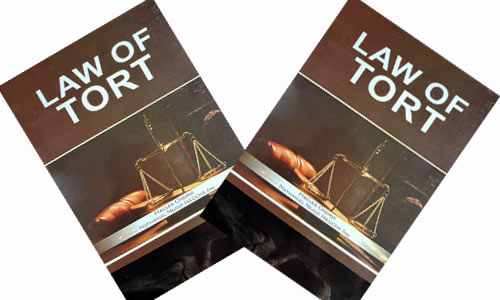 The book, titled The Law of Torts in Nigeria: A Functional Approach, authored by Professor Hagler Sunny Okorie Ph.D and Ikeocha, Nathaniel Ngozi Esq, offers law students, practitioners, and academics a comprehensive guide to understanding and applying tort law in Nigerian courts. Interested buyers can place orders via the following contact numbers: 08028636615, 08037667945, 08032253813, or +234 902 196 2209.
______________________________________________________________________
[A MUST HAVE] Evidence Act Demystified With Recent And Contemporary Cases And Materials
The book, titled The Law of Torts in Nigeria: A Functional Approach, authored by Professor Hagler Sunny Okorie Ph.D and Ikeocha, Nathaniel Ngozi Esq, offers law students, practitioners, and academics a comprehensive guide to understanding and applying tort law in Nigerian courts. Interested buyers can place orders via the following contact numbers: 08028636615, 08037667945, 08032253813, or +234 902 196 2209.
______________________________________________________________________
[A MUST HAVE] Evidence Act Demystified With Recent And Contemporary Cases And Materials

 ARTIFICIAL INTELLIGENCE FOR LAWYERS: A COMPREHENSIVE GUIDE
Reimagine your practice with the power of AI “...this is the only Nigerian book I know of on the topic.” — Ohio Books Ltd
Authored by Ben Ijeoma Adigwe, Esq., ACIArb (UK), LL.M, Dip. in Artificial Intelligence, Director, Delta State Ministry of Justice, Asaba, Nigeria.
Bonus:
Get a FREE eBook titled “How to Use the AI in Legalpedia and Law Pavilion” with every purchase.
ARTIFICIAL INTELLIGENCE FOR LAWYERS: A COMPREHENSIVE GUIDE
Reimagine your practice with the power of AI “...this is the only Nigerian book I know of on the topic.” — Ohio Books Ltd
Authored by Ben Ijeoma Adigwe, Esq., ACIArb (UK), LL.M, Dip. in Artificial Intelligence, Director, Delta State Ministry of Justice, Asaba, Nigeria.
Bonus:
Get a FREE eBook titled “How to Use the AI in Legalpedia and Law Pavilion” with every purchase.
How to Order: 📞 Call, Text, or WhatsApp: 08034917063 | 07055285878 📧 Email: benadigwe1@gmail.com 🌐 Website: www.benadigwe.com
Ebook Version: Access directly online at: https://selar.com/prv626
________________________________________________________________________ “Enhance Legal Practice With Authoritative Reports” — Alexander Payne Offers Comprehensive Law Reports, Spanning Over A Century Of Nigerian Jurisprudence Interested buyers are encouraged to place their orders and enquiries via:
0704 444 4777, 0704 444 4999, 0818 199 9888
Website: www.alexandernigeria.com
Interested buyers are encouraged to place their orders and enquiries via:
0704 444 4777, 0704 444 4999, 0818 199 9888
Website: www.alexandernigeria.com