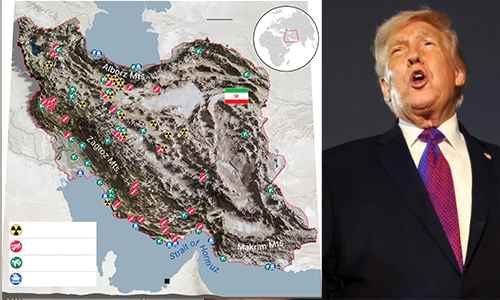
Saudi Arabia has threatened to launch military action against Iran in its harshest comments since the US-Israeli war with Tehran began, as the Trump administration considers ordering American troops to seize or blockade Iran’s Kharg Island — the launch point of 90 per cent of the country’s oil exports — in a dramatic escalation aimed at breaking Tehran’s stranglehold on the Strait of Hormuz and reopening the world’s most critical energy waterway.

The developments come as global fuel supplies face their most severe disruption in decades, with oil prices surging past $109 per barrel, seafarers rationing food and water after three weeks stranded in the Gulf, and the Bank of England warning that the crisis could force interest rate increases that would hit households worldwide.
In the harshest language to emerge from the Gulf kingdom since the conflict began, Saudi Foreign Minister Prince Faisal bin Farhan declared that Iran’s attacks would backfire and that the kingdom reserves the right to respond militarily.
“This pressure from Iran will backfire politically and morally and certainly we reserve the right to take military actions if deemed necessary,” Prince Faisal stated.
Saudi Arabia has come under attack by hundreds of Iranian missiles and drones since the start of the conflict, though authorities said the vast majority have been intercepted. The threat marks a significant escalation, as Saudi Arabia had previously refrained from direct military involvement in the US-Israeli campaign against Iran.
Four sources with knowledge of White House discussions told Axios that President Donald Trump is actively considering plans to occupy or blockade Kharg Island, a five-mile island located 20 miles off Iran’s southern coast that serves as Tehran’s most important economic asset.
The island, traversed by a road known as “Oil Boulevard,” has a loading capacity of roughly seven million barrels per day and is the vital artery of Iran’s sanctions-hit economy. Seizing it would choke off the regime’s primary revenue source and could be used as a bargaining chip to force Iran to reopen the Strait of Hormuz.
“We need about a month to weaken the Iranians more with strikes, take the island and then get them by the balls and use it for negotiations,” a source with knowledge of White House thinking said.
A senior administration official confirmed the seriousness of the planning: “He wants Hormuz open. If he has to take Kharg Island to make it happen, that’s going to happen. If he decides to have a coastal invasion, that’s going to happen. But that decision hasn’t been made.”
Jarrod Agen, executive director of the National Energy Dominance Council, had previously stated that seizing Kharg would mean the US would “not have to worry” about Iranian attempts to keep the strait shut because it would get “all of the oil” out of Tehran’s hands.
Israeli Prime Minister Benjamin Netanyahu also hinted at the possibility of ground operations, admitting there must be a “ground component” involved in forcing the Iranian regime to crumble.
“Yes, the regime could change. Is it guaranteed? No. And it is up to the Iranian people in the final accounting to make use of the conditions that we’re creating, weakening the regime,” Netanyahu told reporters.
Military and policy experts are sharply divided on the wisdom of a Kharg Island operation.
Michael Rubin, a former Pentagon official and senior fellow at the American Enterprise Institute, described it as a “no-brainer” that would choke off Tehran’s ability to bankroll its military. However, he warned it might embolden Iran’s hardliners and recalled the lessons of Iraq: “You don’t destroy the infrastructure of a country that you want to be your ally the day after regime change.”
Oil analyst Tamas Varga told CNBC that seizure would deal a significant blow to the regime but warned that US forces would remain highly vulnerable to drone and missile attacks, and the move would further intensify a conflict that has already spiralled out of control.
Retired Rear Admiral Mark Montgomery suggested that rather than invasion, a more likely scenario was two more weeks of strikes to degrade Iran’s capabilities, followed by US destroyers and aircraft escorting tankers through the strait.
Crucially, positioning Marines on islands off Iran’s coast rather than inside Iran itself could allow Trump to claim he honoured his promise of never putting American boots on the ground in Iran proper.
Trump himself cryptically denied any intention of deploying ground troops on Thursday, telling reporters: “No, I’m not putting troops anywhere. If I were, I certainly wouldn’t tell you.”
Meanwhile, American forces are waging an all-out battle to reopen the Strait of Hormuz, deploying A-10 Warthog ground attack aircraft and Apache attack helicopters to strike Iranian ships and drones in the waterway.
Defence Secretary Pete Hegseth revealed that more than 7,000 targets have been hit across Iran and its military infrastructure since the campaign began. US Central Command released new video showing American bunker-busting bombs deployed against Iranian targets, including the complete destruction of a surface-to-surface missile plant at Karaj.
The Pentagon’s strategy involves nullifying the danger from Iranian weapons and using US warships as escorts for commercial vessels transiting the strait. Only about 90 ships have crossed the waterway since the war began, compared to the normal flow of hundreds daily.
Before-and-after satellite imagery released by CENTCOM showed the complete destruction of the Karaj missile plant, which had been used to assemble ballistic missiles threatening Americans, neighbouring countries, and commercial shipping.
Iran has shown no signs of backing down. Tehran has increasingly targeted energy sites in Gulf states after Israel bombed the South Pars offshore natural gas field. Iranian forces have struck 16 cargo vessels in port towns on the Gulf, and Tehran has warned that any vessel bound for the US, Israel, and their partners would be considered a legitimate target.
The Islamic Republic has also attacked civilian infrastructure across the Gulf, including landmarks, oil and gas facilities, airports, and residential areas, in what appears to be a strategy of raising the economic cost of the conflict for regional states aligned with Washington.
The blockade has created a growing humanitarian crisis for seafarers stranded in the Gulf. Crews on ships trapped for three weeks report rationing food and water as supplies dwindle.
An Indian seaman stuck in a refuelling boat off Iraq, within sight of the Iranian shore, told Reuters: “We don’t have enough water on board right now. Since drinking water is over, we have contacted the owner. Till then, we are boiling the water for drinking.”
A ship’s captain anchored off Qatar near the Ras Laffan liquefied natural gas plant, which was hit by an Iranian attack, expressed fears about being completely cut off: “If the port shuts down completely, then there is no possibility of getting the crew out.”
The economic consequences of the conflict continue to mount. Brent crude futures rose to $109.85 per barrel on Friday, while US West Texas Intermediate crude stood at $96.20.
Bank of England Governor Andrew Bailey warned that reopening the strait is the “best thing to do” to prevent interest rate increases, after the bank voted to hold rates at 3.75 per cent. Bailey said the war would likely increase household energy costs during summer and put pressure on food prices.
“The duration of this problem is crucial. Frankly, reopening the Strait of Hormuz is the best thing to do. Get the energy market back on its normal footing,” Bailey stated, adding that further rate cuts were “not on the horizon” and hinting at possible hikes.
Leading European nations, Japan, and Canada have offered to join efforts to secure safe passage through the strait, and the US has outlined moves to boost oil supply, but prices continued to climb.
Gulf states have launched aggressive crackdowns on information sharing during the conflict. UAE police arrested 109 individuals for filming sites and circulating what they described as incorrect information on social media. Qatar arrested more than 300 people for sharing images and “misleading information.” Bahrain and Kuwait have taken similar measures.
British nationals have been warned they could face jail or deportation for posting pictures of missile strikes on social media.
In a security lapse that highlighted the risks of the digital age during military operations, a French sailor inadvertently revealed the position of the aircraft carrier Charles de Gaulle by recording a 4.3-mile run on the fitness app Strava while jogging on deck as the vessel sailed toward the eastern Mediterranean on March 13. Satellite imagery confirmed the carrier’s position in the area indicated by the Strava data.
UAE security authorities announced they had dismantled a terrorist network allegedly funded and operated by Hezbollah and its backer Iran. The network was operating under fictitious commercial cover and involved money laundering, terrorism financing, and threats to national security. Kuwait also uncovered a Hezbollah-linked group planning to undermine national security, seizing weapons, ammunition, and drones.
Lebanon’s Foreign Ministry condemned the alleged plot and offered cooperation, while reiterating a government ban on Hezbollah’s military activities.
The coming weeks are expected to be decisive. If Trump approves the Kharg Island operation, it would represent the most significant escalation of the conflict to date and could fundamentally reshape the dynamics of the war. The operation would require further degradation of Iran’s military capabilities, deployment of additional Marine units already en route, and potentially the cooperation of Gulf states for basing and overflight rights.
However, the risks are enormous. A seizure of Kharg could trigger full-scale Iranian retaliation against energy infrastructure across the Persian Gulf, potentially sending crude prices surging further and bringing the global economy dangerously close to recession.
Saudi Arabia’s military threat adds another volatile element to an already explosive situation, as the conflict threatens to expand beyond a US-Israeli campaign into a broader regional war with potentially catastrophic consequences for global energy markets and the world economy.
 Interested buyers are encouraged to place their orders and enquiries via:
0704 444 4777, 0704 444 4999, 0818 199 9888
Website: www.alexandernigeria.com
Interested buyers are encouraged to place their orders and enquiries via:
0704 444 4777, 0704 444 4999, 0818 199 9888
Website: www.alexandernigeria.com
 Reimagine your practice with the power of AI “...this is the only Nigerian book I know of on the topic.” — Ohio Books Ltd
Authored by Ben Ijeoma Adigwe, Esq., ACIArb (UK), LL.M, Dip. in Artificial Intelligence, Director, Delta State Ministry of Justice, Asaba, Nigeria.
Bonus:
Get a FREE eBook titled “How to Use the AI in Legalpedia and Law Pavilion” with every purchase.
Reimagine your practice with the power of AI “...this is the only Nigerian book I know of on the topic.” — Ohio Books Ltd
Authored by Ben Ijeoma Adigwe, Esq., ACIArb (UK), LL.M, Dip. in Artificial Intelligence, Director, Delta State Ministry of Justice, Asaba, Nigeria.
Bonus:
Get a FREE eBook titled “How to Use the AI in Legalpedia and Law Pavilion” with every purchase.
How to Order: 📞 Call, Text, or WhatsApp: 08034917063 | 07055285878 📧 Email: benadigwe1@gmail.com 🌐 Website: www.benadigwe.com
Ebook Version: Access directly online at: https://selar.com/prv626
_______________________________________________________________________ [A MUST HAVE] Evidence Act Demystified With Recent And Contemporary Cases And Materials
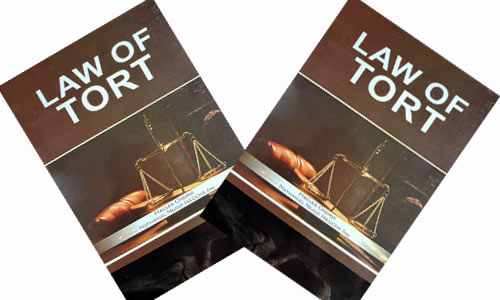 The book, titled The Law of Torts in Nigeria: A Functional Approach, authored by Professor Hagler Sunny Okorie Ph.D and Ikeocha, Nathaniel Ngozi Esq, offers law students, practitioners, and academics a comprehensive guide to understanding and applying tort law in Nigerian courts. Interested buyers can place orders via the following contact numbers: 08028636615, 08037667945, 08032253813, or +234 902 196 2209.