The Economic Community of West African States (ECOWAS) Parliament has adopted a set of strategic and actionable measures aimed at strengthening protection for children living in street situations and curbing child exploitation across the region.

The resolutions were reached at the conclusion of a five-day Parliamentary Joint Committee meeting held in Freetown from April 7 to 11, 2026.
The meeting brought together lawmakers, government officials, regional institutions, and civil society groups under the theme of safeguarding vulnerable children and addressing exploitation within the ECOWAS bloc.
Central to the discussions was the urgent need to move beyond policy formulation to implementation. Members of the Joint Committee, which includes the Social Affairs, Legal Affairs, Trade, and Political Affairs blocs, called on member states to adopt and operationalise well-funded national strategies specifically targeting children in street situations. Lawmakers stressed that clear targets, adequate financing, and measurable outcomes must now take priority.
Participants identified persistent gaps undermining progress, particularly weak enforcement of existing child protection laws and limited institutional capacity. These shortcomings, they noted, continue to expose vulnerable children to abuse, exploitation, and neglect across the region.
A major shift emerging from the meeting is the emphasis on child-centred, inclusive, and trauma-informed protection systems. Member states were urged to guarantee access to essential services such as education, healthcare, legal identity, and child-friendly justice mechanisms for affected children.
The Joint Committee also highlighted the importance of tackling root causes, including poverty and family instability. Governments were encouraged to expand social protection programmes, strengthen family support systems, and implement broader poverty reduction strategies to reduce children’s vulnerability to street life.
Recognising the cross-border dimension of the crisis, lawmakers called for a harmonised regional framework to address child vulnerability. They stressed the need for data-driven policymaking, including standardised definitions, improved data collection, and stronger case management systems to ensure continuity of care for children on the move.
To strengthen regional coordination, the committee recommended that the ECOWAS Commission lead efforts to establish cross-border protection and referral systems, develop safe repatriation and reintegration protocols, and enhance data-sharing mechanisms among member states.
Members also commended the ECOWAS Child Rights Information Management System (ECRIMS), describing it as a critical tool for improving transparency, tracking interventions, and supporting evidence-based decision-making. However, they called for its expansion to maximise impact across the region.
The Joint Committee reaffirmed its commitment to legislative action, oversight, and advocacy, indicating plans to push for a parliamentary resolution focused on children in street situations. Such a resolution, lawmakers said, would strengthen monitoring of both national and regional child protection frameworks.
Insights from public hearings and field visits conducted during the meeting revealed significant gaps in service delivery and reintegration efforts. Stakeholders underscored the importance of education, vocational training, psychosocial support, and community reintegration as essential pillars of effective child protection.
The meeting ended with a strong call for coordinated and sustained action, with parliamentarians describing the protection of vulnerable children not only as a moral obligation but also as a strategic investment in the region’s long-term stability and development.
 Interested buyers are encouraged to place their orders and enquiries via:
0704 444 4777, 0704 444 4999, 0818 199 9888
Website: www.alexandernigeria.com
Interested buyers are encouraged to place their orders and enquiries via:
0704 444 4777, 0704 444 4999, 0818 199 9888
Website: www.alexandernigeria.com
 Reimagine your practice with the power of AI “...this is the only Nigerian book I know of on the topic.” — Ohio Books Ltd
Authored by Ben Ijeoma Adigwe, Esq., ACIArb (UK), LL.M, Dip. in Artificial Intelligence, Director, Delta State Ministry of Justice, Asaba, Nigeria.
Bonus:
Get a FREE eBook titled “How to Use the AI in Legalpedia and Law Pavilion” with every purchase.
Reimagine your practice with the power of AI “...this is the only Nigerian book I know of on the topic.” — Ohio Books Ltd
Authored by Ben Ijeoma Adigwe, Esq., ACIArb (UK), LL.M, Dip. in Artificial Intelligence, Director, Delta State Ministry of Justice, Asaba, Nigeria.
Bonus:
Get a FREE eBook titled “How to Use the AI in Legalpedia and Law Pavilion” with every purchase.
How to Order: 📞 Call, Text, or WhatsApp: 08034917063 | 07055285878 📧 Email: benadigwe1@gmail.com 🌐 Website: www.benadigwe.com
Ebook Version: Access directly online at: https://selar.com/prv626
_______________________________________________________________________ [A MUST HAVE] Evidence Act Demystified With Recent And Contemporary Cases And Materials
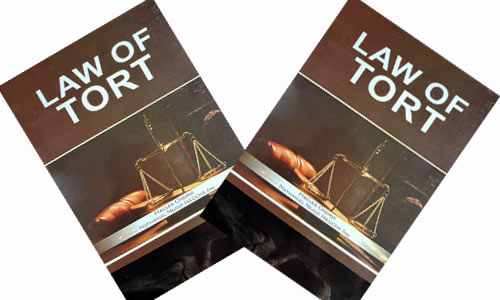 The book, titled The Law of Torts in Nigeria: A Functional Approach, authored by Professor Hagler Sunny Okorie Ph.D and Ikeocha, Nathaniel Ngozi Esq, offers law students, practitioners, and academics a comprehensive guide to understanding and applying tort law in Nigerian courts. Interested buyers can place orders via the following contact numbers: 08028636615, 08037667945, 08032253813, or +234 902 196 2209.