By Levi I. Shaapera, Esq.

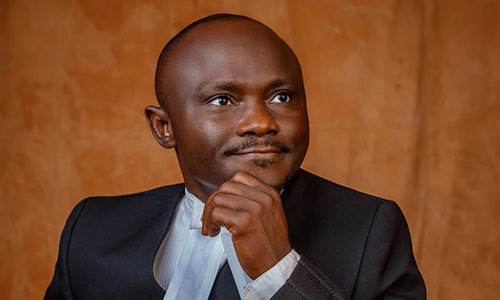
The newly sworn-in Chairman of the Independent National Electoral Commission (INEC), Professor Joash Ojo Amupitan, SAN is no stranger to excellence. With degrees spanning the LL.B, LL.M, and Ph.D, he has built a long and distinguished career at the University of Jos, where he rose to become Professor of Law and Deputy Vice-Chancellor (Administration). His elevation to the coveted rank of Senior Advocate of Nigeria (SAN) in 2014 further confirmed his stature among the nation’s legal elite.
A prolific academic, Amupitan’s intellectual interests in Corporate Governance and the Law of Evidence reflect an ordered mind that values systems, procedures, and compliance. For decades, his students and colleagues have described him as calm, firm, and incorruptible. I cannot agree less. I can even attest that Prof. Amupitan was one of those lecturers who commanded uncommon classroom respect during my days at the prestigious Faculty of Law, University of Jos. Nobody needed to be cautioned to keep quiet. There was always a pin-drop silence during his classes, not out of fear but from a deep desire to hear him speak.
When President Bola Ahmed Tinubu nominated Prof. Amupitan as Chairman of INEC, the decision stirred cautious optimism across Nigeria’s political and intellectual space. Many Nigerians, myself included, saw in Amupitan the rare convergence of scholarship, moral discipline, and administrative experience.
Amupitan’s background offers several clear advantages to the electoral body. Firstly, his legal mind is trained to respect procedure and the sanctity of due process. INEC, which operates under intense statutory scrutiny, requires precisely this mindset. Secondly, his years in university management mean he understands bureaucracy: how to motivate, discipline, and manage large and complex institutions. As a SAN and scholar, his moral authority may help re-establish credibility in an INEC long battered by public distrust.
Indeed, Prof. Amupitan appears to be the near-perfect choice and a flawless fit for an office that demands integrity, intellect, and independence. Yet beneath the optimism lies a quiet fear, shaped by history, that Nigeria, as she has done to others before him, might “happen” to him.
This is because; running elections in Nigeria is not merely a legal or administrative task. It is a political war fought with technology, logistics, and immense pressure. The challenges of ballot logistics, digital security, and political interference demand a flexibility that academia rarely rewards. INEC’s battlefield is not a seminar room; it is the Nigerian street, unpredictable, emotional, and sometimes violent. The fear, therefore, is not whether Prof. Amupitan is competent. He undoubtedly is. The fear is whether the system will allow him to remain the man we know.
That fear is deep-rooted in the fact that history has been unkind to men and women who entered public office with noble intentions and unblemished reputations. For instance, with due respect, Michael Aondoakaa (SAN) came in as a brilliant lawyer. His brilliance in Mbanengen Shande v. The State once persuaded the Supreme Court to reconsider its long-held position that provocation must be immediate, as previously held in cases such as Oladipupo v. The State. The Shande decision introduced a more flexible approach, recognising the possibility of continuing (or cumulative) provocation and the influence of psychological or cognitive factors on human behaviour. Yet, Aondoakaa left the office of Attorney-General under a cloud of political manipulation and controversy. His famous slogan, “The President can rule from anywhere,” in defence of the late President Yar’Adua, remains fresh in the minds of many Nigerians.
Without fear of exaggeration, every Nigerian lawyer read Prof. Itse Sagay (SAN) through his well-researched books, particularly Sagay: Nigerian Law of Contract, and reserved a special place in their minds for him. Sadly, Sagay arguably became the face of moral compromise when his anti-corruption advisory role appeared to defend what he once condemned.
Prof. Mahmood Yakubu, another academic of repute, began with integrity and promise at INEC, but his stewardship of the 2023 elections left many Nigerians questioning the impartiality of even the best minds when swallowed by the Nigerian state. In a similar vein, Lateef Fagbemi (SAN), the current Attorney-General, faces public anxiety over the fear that the system is already dulling the sharp edges of his famed independence.
Thus, the apprehension is simple: will Prof. Joash Amupitan remain the scholar we respect, or will the machinery of Nigeria, with its political blackmail, institutional rot, and quiet compromises, bend him into conformity?
The answer to this crucial question will depend on the Professor himself. Nigerians will mark his script, and his scores will depend on a few critical early decisions:
- Technical Strength Over Legal Comfort: He must surround himself with credible, non-partisan technocrats who understand election logistics, data systems, and field operations.
- Civil Society Engagement: Rather than avoid critics, he should work closely with election observers, the media, and credible civic groups to build trust through dialogue.
- Moral Defiance: Most importantly, he must remember that the system respects only those who refuse to bow to it.
In Nigeria, perfection is rarely allowed to stand unbent. Whether he will rise above the system or be absorbed by it remains to be seen. If he succeeds, his story will redeem the faith of many who still believe that character can survive power. If he fails, he will join the long list of those who came to clean the system but left with the stain of its dirt on their robes.
For now, Nigeria watches, half in hope and half in fear, praying that, this time, the square peg truly fits into the square hole and stands firm.
*Levi I. Shaapera, Esq., is a legal practitioner, commentator on national and judicial affairs, and the author of Nigerian Courtroom Canon—a widely celebrated reference work for lawyers and judges across Nigeria. He is also the founder of LawCompass Electronic Reports and Leis Law Clinic.
He can be reached via email at leislawng@gmail.com or by phone on 0902 349 9999.
[A MUST HAVE] Evidence Act Demystified With Recent And Contemporary Cases And Materials

Available now for NGN 40,000 at ASC Publications, 10, Boyle Street, Onikan, Lagos. Beside High Court, TBS. Email publications@ayindesanni.com or WhatsApp +2347056667384. Purchase Link: https://paystack.com/buy/evidence-act-complete-annotation
______________________________________________________________________ “Enhance Legal Practice With Authoritative Reports” — Alexander Payne Offers Comprehensive Law Reports, Spanning Over A Century Of Nigerian Jurisprudence Interested buyers are encouraged to place their orders and enquiries via:
0704 444 4777, 0704 444 4999, 0818 199 9888
Website: www.alexandernigeria.com
Interested buyers are encouraged to place their orders and enquiries via:
0704 444 4777, 0704 444 4999, 0818 199 9888
Website: www.alexandernigeria.com