The Liberian government has agreed to receive up to 1,200 third-country deportees from the United States over the next 12 months, as Washington expands arrangements with African countries to take in people who cannot legally be returned to their countries of origin.

Liberia announced the agreement on Tuesday, saying the first batch of 20 deportees is expected to arrive in the country on Thursday.
The nationalities of the deportees were not disclosed, but the government said they would include citizens or nationals of African and Western Hemisphere countries who have been medically cleared to travel.
Liberia’s Minister of Information, Jerolinmek Piah, said the government was receiving the deportees on humanitarian grounds and would not treat them as prisoners or criminal suspects.
“The government wants to emphasise that those being brought to Liberia are being received as guests,” Piah said.
According to him, the deportees would be free to leave Liberia whenever they choose or could apply for asylum if they wished to remain in the country.
He also said none of those being transferred to Liberia was a criminal or facing prosecution in either the United States or Liberia.
Piah said the arrangement was consistent with Liberia’s longstanding tradition of providing refuge and protection to people fleeing persecution, war and other forms of conflict.
The Liberian government also said it was not demanding financial compensation for accepting the deportees.
It, however, said the country would receive support to help manage the programme and strengthen its broader migration system.
Piah described the agreement as “entirely humanitarian.”
The development is part of a wider policy by the administration of United States President Donald Trump to secure agreements with third countries willing to receive people whom the US cannot lawfully deport to their home countries.
Since Trump returned to office in January last year, his administration has reached similar arrangements with several African countries, including Ghana, Equatorial Guinea, Eswatini, the Democratic Republic of Congo and Sierra Leone.
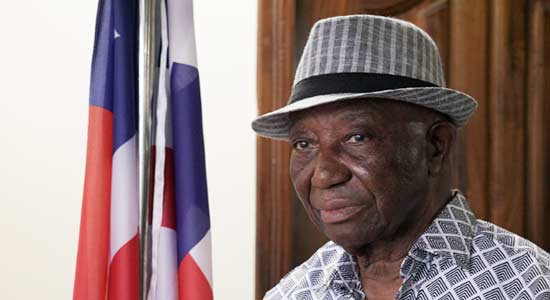
Liberian President Joseph Boakai was among five West African leaders who travelled to the White House last year for talks with Trump.
The United States had also reportedly sought a similar arrangement with Nigeria, but the proposal did not succeed.
Nigeria had rejected the idea of becoming a destination for third-country deportees, with government officials maintaining that the country would not serve as a “dumping ground” for people removed from the United States.
Reports had also linked Nigeria’s refusal to accept asylum seekers and deportees from the US to some of the visa restrictions later imposed by the Trump administration, although the full extent of that connection has remained a matter of public debate.
Liberia’s agreement, meanwhile, will see the country receive deportees over a 12-month period, beginning with the first 20 arrivals.
The government insists that the arrangement is not a detention programme and that those arriving will retain the option of leaving Liberia or seeking asylum under applicable laws.
Monrovia has also maintained that the deal is being implemented as a humanitarian measure rather than a commercial arrangement, even as it expects logistical and institutional support to manage the programme and strengthen Liberia’s migration system.
[A MUST HAVE] Evidence Act Demystified With Recent And Contemporary Cases And Materials

Available now for NGN 40,000 at ASC Publications, 10, Boyle Street, Onikan, Lagos. Beside High Court, TBS. Email publications@ayindesanni.com or WhatsApp +2347056667384. Purchase Link: https://paystack.com/buy/evidence-act-complete-annotation
______________________________________________________________________ “Enhance Legal Practice With Authoritative Reports” — Alexander Payne Offers Comprehensive Law Reports, Spanning Over A Century Of Nigerian Jurisprudence Interested buyers are encouraged to place their orders and enquiries via:
0704 444 4777, 0704 444 4999, 0818 199 9888
Website: www.alexandernigeria.com
Interested buyers are encouraged to place their orders and enquiries via:
0704 444 4777, 0704 444 4999, 0818 199 9888
Website: www.alexandernigeria.com