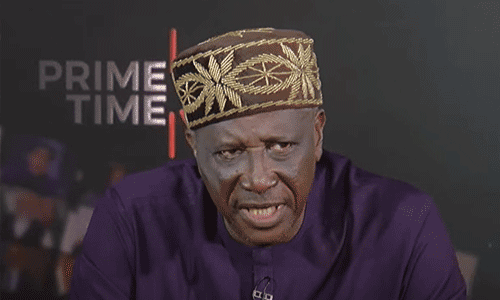
In a pointed critique on Arise TV’s flagship program, Senior Advocate of Nigeria (SAN) Oba Maduabuchi lambasted President Bola Tinubu’s six-month state of emergency in Rivers State as an unnecessary and unconstitutional suspension of democracy, describing the initial declaration as a “laughable situation” that robbed the people of their elected governor. Speaking exclusively on the lifting of the emergency rule effective midnight September 17, Maduabuchi expressed cautious relief at Governor Siminalayi Fubara’s reinstatement but cautioned that the state’s political hawks remain poised to undermine his leadership, raising doubts about the sustainability of the purported “new spirit of understanding.”

The emergency rule, declared on March 18, 2025, under Section 305 of the 1999 Constitution, suspended Fubara, Deputy Governor Ngozi Nma Odu, and the entire 32-member Rivers State House of Assembly amid a fierce political standoff between the governor and a faction of 27 pro-Wike lawmakers. The crisis stemmed from legislative gridlock, including disputes over budget approvals and the defection of lawmakers, which Tinubu cited as a “total paralysis of governance” threatening anarchy. The National Assembly approved the measure via voice vote, a process Maduabuchi decried as a blatant constitutional violation.
Maduabuchi, a prominent constitutional lawyer, wasted no time in dismissing Tinubu’s rationale for the emergency declaration. “I do not believe there was need for any state of emergency in the first place,” he stated emphatically during the interview. “And I do not see how anybody could have said, ‘Governor, go and sit down. House of Assembly, go and sit down,’ because the place is ungovernable, and then you are holding elections. So it’s a laughable situation, honestly.”
He argued that normalcy prevailed despite the tensions: “On that day in March, people travelled from Port Harcourt to Abuja. People travelled from Abuja to Port Harcourt. People travelled from Brass to Port Harcourt, from Degema to Omoku. So what was the emergency? There was no need for that. All they needed was a little bit of patience on the side of the president, [as] the matters were in court.”
Maduabuchi highlighted the Supreme Court’s recent judgment on the assembly’s quorum, which invalidated legislative actions by a four-member pro-Fubara faction. He noted that Fubara had subsequently engaged the 27 defected lawmakers, aligning with constitutional expectations. “What did the president do? The governor now went to the 27 members. That is what you expect under such a situation. You wait for the Supreme Court,” he said, criticizing the lack of judicial resolution on the defectors’ status. “The Supreme Court was the proper authority that should have settled that issue. Whether the 27 members decamped or not, if that issue was resolved, we would know all these things.”
The SAN reserved his harshest words for the suspension of elected officials, calling it a grave democratic deficit. “Saying that you remove a governor democratically elected by the people of Rivers State and deny them democracy for six months—I think the president was wrong,” Maduabuchi asserted. “But I’m happy that he has brought Fubara back. Whether we can call him governor now, I don’t know. He has no local government chairman, or he has no local government structure behind him. There are 27 hawks looking to pick his eyes, pick his nose, pick any part of his body that they want. So is that what you call governor?”
He drew parallels to historical precedents, invoking the 2013 emergency declarations in Adamawa, Borno, and Yobe under President Goodluck Jonathan, where governors were not removed. “When Muhammad Adoke was Attorney General… he made it clear: ‘Look, Mr. President, I’m Attorney General. The law does not allow you to remove any governor, remove any elected person.’ What the law allows is to declare a state of emergency, appoint an administrator, deploy security personnel to keep the peace, but not to remove elected people.” Maduabuchi praised Jonathan for upholding this, contrasting it with Tinubu’s approach, which he said ignored Supreme Court judgments like the Dariye case.
On the National Assembly’s role, Maduabuchi accused lawmakers of failing Nigerians by approving the proclamation through a voice vote rather than the required two-thirds majority via headcount. “The constitution says it must be two-thirds, and [Senate President] Akpabio decides to use a voice vote… These are constitutional issues. I don’t think people give it respect. That is why this country has remained a beacon in Nigerian politics,” he quipped, referencing how former Senate President Nnamani thwarted a third-term bid by enforcing constituency mandates.
Addressing over 40 pending lawsuits challenging the emergency rule—including PDP governors’ suits questioning the president’s power to suspend a sitting governor—Maduabuchi predicted their swift dismissal. “That case will never see the light of day again. The only day it will come up is the day they strike it out… because it’s academic,” he said. “What are they going to decide? Who will benefit from any decision rendered by the Supreme Court on that issue? The Supreme Court deals with live issues… Once Fubara starts tomorrow, all those cases become a mere waste of time.”
However, he urged the apex court to prioritize constitutional interpretations for future guidance. “My position is that any constitutional issue is continually a live issue because the constitution remains, and the possibility of repetition is there… Constitutional interpretations can never be said to be academic. So I will order the Supreme Court to call up that case so that we guide our leaders because of tomorrow.”
Maduabuchi also critiqued APC National Secretary Senator Basiru Ajibola’s defense of the emergency as “above law,” retorting that “you cannot build legality on illegality.” He questioned the moral grounds Tinubu invoked, noting the absence of violence: “Not even a fly, not even a mosquito died in Rivers State,” unlike in other “killing fields.”
While welcoming the end of the “dark six months,” Maduabuchi expressed skepticism about lasting peace. “We can only say we are breathing some kind of sigh of relief. Let us see where we go from here. But that statement by Mr. President, with all due respect to me, is simply begging the issue. What was the emergency that I came to handle?”
He called on Fubara to rebuild local structures and navigate the “hawks,” while urging national leaders to respect constitutional limits. “What you don’t deal with now may haunt you in the future,” he warned, emphasizing the need for judicial clarity to prevent repeats.
[A MUST HAVE] Evidence Act Demystified With Recent And Contemporary Cases And Materials

Available now for NGN 40,000 at ASC Publications, 10, Boyle Street, Onikan, Lagos. Beside High Court, TBS. Email publications@ayindesanni.com or WhatsApp +2347056667384. Purchase Link: https://paystack.com/buy/evidence-act-complete-annotation
______________________________________________________________________ “Enhance Legal Practice With Authoritative Reports” — Alexander Payne Offers Comprehensive Law Reports, Spanning Over A Century Of Nigerian Jurisprudence Interested buyers are encouraged to place their orders and enquiries via:
0704 444 4777, 0704 444 4999, 0818 199 9888
Website: www.alexandernigeria.com
Interested buyers are encouraged to place their orders and enquiries via:
0704 444 4777, 0704 444 4999, 0818 199 9888
Website: www.alexandernigeria.com