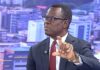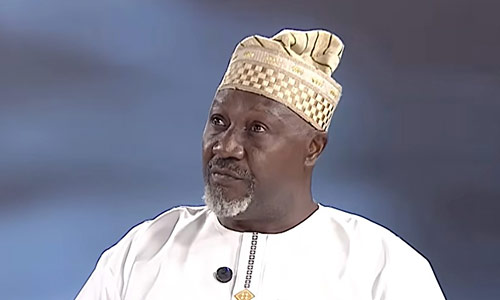
In a candid interview on Arise TV, constitutional lawyer and public affairs analyst Fred Nzeako delivered a scathing critique of the recent conviction and sentencing of Indigenous People of Biafra (IPOB) leader Nnamdi Kanu, describing the judicial process as a “travesty of justice” marred by procedural flaws and judicial overreach. Nzeako also weighed in on the turmoil within the People’s Democratic Party (PDP) and Nigeria’s escalating insecurity crisis, calling for urgent reconciliation, introspection, and a shift from politics to effective governance.

Speaking with host Dr. Reuben Abati, Nzeako argued that Kanu’s trial under the repealed Terrorism (Prevention) Act of 2011 (amended 2013), which was superseded by the 2022 Terrorism Prevention and Prohibition Act, raises fundamental legal questions. He highlighted that Kanu was initially acquitted by the Federal High Court in October 2022, only for the government to appeal and prolong his detention, effectively nullifying the acquittal’s intent. “The federal government refused to release him. At that point of discharge and acquittal, the court became functus officio, so you can no longer hold on to that old law,” Nzeako stated, emphasizing that criminal laws cannot have retroactive effect in a democracy.
Nzeako also dismissed speculation that Kanu’s decision to reject seasoned counsel – including SANs like Kanu Agabi, Ifeanyi Ejiofor, Paul Erokoro, and others – and represent himself turned the trial into a “circus” fueled by “Twitter lawyers.” “Those are now in the realm of history,” he said, pivoting to what he called the real scandal: the conduct of Justice Omotosho at the Federal High Court. Kanu, 58, was sentenced on November 22, 2025, to concurrent prison terms totaling 16 years on seven counts of terrorism and related offenses, but Nzeako argued the process flouted core criminal justice tenets.
The analyst reserved particular ire for Justice Binta Nyako’s successor, Justice James Omotosho, accusing the judge of “jumping into the arena” by usurping executive powers. In a 144-page judgment, Omotosho sentenced Kanu to concurrent terms totaling 16 years but recommended “special confinement” to limit access a directive Nzeako deemed illegal overreach. “It does not lie in the purview of the court to decide where a convict will be kept. The very moment you give your judgment, you become functus officio. It is the duty of the executive to determine,” he asserted. Reports of Kanu’s potential transfer to Sokoto Prison, Nzeako added, exemplify how such orders fuel perceptions of bias, likening it to exiling him to “Robben Island or Guantanamo Bay.”
He further dismissed claims that Kanu’s self-representation and courtroom outbursts, including alleged insults to the judge, justified the outcome. Invoking contempt of court principles, Nzeako said, “If anybody misconducts himself in court, it is contempt, but it cannot come anywhere close to an issue of terrorism,” drawing parallels to how President Muhammadu Buhari’s administration allegedly inflated civil offenses like insults into terrorism charges. Regarding the charges themselves, primarily tied to Kanu’s broadcasts, Nzeako questioned the absence of proven mens rea (guilty mind) and actus reus (guilty act). “What he did was insult the authorities because he felt he was not getting what he expected from the system,” he noted.
Looking ahead, Nzeako urged Kanu’s legal team, led by Chief Alloy Ejimakor, to file an appeal within the 90-day window, ideally by Monday after obtaining the full judgment. “They have to go and appeal timeously, sift through it, bring out all the grounds of appeal,” he advised. Beyond the courts, he called on President Bola Tinubu to exercise the prerogative of mercy, now that the matter is “discharged” judicially. “The book now stops on the table of the C in C. When he pardoned some criminals, people asked why not Kanu? Today the court has discharged the matter. Now the executive can take over,” Nzeako implored, warning that prolonged detention risks “pouring fuel into a raging fire” amid nationwide insecurity.
Shifting to politics, Nzeako diagnosed the PDP’s internal “chaos” as self-inflicted, exacerbated by APC “sledgehammers” but rooted in “self-greed” and ego. “They need to go back, talk to themselves honestly, swallow their ego, tone down their self-greed,” he said, rejecting PDP narratives of a one-party state plot. Invoking the blindfolded Lady Justice, he quipped that opposition unity, eyes closed to distractions like the EndBadGovernance movement, would have thwarted APC advances. “If they stood their ground, the APC would have failed. Anytime you open your eyes, your house will collapse.”
On insecurity, Nzeako lambasted the Tinubu administration for “majoring in the minors,” prioritizing diplomatic damage control over action. With a Nigerian delegation in the U.S. amid President Donald Trump’s threats to intervene against “Nigerian terrorists,” he dismissed regime-change fears as spin. “America has never said they are coming for regime change or your resources,” he said, pointing to elite complicity in resource theft. Citing recent horrors, including over 300 students kidnapped in Niger State in one week alongside a litany of killings, Nzeako invoked the legal maxim res ipsa loquitur (“the thing speaks for itself”). “The state of insecurity is moving like wildfire… Government is not doing enough. Politics is subservient to good governance.”
[A MUST HAVE] Evidence Act Demystified With Recent And Contemporary Cases And Materials

Available now for NGN 40,000 at ASC Publications, 10, Boyle Street, Onikan, Lagos. Beside High Court, TBS. Email publications@ayindesanni.com or WhatsApp +2347056667384. Purchase Link: https://paystack.com/buy/evidence-act-complete-annotation
______________________________________________________________________ “Enhance Legal Practice With Authoritative Reports” — Alexander Payne Offers Comprehensive Law Reports, Spanning Over A Century Of Nigerian Jurisprudence Interested buyers are encouraged to place their orders and enquiries via:
0704 444 4777, 0704 444 4999, 0818 199 9888
Website: www.alexandernigeria.com
Interested buyers are encouraged to place their orders and enquiries via:
0704 444 4777, 0704 444 4999, 0818 199 9888
Website: www.alexandernigeria.com