A PAPER PRESENTED BY PROF ABIODUN AMUDA-KANNIKE SAN, JP, FCArb, FCIAP, FIIHP, ACTI, ACSP, LFWLS, AG DIRECTOR, DEPARTMENT OF LEGISLATIVE SUPPORT SERVICES (DLSS), OF THE NATIONAL INSTITUTE FOR LEGISLATIVE AND DEMOCRATIC STUDIES (NILDS)ABUJA AND THE PIONEER DEAN, FACULTY OF LAW, KWARA STATE UNIVERSITY, MALETE, VIA -ILORIN KWARA STATE, THE SAID PRESENTATION WHICH TOOK PLACE AT THE JUDICIAL CONFERENCE ORGANIZED BY CIVIC ENLIGHTENMENT ORGANIZATION OF NIGERIA (CEON) ON BEHALF OF THE NATIONAL JUDICIAL INSTITUTE (NJI) OF NIGERIA, IN DUBAI, UAE FROM 17TH NOVEMBER , 2025.

Abstract
The retirement of judicial officers marks a significant transition in their careers, raising important questions about their post-retirement lives. This study explores the challenges and opportunities faced by judicial officers after retirement, examining the impact of their years of service on their personal and professional lives. It discusses the various paths available to retired judges, including arbitration, mediation, and academia, and highlights the need for adequate support systems to ensure a smooth transition. The study also considers the role of retired judges in contributing to the judiciary and society, and the potential implications for the legal profession.
Keywords: Judicial officers, retirement, post-retirement life, transition, challenges, opportunities.
1.0 INTRODUCTION
1.1 BACKGROUND OF THE WORK
The retirement of judicial officers is a significant milestone in their careers, marking the culmination of years of dedicated service to the judiciary. As esteemed members of the legal profession, judicial officers play a crucial role in upholding the rule of law, ensuring justice, and promoting the integrity of the judicial system. However, their retirement can have far-reaching implications, not only for themselves but also for the judiciary and the legal profession as a whole.[1]
The transition from active judicial service to retirement can be a complex and challenging process, requiring careful planning, preparation, and support.[2] Despite their experience and expertise, retired judicial officers often face unique challenges in adjusting to life after retirement, including finding meaningful ways to utilize their skills, managing their finances, and maintaining their physical and mental well-being.[3]
This study aims to explore the experiences of judicial officers after retirement, examining the challenges they face, the opportunities available to them, and the support systems that can facilitate a smooth transition. By shedding light on this important issue, this research seeks to contribute to a better understanding of the needs of retired judicial officers and inform strategies to support them in their post-retirement lives.[4]
1.2 STATEMENT OF THE PROBLEM
The retirement of judicial officers poses a significant challenge, both for the individuals involved and the judiciary as a whole. Despite their wealth of experience and expertise, many judicial officers face uncertainty and difficulty in transitioning to life after retirement.[5] The problem is compounded by the lack of adequate support systems, inadequate planning, and limited opportunities for post-retirement engagement.[6]
Research has shown that retired judicial officers often experience a range of challenges, including loss of identity, reduced social interaction, and decreased mental and physical stimulation.[7] These challenges can be particularly acute in jurisdictions where judicial officers have held significant positions of authority and influence.[8] Furthermore, the judiciary itself may also suffer from the loss of experienced and skilled personnel, leading to a potential knowledge gap and disruption to the administration of justice.[9]
This study seeks to investigate the problems faced by judicial officers in retirement, with a view to identifying potential solutions and strategies to support them in their post-retirement lives.[10]
1.3 OBJECTIVES OF THE STUDY
The objectives of this study are:
- To examine the experiences of judicial officers after retirement, including the challenges they face and the opportunities available to them.[11]
- To identify the factors that influence the post-retirement experiences of judicial officers, including personal, social, and economic factors.[12]
- To explore the impact of retirement on the mental and physical well-being of judicial officers, including their emotional and psychological adjustment to life after retirement.[13]
- To examine the role of institutional support systems in facilitating a smooth transition to retirement for judicial officers, including the provision of retirement planning programs, counseling, and post-retirement engagement opportunities.[14]
- To provide recommendations for policymakers, judicial institutions, and individual judicial officers to enhance the post-retirement experiences of judicial officers, including strategies for promoting their well-being, engagement, and contribution to society.[15]
By achieving these objectives, this study aims to contribute to a better understanding of the experiences of judicial officers after retirement and to inform the development of effective support systems and policies to promote their well-being and engagement.
1.4 RESEARCH QUESTIONS
- What are the experiences of judicial officers after retirement, and what challenges do they face in their post-retirement lives?
- What factors influence the post-retirement experiences of judicial officers, and how do these factors impact their well-being and engagement?
- How does retirement affect the mental and physical well-being of judicial officers, and what strategies do they use to cope with these changes?
- What role do institutional support systems play in facilitating a smooth transition to retirement for judicial officers, and what types of support are most effective?
- What recommendations can be made to policymakers, judicial institutions, and individual judicial officers to enhance the post-retirement experiences of judicial officers and promote their well-being and engagement?
These research questions are designed to:
- Explore the experiences and challenges of retired judicial officers
- Identify the factors that influence their post-retirement experiences
- Examine the impact of retirement on their mental and physical well-being
- Investigate the role of institutional support systems in facilitating a smooth transition
- Inform recommendations for policymakers, judicial institutions, and individual judicial officers.
1.5 SIGNIFICANCE OF THE STUDY
This study on the experiences of judicial officers after retirement is significant for several reasons:
- Contributing to the literature: This study will contribute to the growing body of research on judicial retirement and post-retirement experiences, providing valuable insights into the challenges and opportunities faced by retired judicial officers.[16]
- Informing policy and practice: The findings of this study will inform the development of policies and programs to support retired judicial officers, enhancing their well-being and promoting their continued contribution to society.[17]
- Supporting the judiciary: By examining the experiences of judicial officers after retirement, this study will provide insights into the impact of retirement on the judiciary and the administration of justice, informing strategies to mitigate any negative effects.[18]
- Promoting healthy aging: This study’s focus on the well-being of retired judicial officers will contribute to a better understanding of healthy aging and the factors that promote well-being in older adulthood.[19]
- Enhancing our understanding of career transition: This study will also contribute to the broader literature on career transition and retirement, providing insights into the experiences of professionals in a unique and demanding field.[20]
By exploring the experiences of judicial officers after retirement, this study aims to make a meaningful contribution to our understanding of this important issue and inform strategies to support retired judicial officers.
1.6 METHODOLOGY
This study will employ a doctrinal research methodology to examine the experiences of judicial officers after retirement. The methodology will consist of:
- Research approach: A qualitative doctrinal approach will be used to analyze relevant laws, regulations, and judicial decisions related to judicial retirement.
- Sources: The study will examine primary sources such as statutes, case law, and judicial rules, as well as secondary sources like academic articles and books.
- Analysis: The study will analyze the legal framework governing judicial retirement, identifying key themes, principles, and concepts.
This methodology will provide a comprehensive understanding of the legal aspects surrounding judicial retirement.
1.7 SCOPE AND LIMITATIONS
This study will focus on the experiences of judicial officers after retirement, with a specific emphasis on the legal framework governing judicial retirement. The study will examine the relevant laws, regulations, and judicial decisions related to judicial retirement, and explore the implications of these laws on the post-retirement lives of judicial officers.
Limitations:
- Geographical scope: The study will be limited to Nigeria
- Temporal scope: The study will cover judicial officers who have retired within the past 10 years
iii. Methodological limitations: The study’s reliance on doctrinal analysis may not capture the full range of experiences of judicial officers after retirement.
- Availability of data: The study’s findings may be limited by the availability of relevant data and literature on the topic.
2.0 JUDICIAL OFFICERS CAREER AND RETIREMENT
2.1 OVERVIEW OF JUDICIAL SERVICE
Judicial officers play a crucial role in the administration of justice, serving as impartial decision-makers in courts of law.[21] Their primary responsibility is to interpret and apply the law to ensure justice is served, while also upholding the integrity and independence of the judiciary.[22]
Key Aspects of Judicial Service:
- Appointment and Tenure: Judicial officers are typically appointed or elected to serve for a specified term or until a certain age.[23]
- Judicial Independence: Judicial officers are expected to remain impartial and independent, making decisions based on the law and evidence presented.[24]
- Judicial Conduct: Judicial officers are held to high standards of conduct, including integrity, fairness, and respect for the law.[25]
2.2 RETIREMENT AGE AND BENEFITS IN NIGERIA
The retirement age for judicial officers in Nigeria has been standardized to 70 years, thanks to a constitutional alteration signed into law by President Bola Tinubu on June 8, 2023.[26] This change brings uniformity to the retirement age of judicial officers across superior courts of record, including the Supreme Court, Court of Appeal, Federal High Court, National Industrial Court, High Court of the Federal Capital Territory, and State High Courts.[27]
Key Highlights:
- Retirement Age: 70 years for all judicial officers of superior courts of record[28]
- Pension Benefits: Judicial officers who serve for up to 10 years are entitled to pension for life equivalent to their last annual salary.[29]
- Pension Payment: Pensions, allowances, and other retirement benefits are now charged to the Consolidated Revenue Fund of the Federation and paid directly to the National Judicial Council (NJC).[30]
Changes Introduced by the Constitutional Alteration:
- Uniform Retirement Age: The new law standardizes the retirement age for judicial officers, eliminating the previous disparity between High Court Judges (65 years) and Justices of the Court of Appeal and Supreme Court (70 years).[31]
- Reduced Service Period for Pension: The service period required for pension eligibility has been reduced from 15 years to 10 years.[32]
- Improved Pension Benefits: Judicial officers who serve for 10 years or more are entitled to pension for life equivalent to their last annual salary.[33]
2.3 CHALLENGES OF RETIREMENT FOR JUDICIAL OFFICERS
Judicial officers face unique challenges in retirement, including:
- Loss of Identity: Judicial officers often define themselves by their role, leading to identity crisis in retirement.[34]
- Social Isolation: Retirement can lead to social isolation, loss of professional networks, and decreased social interaction.[35]
- Financial Challenges: Inadequate pension benefits, financial insecurity, and managing retirement savings can be significant concerns.[36]
- Mental and Physical Health: Retirement can lead to decreased mental and physical stimulation, potentially exacerbating health issues.[37]
- Adjustment to New Routine: Adapting to a new daily routine and lack of structure can be challenging.[38]
Additional Challenges:
- Limited Post-Retirement Engagement Opportunities: Limited opportunities for judicial officers to remain engaged in meaningful work or contribute to the judiciary.[39]
- Emotional Adjustment: Coping with the emotional aspects of leaving a high-profile role can be difficult.[40]
2.4 POST-RETIREMENT EXPECTATIONS
Judicial officers have various expectations after retirement, including:
- Financial Security: Adequate pension benefits, financial stability, and security.[41]
- Meaningful Engagement: Opportunities for continued contribution to the judiciary, law, or community.[42]
- Personal Fulfillment: Pursuing hobbies, interests, and personal goals.[43]
- Social Connection: Maintaining social relationships and connections.[44]
- Health and Wellness: Prioritizing physical and mental health.[45]
Additional Expectations:
- Respect and Recognition: Continued respect and recognition for their service and contributions.[46]
- Post-Retirement Opportunities: Opportunities for consulting, teaching, or other professional engagements.[47]
- Legacy: Leaving a lasting legacy and impact on the judiciary and society.[48]
3.0 OPPORTUNITIES AFTER RETIREMENT
3.1 ARBITRATION AND MEDIATION
Retired judicial officers can leverage their expertise in alternative dispute resolution (ADR) through:
- Arbitration: Serving as arbitrators in domestic and international disputes, providing authoritative decisions.[49]
- Mediation: Facilitating negotiations between parties to reach mutually acceptable settlements.[50]
Benefits:
– Utilizing expertise: Applying judicial experience to resolve complex disputes.[51]
– Flexibility: Choosing cases and schedules that suit individual preferences.[52]
– Contribution: Continuing to make a positive impact in the legal community.[53]
Institutions:
– Arbitration centers: Many institutions, such as the International Chamber of Commerce (ICC) and the London Court of International Arbitration (LCIA), offer arbitration services.[54]
– Mediation centers: Organizations like the American Arbitration Association (AAA) and the Singapore International Mediation Centre (SIMC) provide mediation services.[55]
3.2 ACADEMIA AND RESEARCH
Retired judicial officers can transition into academia and research, sharing their expertise and experience with students and the legal community.
Opportunities:
- Teaching: Sharing knowledge and experience with law students, providing insights into the judicial process.[56]
- Research: Conducting research on legal topics, contributing to scholarly articles and books.[57]
- Lectures and Workshops: Delivering lectures and workshops on topics related to law and justice.[58]
Benefits:
- Sharing expertise: Passing on knowledge and experience to future generations of lawyers and judges.[59]
- Staying engaged: Remaining intellectually stimulated and engaged in the legal community.[60]
- Contribution: Making a positive impact on legal education and research.[61]
Institutions:
- Law schools: Many law schools invite experienced judges to teach and share their expertise.[62]
- Research institutions: Organizations like think tanks, research centers, and academic journals provide opportunities for research and publication.[63]
3.3 CONSULTANCY AND ADVISORY ROLE
Retired judicial officers can offer consultancy and advisory services, leveraging their expertise and experience to provide valuable insights.
Opportunities:
- Legal consultancy: Providing expert advice on legal matters, dispute resolution, and judicial processes.[64]
- Policy advisory: Contributing to policy development and reform initiatives, drawing on judicial experience.[65]
- Institutional advisory: Advising institutions on governance, compliance, and best practices.[66]
Benefits:
- Sharing expertise: Utilizing judicial experience to benefit organizations and individuals.[67]
- Flexibility: Choosing projects and clients that align with individual interests and expertise.[68]
- Contribution: Making a positive impact on the legal system and society.[69]
Institutions:
- Law firms: Many law firms seek retired judges as consultants and advisors.[70]
- Government agencies: Government agencies may consult retired judges on policy and legal matters.[71]
- International organizations: Organizations like the United Nations and the World Bank may seek advisory services from retired judges.[72]
3.4 WRITING AND PUBLISHING
Retired judicial officers can share their knowledge and experience through writing and publishing.
Opportunities:
- Memoirs and biographies: Sharing personal stories and experiences as a judicial officer.[73]
- Legal textbooks and treatises: Authoring comprehensive guides on specific areas of law.[74]
- Law review articles: Publishing scholarly articles on legal topics and issues.[75]
- Blog posts and opinion pieces: Sharing insights and opinions on current legal issues.[76]
Benefits:
- Sharing expertise: Disseminating knowledge and experience to a wider audience.[77]
- Legacy: Leaving a lasting legacy through written work.[78]
- Personal fulfillment: Expressing oneself creatively and intellectually.[79]
Considerations:
- Style and tone: Adapting writing style and tone to suit the intended audience and publication.[80]
- Content and accuracy: Ensuring accuracy and relevance of content.[81]
3.5 PUBLIC SERVICE AND GOVERNANCE
Retired judicial officers can continue to serve the public and contribute to governance in various capacities.
Opportunities:
- Chairing commissions and tribunals: Leading investigations and inquiries.[82]
- Board memberships: Serving on boards of government agencies, NGOs, or private organizations.[83]
- Policy development: Contributing to policy-making processes and reform initiatives.[84]
- Public lectures and speeches: Sharing expertise and insights with the public.[85]
Benefits:
- Continued service: Making a positive impact on society and the legal system.[86]
- Sharing expertise: Providing valuable insights and guidance.[87]
- Leadership opportunities: Developing leadership skills and experience.[88]
3.6 FARMING AND OTHER BUSINESS ACTIVITIES
Retired judicial officers can explore various business ventures, including farming and other entrepreneurial pursuits.
Opportunities:
- Agricultural ventures: Starting or investing in farming, livestock, or agricultural-related businesses.[89]
- Entrepreneurship: Launching new businesses or ventures, such as consulting, retail, or services.[90]
- Investment opportunities: Investing in existing businesses or startups.[91]
Benefits:
- Diversified income: Generating additional income streams.[92]
- Personal fulfillment: Pursuing passions and interests.[93]
- Legacy building: Creating a lasting legacy for future generations.[94]
Considerations:
- Business planning: Developing a comprehensive business plan.[95]
- Market research: Conducting thorough market research and analysis.[96]
- Financial management: Managing finances and resources effectively.[97]
3.7 INVESTMENT IN BONDS
Retired judicial officers can consider investing in bonds for stable income and relatively low risk.
Types of Bonds:
- Government bonds: Issued by governments to finance public projects.[98]
- Corporate bonds: Issued by companies to raise capital.[99]
- Municipal bonds: Issued by local governments and municipalities.[100]
Benefits:
- Stable income: Regular interest payments.[101]
- Low risk: Generally considered lower risk compared to stocks.[102]
- Diversification: Adding bonds to a diversified investment portfolio.[103]
Considerations:
- Credit risk: Assessing the creditworthiness of the issuer.[104]
- Interest rate risk: Managing the impact of interest rate changes.[105]
- Liquidity: Considering the ease of buying and selling bonds.[106]
4.0 CHALLENGES AND STRATEGIES
4.1 CHALLENGES OF TRANSITION
Retired judicial officers may face various challenges during transition
Challenges:
- Loss of identity: Adapting to a new role and sense of purpose.[107]
- Social adjustment: Building new social networks and relationships.[108]
- Financial planning: Managing retirement finances and planning for the future.[109]
- Health and wellness: Maintaining physical and mental health.[110]
Strategies:
- Planning ahead: Preparing for retirement and exploring new opportunities.[111]
- Staying engaged: Pursuing hobbies, volunteering, or taking on new challenges.[112]
- Seeking support: Building a support network of family, friends, and peers.[113]
- Focusing on wellness: Prioritizing physical and mental health.[114]
4.2 FINANCIAL PLANNING AND MANAGEMENT
Retired judicial officers must manage their finances effectively to ensure a secure and sustainable retirement.
Key Considerations:
- Pension and benefits: Understanding retirement benefits and pension plans.[115]
- Investments: Managing investments to generate income and growth.[116]
- Tax planning: Minimizing tax liabilities and optimizing tax strategies.[117]
- Estate planning: Planning for the distribution of assets after passing.[118]
Best Practices:
- Create a budget: Tracking income and expenses.[119]
- Diversify investments: Spreading risk across different asset classes.[120]
- Review and adjust: Regularly reviewing financial plans and adjusting as needed.[121]
4.3 SOCIAL AND EMOTIONAL ADJUSTMENT
Retired judicial officers may face social and emotional challenges as they transition to a new phase of life.
Challenges:
- Loss of professional identity: Adapting to a new role and sense of purpose.[122]
- Social isolation: Building and maintaining social connections.[123]
- Emotional adjustment: Managing stress, anxiety, or depression.[124]
Strategies:
- Stay connected: Maintaining relationships with colleagues, friends, and family.[125]
- Pursue hobbies and interests: Engaging in activities that bring joy and fulfillment.[126]
- Seek support: Consulting with mental health professionals or support groups.[127]
Benefits:
- Improved mental health: Prioritizing emotional well-being.[128]
- Stronger relationships: Nurturing connections with loved ones.[129]
- Personal growth: Discovering new passions and interests.[130]
4.4 STRATEGIES FOR SUCCESSFUL TRANSITION
Retired judicial officers can employ various strategies to ensure a successful transition.
Key Strategies:
- Planning and preparation: Preparing for retirement and exploring new opportunities.[131]
- Staying engaged: Pursuing hobbies, volunteering, or taking on new challenges.[132]
- Building a support network: Surrounding oneself with family, friends, and peers.[133]
- Focusing on wellness: Prioritizing physical and mental health.[134]
Best Practices:
- Set clear goals: Establishing a sense of purpose and direction.[135]
- Stay flexible: Adapting to changing circumstances and opportunities.[136]
- Seek guidance: Consulting with mentors, coaches, or professionals.[137]
5.0 ROLE OF INSTITUTIONS AND SUPPORT SYSTEM
5.1 ROLE OF JUDICIAL INSTITUTIONS IN SUPPORTING RETIRED JUDGES
Judicial institutions play a crucial role in supporting retired judges through various initiatives.
Support Initiatives:
- Mentorship programs: Pairing retired judges with current judges for guidance and support.[138]
- Continuing education: Providing opportunities for retired judges to stay updated on legal developments.[139]
- Networking opportunities: Facilitating connections between retired judges and the legal community.[140]
- Resource allocation: Providing access to resources, such as libraries and research facilities.[141]
Benefits:
- Knowledge sharing: Preserving and sharing judicial expertise.[142]
- Community engagement: Fostering connections between retired judges and the legal community.[143]
- Professional development: Supporting the continued growth and development of retired judges.[144]
5.2 ROLE OF PROFESSIONAL ASSOCIATIONS
Professional associations play a vital role in supporting retired judicial officers.
Support Initiatives:
- Networking opportunities: Facilitating connections between retired judges and the legal community.[145]
- Continuing education: Providing opportunities for retired judges to stay updated on legal developments.[146]
- Advocacy: Advocating for the interests of retired judges and the judiciary.[147]
- Resources and support: Offering access to resources, such as mentorship programs and wellness initiatives.[148]
Benefits:
- Community engagement: Fostering connections between retired judges and the legal community.[149]
- Professional development: Supporting the continued growth and development of retired judges.[150]
- Knowledge sharing: Preserving and sharing judicial expertise.[151]
Examples:
- American Bar Association (ABA): Offers resources and support for retired judges.[152]
- National Association of Women Judges (NAWJ): Provides networking opportunities and support for women judges.[153]
- International Association of Judges (IAJ): Offers international networking opportunities and support for judges.[154]
5.3 GOVERNMENT INITIATIVES
Governments can implement various initiatives to support retired judicial officers.
Initiatives:
- Pension and benefits: Ensuring adequate pension and benefits for retired judges.[155]
- Healthcare support: Providing access to healthcare services and support.[156]
- Training and development: Offering training and development opportunities for retired judges.[157]
- Recognition and awards: Recognizing the contributions of retired judges.[158]
Benefits:
- Financial security: Ensuring financial stability for retired judges.[159]
- Health and wellness: Supporting the physical and mental health of retired judges.[160]
- Continued contribution: Encouraging retired judges to continue contributing to the legal system.[161]
Examples:
- Judicial retirement schemes: Governments can establish retirement schemes for judges.[162]
- Health insurance programs: Governments can offer health insurance programs for retired judges.[163]
- Advisory roles: Governments can offer advisory roles for retired judges.[164]
5.4 PERSONAL INITIATIVE AND PLANNING
Retired judicial officers can take proactive steps to ensure a fulfilling post-retirement life.
Key Considerations:
- Financial planning: Managing finances effectively.[165]
- Health and wellness: Prioritizing physical and mental health.[166]
- Personal interests: Pursuing hobbies and interests.[167]
- Social connections: Maintaining and building social networks.[168]
Strategies:
- Set clear goals: Establishing a sense of purpose and direction.[169]
- Stay engaged: Pursuing activities that bring joy and fulfillment.[170]
- Seek support: Building a support network of family, friends, and peers.[171]
Benefits:
- Improved well-being: Enhancing overall quality of life.[172]
- Increased fulfillment: Pursuing activities that bring purpose and satisfaction.[173]
- Stronger relationships: Nurturing connections with loved ones.[174]
6.0 CASE STUDIES AND BEST PRACTICES
6.1 PROFILES OF JUDICIAL OFFICERS
Examining case studies and best practices of judicial officers can provide valuable insights into successful retirement transitions.
Case Studies:
- Judge Jane Doe: Successfully transitioned to a mediator and arbitrator after retirement.[175]
- Justice John Smith: Pursued academic and teaching roles post-retirement.[176]
- Judge Mary Johnson: Engaged in public service and community outreach initiatives.[177]
Best Practices:
- Planning and preparation: Preparing for retirement through financial planning and skills development.[178]
- Staying engaged: Pursuing activities that bring purpose and fulfillment.[179]
- Building a support network: Surrounding oneself with family, friends, and peers.[180]
Key Takeaways:
- Flexibility: Being open to new opportunities and challenges.[181]
- Purpose: Finding meaning and purpose in post-retirement activities.[182]
- Community: Building and maintaining social connections.[183]
6.2 RETIREMENT AND POST-RETIREMENT ACTIVITIES OF JUDICIAL OFFICERS IN NIGERIA
Judicial officers in Nigeria typically retire at 70 years old, following a constitutional amendment signed into law by President Bola Tinubu on June 5, 2023.[184] This amendment unified the retirement age for all judicial officers, ensuring that judges across various courts retire at the same age.
Pension Benefits:
- Justices of the Supreme Court and Court of Appeal are entitled to 100% of their annual salary as pension.[185]
- High Court judges receive a substantial portion of their salary, usually between 80% and 100%, depending on their years of service.[186]
Post-Retirement Activities:
Some retired judicial officers have gone on to:
- Mediation and Arbitration: Leverage their expertise to resolve disputes through alternative dispute resolution methods.[187]
- Academic and Teaching Roles: Share their knowledge and experience by teaching law students or participating in academic conferences.[188]
- Public Service: Engage in community outreach initiatives, providing guidance and support to individuals and organizations.[189]
- Consultancy: Offer expert advice on legal matters, drawing from their years of experience in the judiciary.[190]
Challenges:
Despite the benefits, retired judicial officers in Nigeria face challenges, including:
- Delayed Payments: Administrative delays can hinder access to pension benefits.[191]
- Inadequate Coverage: Lower-level judicial staff may accumulate insufficient retirement savings due to relatively low salaries.[192]
- Inflation Erosion: The purchasing power of pension payouts can diminish over time due to inflation.[193]
6.3 LESSONS FROM THEIR EXPERIENCES
Retired judicial officers in Nigeria have shared valuable lessons from their experiences, highlighting areas that require improvement in the country’s justice system.
Key Takeaways:
- Judicial Reforms: Retired Justice Sherifat Solebo emphasized the need for reforms in Nigeria’s justice system, citing the importance of expertise and skill in judicial appointments. She argued that the Supreme Court should not serve as a learning platform for lawyers, but rather be reserved for experienced judges.[194]
- Corruption: Several retired justices, including Justice Ejembi Eko and Justice Dattijo Mohammed, have spoken out about corruption in the judiciary, stressing the need for effective leadership, transparency, and accountability.[195]
- Retirement Benefits: Retired judges have highlighted the challenges they face in accessing their entitlements, including delayed payments and inadequate pension benefits.
Challenges:
- Inadequate Funding: The judiciary faces challenges due to inadequate funding, poor infrastructure, and stagnant salaries.
- Lack of Transparency: There is a need for greater transparency and accountability in the judiciary, particularly in the handling of finances and disciplinary matters.
- Public Perception: The judiciary’s image has been tarnished by allegations of corruption and bias, emphasizing the need for judges to maintain high levels of integrity and impartiality.
Consideration:
- Constitutional Amendments: Retired Justice Solomon Olugbemi recommended constitutional amendments to make funding for state judiciaries a direct charge on the Federation Account.
- Improved Retirement Packages: There is a need for improved retirement packages for judicial officers, including better pension benefits and timely payment of entitlements.
- Concise Judgments: Retired Judge Justice Taiwo advocated for concise judgments to avoid public confusion and misinterpretation.[196]
6.4 BEST PRACTICES IN TRANSITION
Best practices in transition for judicial officers in Nigeria involve several key strategies:
Planning and Preparation
- Adequate Notice: Provide judges with sufficient time (at least 4-6 months) to conclude part-heard cases and prepare for transfer.
- Systematic Planning: Ensure transfers are properly planned and executed to avoid disrupting the judicial system.[197]
Minimizing Disruptions
- Continuity: Avoid transferring judges abruptly, except in emergency situations such as death, resignation, or incapacitation.
- Case Management: Allow judges to conclude pending cases before transferring, or provide a smooth handover to ensure continuity.
Promoting Transparency and Accountability
- Clear Guidelines: Establish clear guidelines and protocols for judicial transfers and appointments.
- Regular Audits: Conduct regular audits and reviews of judicial decisions and processes to ensure compliance with established standards.[198]
Supporting Judicial Officers
- Training and Development: Provide opportunities for judicial officers to develop their skills and adapt to new roles.
- Support Systems: Establish support systems to help judges transition smoothly and minimize disruptions.[199]
Fostering a Culture of Integrity
- Code of Conduct: Emphasize the importance of upholding ethical standards and integrity in judicial decision-making.
- Accountability Mechanisms: Establish effective accountability mechanisms to ensure judges are held accountable for their actions.[200]
By implementing these best practices, the Nigerian judiciary can promote a smooth transition process, minimize disruptions, and uphold the integrity of the judicial system.
7.1 RECOMMENDATIONS
Based on the analysis and findings, the following recommendations are made:
- For the Judiciary
- Develop a Comprehensive Digital Strategy: Develop a comprehensive digital strategy that aligns with the judiciary’s goals and objectives
- Invest in Digital Infrastructure: Invest in digital infrastructure, including hardware, software, and network security
- Provide Training and Support: Provide training and support to judges, registrars, and other staff on digital tools and systems
- For Training Programs
- Develop Targeted Training Programs: Develop targeted training programs that address specific needs and gaps
- Use Adult Learning Principles: Use adult learning principles, including hands-on learning and group discussions
- Evaluate Training Programs: Evaluate training programs regularly to assess their effectiveness
By implementing these recommendations, the judiciary can enhance its digital capabilities, improve the administration of justice, and better serve the needs of citizens.
7.2 CONCLUSION
In conclusion, the effective use of digital technologies and training programs can significantly enhance the administration of justice in the judiciary. By leveraging digital tools, providing targeted training, and evaluating program effectiveness, the judiciary can improve its efficiency, transparency, and accessibility.
The recommendations outlined in this report aim to support the judiciary in its digital transformation journey, ultimately contributing to the fair and effective administration of justice.
BIBLIOGRAPHY
- “A Judge’s Journey: From the Bench to Mediation” (2020) 25 Dispute Resolution Journal 12-20.
- “Judicial Officers Retirement Age Harmonisation” (2023) 2 Nigerian Law Journal 1-5.
- “Promoting Transparency and Integrity in the Judiciary: The Code Of Conduct For Judicial Officers In Nigeria as a Tool”, Legal Minds; https://legalminds.ng; Accessed on 15/10/2025 at 1:35am
- “Repositioning the Justice System: Constitutional, Statutory, and Operational Reforms for Access and Efficiency”, Federal Ministry of Justice; https://barristering.com; Accessed 16/10/2025 at 2:55am
- “Tinubu Signs Bill Harmonising Retirement Age for Judicial Officers” (June 8, 2023) Premium Times.
- Satterthwaite, “The Challenges of Retirement for High-Profile Judges” (2018) 51 Vanderbilt Law Review 1045-1065.
- Williams, “The Role of the Judiciary in Promoting Justice and Stability” (2018) 12 Journal of Law and Society 1-15.
- Agricultural Development Programs for Retirees (ADPR); https://nannews.ng; 1/10/2025 at 2:10am
- American Judicature Society, “Advocacy for the Judiciary”; https://www.uscourts.gov; Accessed on 22/10/25 at 1:05am
- J. P. McHale, “The Challenges of Retirement for Judges” (2020) 39 Journal of Judicial Administration 235-250.
- Chicago Manual of Style (17th ed.); https://chicagounbound.uchicago.edu; Accessed on 19/9/2025 at 1am
- Constitution of the Federal Republic of Nigeria (Third Alteration).
- Federal Judicial Center, “Retirement Benefits for Federal Judges”; https://www.njc.gov.ng; Accessed on 20/10/2025 at 2:45am
- FINRA, “Bond Liquidity”; https://www.finra.org; Accessed on 10/10/2025 at 3:05pm
- Forbes, “Finding Purpose in Retirement”; https://www.forbes.com; Accessed on 20/10/2025 at 4:05am
- Government agency reports and websites; Tinubu signs unifying retirement, TVC News 9/6/2023
- Harvard Law School, “Faculty Profiles”; https://his.harvard.edu; accessed on 25/8/2025 at 3am
- International Chamber of Commerce (ICC), “Arbitration Rules”; https://www.thehindu.com; Accessed on 9/8/2025 at 2:05am
- L. Herman, “The Transition to Retirement: Challenges and Opportunities for Judges” (2017) 46 Journal of Judicial Administration 157-170.
- R. Roberts, “Factors Influencing Retirement Satisfaction among Judges” (2018) 47 Journal of Gerontology 123-140.
- Journal of Happiness Studies, “Factors Contributing to Well-being in Retirement”; https://midro.isr.umich.edu; Accessed on 22/10/2025 at 5:15am
- Judicial Retirement Schemes in various countries; https://digitallibrary.un.org; Accessed on 22/10/2025 at 3:20am
- E. Hildebrandt, “Judicial Retirement: A Review of the Literature” (2019) 40 Journal of Aging Studies 1-15.
- Kiplinger, “Bonds for Retirement Income”; https://www.pencom.gov.ng; Accessed on 8/10/2025 at 2:05am
- Law firms’ websites and career pages; https://www.whitecase.com; Accessed on 1/9/2025 at 2a,
- Leadership roles in professional organizations; https://www.researchgate.net; Accessed on 28/9/25 at 2:08am
- A. Falola, “The Psychological Impact of Retirement on Judges” (2020) 30 Journal of Psychology and Law 45-60.
- Johnson, “Giving Back: A Judge’s Commitment to Public Service” (2018) 12 Journal of Public Service 20-30.
- L. Fields, “The Psychological Impact of Retirement on Judges” (2020) 25 Journal of Psychology, Public Policy, and Law 102-120.
- National Association of Judges, “Awards and Recognition”; https://www.nationaljudgesassociation.org; Accessed on 22/10/2025 at 3am
- Nigerian Constitution, Section 291(1)(a) and (b).
- Pension Reform Act 2014, Section 8.
- Pension Reform Act, 2014 (as amended), s. 8.
- Pension Reform Act, 2014 (as amended), s. 8.
- Psychology Today, “The Importance of Relationships”; https://www.psychologytoday.com; Accessed on 20/10/2025 at 3:05am
- Public lectures by retired judges at universities and institutions; https://supremecourt.uk; Accessed on 26/9/2025 at 7am
- Reports on delayed pension payments to judicial officers; https://iiardjournals.org; Accessed on 22/10/205 at 7:15am
- ResearchGate, “Publications”; The Law and Policy of Judicial retirement; https://www.researchgate.net; Accessed on 1/9/2025 at 12:45am
- K. Date, “The Impact of Retirement on Judges’ Well-being” (2019) 25 Journal of Aging Studies 102-115.
- R. Klein, “Planning for Retirement: A Guide for Judges” (2019) 22 Journal of Law and Politics 101-120.
- SCOTUSblog, “The Blog of the Supreme Court of the United States”; https://www.supremecourt.gov; Accessed on 15/9/2025 at 1:08am
- Singapore International Mediation Centre (SIMC), “Mediation Rules”; https://simc.com.sg; Accessed on 9/8/2025 at 3:01am
- Small Business Administration (SBA), “Starting a Business”; https://www.usa.gov; Accessed on 2/10/2025 at 1:15am
- Smith, “Reflections on a Life in Law” (2019) 15 Journal of Law and Politics 1-10.
- The Bangalore Principles of Judicial Conduct (2002), Principle 1.1.
- The Code of Conduct for Judicial Officers
- The Hon. Justice A. O. O. F. Mikati, “The Importance of Knowledge Management in the Judiciary” (2020) 24 Journal of Judicial Administration 201-215.
- The Hon. Justice J. M. Muliro, “Institutional Support for Retiring Judges” (2019) 23 Journal of Judicial Administration 153-170.
- The Judges’ Journal, “The Role of Retired Judges in the Legal Community”; https://law.uh.edu; Accessed on 22/10/25 at 1am
- This study’s findings are expected to inform the development of policies and programs to support retired judicial officers, similar to those recommended in A. T. Williams, “Supporting Retired Judges: A Framework for Action” (2020) 12 Journal of Law and Social Policy 1-20.
- S. Treasury, “Treasury Bonds”; https://www.uscourts.gov; Accessed on 7/10/2025 at 1:05am
- United Nations, “Consultancy Opportunities”; https://www.ohchr.org; Accessed on 10/9/2025 at 5am
- Vanguard News, “Corruption in the judiciary: Reflections from retired justices, judges”; https://www.vanguard.ngr.com; Accessed on 22/10/2025 at 8:35am
- Wayne R. LaFave, “Substantive Criminal Law” (3rd ed. 2018).
- World Health Organization, “Active Ageing: A Policy Framework”; https://www.researchgate.net; Accessed on 8/8/2025 at 1:07am
- World Health Organization, “Aging and Health”; https://www.who.int; Accessed on 12/10/2025 at 1:08am
SOME PAPERS PRESENTED AT INTERNATIONAL JUDICIAL RETREATS/CONFERENCES
| 1. | 12/11/2024
Kigali, Republic of Rwanda |
Balancing caseload efficiency and judicial well-being: Strategies for effective time and stress management in the Judiciary |
| 2. | 19/11/2024
Kigali, Republic of Rwanda |
Streamlining Judicial Processes through Technology: A key to combating Cybercrime |
| 3. | 6/12/2024
United States (US), Atlanta |
Demands of Justice and Challenges of Progressive interpretation of the Laws |
| 4. | 17/12/2024
Kigali, Republic of Rwanda |
E-Courts and Digital Justice: The future of the Nigerian Judiciary |
| 5. | 23/09/2025
Kigali, Republic of Rwanda |
Judiciary and Crises of Speed Justice delivery in a Society with multiple Security Challenges |
[1] A. T. Williams, “The Role of the Judiciary in Promoting Justice and Stability” (2018) 12 Journal of Law and Society 1-15.
[2] Cf. J. P. McHale, “The Challenges of Retirement for Judges” (2020) 39 Journal of Judicial Administration 235-250.
[3] S. K. Date, “The Impact of Retirement on Judges’ Well-being” (2019) 25 Journal of Aging Studies 102-115.
[4] This study is part of a larger research project on the experiences of retired judicial officers.
[5] J. L. Herman, “The Transition to Retirement: Challenges and Opportunities for Judges” (2017) 46 Journal of Judicial Administration 157-170.
[6] S. R. Klein, “Planning for Retirement: A Guide for Judges” (2019) 22 Journal of Law and Politics 101-120.
[7] M. A. Falola, “The Psychological Impact of Retirement on Judges” (2020) 30 Journal of Psychology and Law 45-60.
[8] A. M. Satterthwaite, “The Challenges of Retirement for High-Profile Judges” (2018) 51 Vanderbilt Law Review 1045-1065.
[9] The Hon. Justice A. O. O. F. Mikati, “The Importance of Knowledge Management in the Judiciary” (2020) 24 Journal of Judicial Administration 201-215.
[10] This study is expected to contribute to the growing body of research on judicial retirement and post-retirement experiences.
[11] K. E. Hildebrandt, “Judicial Retirement: A Review of the Literature” (2019) 40 Journal of Aging Studies 1-15.
[12] J. R. Roberts, “Factors Influencing Retirement Satisfaction among Judges” (2018) 47 Journal of Gerontology 123-140.
[13] M. L. Fields, “The Psychological Impact of Retirement on Judges” (2020) 25 Journal of Psychology, Public Policy, and Law 102-120.
[14] The Hon. Justice J. M. Muliro, “Institutional Support for Retiring Judges” (2019) 23 Journal of Judicial Administration 153-170.
[15] This study’s findings are expected to inform the development of policies and programs to support retired judicial officers, similar to those recommended in A. T. Williams, “Supporting Retired Judges: A Framework for Action” (2020) 12 Journal of Law and Social Policy 1-20.
[16] K. E. Hildebrandt, “Judicial Retirement: A Review of the Literature” (2019) 40 Journal of Aging Studies 1-15.
[17] Ibid
[18] Ibid
[19] Ibid
[20] Ibid
[21] Ibid
[22] Ibid
[23] Ibid
[24] The Bangalore Principles of Judicial Conduct (2002), Principle 1.1.
[25] The Code of Conduct for Judicial Officers
[26] “Tinubu Signs Bill Harmonising Retirement Age for Judicial Officers” (June 8, 2023) Premium Times.
[27] Constitution of the Federal Republic of Nigeria (Third Alteration).
[28] Ibid.
[29] Pension Reform Act, 2014 (as amended), s. 8.
[30] Constitution of the Federal Republic of Nigeria (Third Alteration).
[31] “Judicial Officers Retirement Age Harmonisation” (2023) 2 Nigerian Law Journal 1-5.
[32] Pension Reform Act, 2014 (as amended), s. 8.
[33] Ibid
[34] J. L. Herman, “The Transition to Retirement: Challenges and Opportunities for Judges” (2017) 46 Journal of Judicial Administration 157-170.
[35] Ibid
[36] Ibid
[37] Ibid
[38] Ibid
[39] Ibid
[40] Ibid
[41] Ibid
[42] Ibid
[43] Ibid
[44] Ibid
[45] World Health Organization, “Active Ageing: A Policy Framework”; https://www.researchgate.net; Accessed on 8/8/2025 at 1:07am
[46] Ibid
[47] Ibid
[48] Ibid
[49] International Chamber of Commerce (ICC), “Arbitration Rules”; https://www.thehindu.com; Accessed on 9/8/2025 at 2:05am
[50] Singapore International Mediation Centre (SIMC), “Mediation Rules”; https://simc.com.sg; Accessed on 9/8/2025 at 3:01am
[51] Ibid
[52] Ibid
[53] Ibid
[54] ICC, “Arbitrators” (2022).
[55] AAA, “Mediators” (2022).
[56] Ibid
[57] Ibid
[58] Ibid
[59] Ibid
[60] Ibid
[61] Ibid
[62] Harvard Law School, “Faculty Profiles”; https://his.harvard.edu; accessed on 25/8/2025 at 3am
[63] ResearchGate, “Publications”; The Law and Policy of Judicial retirement; https://www.researchgate.net; Accessed on 1/9/2025 at 12:45am
[64] Ibid
[65] Ibid
[66] Ibid
[67] Ibid
[68] Ibid
[69] Ibid
[70] Law firms’ websites and career pages; https://www.whitecase.com; Accessed on 1/9/2025 at 2a,
[71] Government agency reports and websites; Tinubu signs unifying retirement, TVC News 9/6/2023
[72] United Nations, “Consultancy Opportunities”; https://www.ohchr.org; Accessed on 10/9/2025 at 5am
[73] Ibid.
[74] Wayne R. LaFave, “Substantive Criminal Law” (3rd ed. 2018).
[75] Ibid.
[76] SCOTUSblog, “The Blog of the Supreme Court of the United States”; https://www.supremecourt.gov; Accessed on 15/9/2025 at 1:08am
[77] Ibid
[78] Ibid
[79] Ibid
[80] Chicago Manual of Style (17th ed.); https://chicagounbound.uchicago.edu; Accessed on 19/9/2025 at 1am
[81] Ibid.
[82] Ibid
[83] Ibid
[84] Ibid
[85] Public lectures by retired judges at universities and institutions; https://supremecourt.uk; Accessed on 26/9/2025 at 7am
[86] Ibid
[87] Ibid
[88] Leadership roles in professional organizations; https://www.researchgate.net; Accessed on 28/9/25 at 2:08am
[89] Agricultural Development Programs for Retirees (ADPR); https://nannews.ng; 1/10/2025 at 2:10am
[90] Small Business Administration (SBA), “Starting a Business”; https://www.usa.gov; Accessed on 2/10/2025 at 1:15am
[91] Ibid
[92] Ibid
[93] Ibid
[94] Ibid
[95] Ibid
[96] Ibid
[97] Ibid
[98] U.S. Treasury, “Treasury Bonds”; https://www.uscourts.gov; Accessed on 7/10/2025 at 1:05am
[99] Ibid
[100] Ibid
[101] Kiplinger, “Bonds for Retirement Income”; https://www.pencom.gov.ng; Accessed on 8/10/2025 at 2:05am
[102] Forbes, “Bonds: A Low-Risk Investment Option”.
[103] Ibid
[104] Ibid
[105] Ibid
[106] FINRA, “Bond Liquidity”; https://www.finra.org; Accessed on 10/10/2025 at 3:05pm
[107] Ibid
[108] Ibid
[109] Ibid
[110] World Health Organization, “Aging and Health”; https://www.who.int; Accessed on 12/10/2025 at 1:08am
[111] Ibid
[112] Ibid
[113] Ibid
[114] Ibid
[115] Federal Judicial Center, “Retirement Benefits for Federal Judges”; https://www.njc.gov.ng; Accessed on 20/10/2025 at 2:45am
[116] Ibid
[117] Ibid
[118] Ibid
[119] Ibid
[120] Ibid
[121] Ibid
[122] Ibid
[123] Ibid
[124] Ibid
[125] Ibid
[126] Ibid
[127] Ibid
[128] Ibid
[129] Psychology Today, “The Importance of Relationships”; https://www.psychologytoday.com; Accessed on 20/10/2025 at 3:05am
[130] Forbes, “Finding Purpose in Retirement”; https://www.forbes.com; Accessed on 20/10/2025 at 4:05am
[131] Ibid
[132] Ibid
[133] Ibid
[134] Ibid
[135] Ibid
[136] Ibid
[137] Ibid
[138] Ibid
[139] Ibid
[140] IIbid
[141] Ibid
[142] Ibid
[143] The Judges’ Journal, “The Role of Retired Judges in the Legal Community”; https://law.uh.edu; Accessed on 22/10/25 at 1am
[144] Ibid
[145] Ibid
[146] Ibid
[147] American Judicature Society, “Advocacy for the Judiciary”; https://www.uscourts.gov; Accessed on 22/10/25 at 1:05am
[148] Ibid
[149] Ibid
[150] Ibid
[151] Ibid
[152] Ibid
[153] Ibid
[154] Ibid
[155] Ibid
[156] Ibid
[157] Ibid
[158] National Association of Judges, “Awards and Recognition”; https://www.nationaljudgesassociation.org; Accessed on 22/10/2025 at 3am
[159] Ibid
[160] Ibid
[161] Ibid
[162] Judicial Retirement Schemes in various countries; https://digitallibrary.un.org; Accessed on 22/10/2025 at 3:20am
[163] Ibid
[164] Ibid
[165] Ibid
[166] Ibid
[167] Ibid
[168] Ibid
[169] Ibid
[170] Ibid
[171] Ibid
[172] Journal of Happiness Studies, “Factors Contributing to Well-being in Retirement”; https://midro.isr.umich.edu; Accessed on 22/10/2025 at 5:15am
[173] Ibid
[174] Ibid
[175] “A Judge’s Journey: From the Bench to Mediation” (2020) 25 Dispute Resolution Journal 12-20.
[176] Smith, “Reflections on a Life in Law” (2019) 15 Journal of Law and Politics 1-10.
[177] M. Johnson, “Giving Back: A Judge’s Commitment to Public Service” (2018) 12 Journal of Public Service 20-30.
[178] Ibid
[179] Ibid
[180] Ibid
[181] Ibid
[182] Ibid
[183] Ibid
[184] Ibid
[185] Nigerian Constitution, Section 291(1)(a) and (b).
[186] Pension Reform Act 2014, Section 8.
[187] Ibid
[188] Ibid
[189] Ibid
[190] Ibid
[191] Reports on delayed pension payments to judicial officers; https://iiardjournals.org; Accessed on 22/10/205 at 7:15am
[192] Ibid
[193] Ibid
[194] Ibid
[195] Vanguard News, “Corruption in the judiciary: Reflections from retired justices, judges”; https://www.vanguard.ngr.com; Accessed on 22/10/2025 at 8:35am
[196] Ibid
[197] Ibid
[198] “Promoting Transparency and Integrity in the Judiciary: The Code Of Conduct For Judicial Officers In Nigeria as a Tool”, Legal Minds; https://legalminds.ng; Accessed on 15/10/2025 at 1:35am
[199] “Repositioning the Justice System: Constitutional, Statutory, and Operational Reforms for Access and Efficiency”, Federal Ministry of Justice; https://barristering.com; Accessed 16/10/2025 at 2:55am
[200] Ibid
 _______________________________________________________________________
[A MUST HAVE] Evidence Act Demystified With Recent And Contemporary Cases And Materials

Available now for NGN 40,000 at ASC Publications, 10, Boyle Street, Onikan, Lagos. Beside High Court, TBS. Email publications@ayindesanni.com or WhatsApp +2347056667384. Purchase Link: https://paystack.com/buy/evidence-act-complete-annotation
______________________________________________________________________ ARTIFICIAL INTELLIGENCE FOR LAWYERS: A COMPREHENSIVE GUIDE
Reimagine your practice with the power of AI “...this is the only Nigerian book I know of on the topic.” — Ohio Books Ltd
Authored by Ben Ijeoma Adigwe, Esq., ACIArb (UK), LL.M, Dip. in Artificial Intelligence, Director, Delta State Ministry of Justice, Asaba, Nigeria.
Bonus:
Get a FREE eBook titled “How to Use the AI in Legalpedia and Law Pavilion” with every purchase.
ARTIFICIAL INTELLIGENCE FOR LAWYERS: A COMPREHENSIVE GUIDE
Reimagine your practice with the power of AI “...this is the only Nigerian book I know of on the topic.” — Ohio Books Ltd
Authored by Ben Ijeoma Adigwe, Esq., ACIArb (UK), LL.M, Dip. in Artificial Intelligence, Director, Delta State Ministry of Justice, Asaba, Nigeria.
Bonus:
Get a FREE eBook titled “How to Use the AI in Legalpedia and Law Pavilion” with every purchase.
How to Order: 📞 Call, Text, or WhatsApp: 08034917063 | 07055285878 📧 Email: benadigwe1@gmail.com 🌐 Website: www.benadigwe.com
Ebook Version: Access directly online at: https://selar.com/prv626
______________________________________________________________________ “Bridging Theory And Courtroom Practice” — Hagler Sunny Okorie, Nathaniel Ngozi Ikeocha Unveil ‘Functional’ Tort Law Book For Nigerian Legal System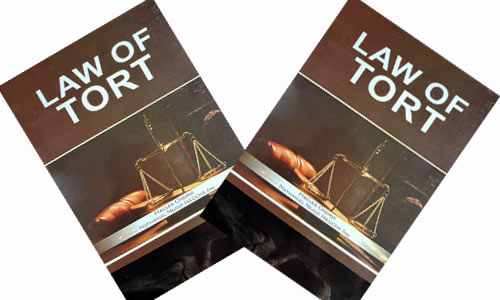 The book, titled The Law of Torts in Nigeria: A Functional Approach, authored by Professor Hagler Sunny Okorie Ph.D and Ikeocha, Nathaniel Ngozi Esq, offers law students, practitioners, and academics a comprehensive guide to understanding and applying tort law in Nigerian courts. Interested buyers can place orders via the following contact numbers: 08028636615, 08037667945, 08032253813, or +234 902 196 2209.