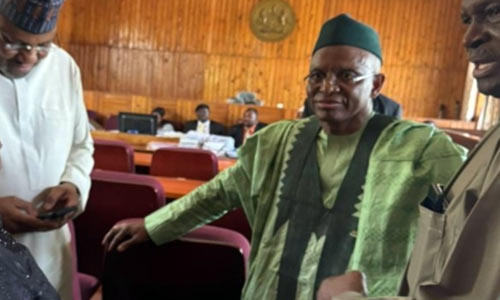
Former Governor of Kaduna State, Malam Nasir El-Rufai, arrived at the Federal High Court in Kaduna on Tuesday morning under tight security for his arraignment by the Independent Corrupt Practices and Other Related Offences Commission on charges of conversion and possession of public property and money laundering — bringing to an end weeks of controversy over his prolonged detention without formal charges.

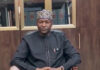
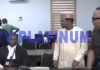
El-Rufai, dressed in a light green babanriga with a matching cap, was brought to the court premises at approximately 9:00 a.m. in a Hilux vehicle. He remained inside the vehicle for over 30 minutes before being escorted into the courtroom at about 9:34 a.m., flanked by a heavy security cordon comprising operatives of the ICPC and the Department of State Services.
However, in a development that drew immediate criticism, journalists who had arrived at the venue as early as 7:00 a.m. to cover the proceedings were barred from gaining access to the courtroom by DSS operatives, raising concerns about transparency in a case that has attracted enormous public interest.
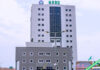
Security was significantly intensified around the court premises, located at the old Nigerian Defence Academy site, from the early hours of Tuesday. The security deployment comprised operatives of the DSS, the Nigeria Police Force, the Mobile Police Force, and the Nigeria Security and Civil Defence Corps.
Vehicular movement in the area was restricted, with motorists forced into a single lane from the Ungwan Sarki axis through Kawo, causing significant traffic disruptions across that section of Kaduna city.
The scale of the security operation reflected the political significance of the case and the stature of the defendant — a two-term governor who was one of the most prominent members of the APC before his falling out with the party leadership.
El-Rufai was arraigned alongside one Joel Adoga in Suit No. FHC/KD/73/2026. The charges include conversion and possession of public property, as well as money laundering.
The ICPC also disclosed that a separate charge, marked KDH/KAD/ICPC/01/26, has been filed against El-Rufai and one Amadu Sule before a Kaduna State High Court. The charges in the state court case include abuse of office, fraud, intent to commit fraud, and conferring undue advantage. The date for arraignment in the state court will be communicated at the appropriate time.
Both sets of charges were filed on March 18, 2026. The ICPC confirmed that El-Rufai was duly served with the charges.
The decision to bar journalists from the courtroom was notable given the enormous public interest in the case and the repeated calls from civil society organisations, the opposition, and legal practitioners for transparency in El-Rufai’s prosecution.
No official explanation was provided for the media exclusion. The restriction meant that details of what transpired inside the courtroom — including El-Rufai’s plea, bail arguments, and the court’s response — were not immediately available to the public through media coverage.
The barring of the press is likely to attract criticism from media organisations and press freedom advocates, who may argue that open justice requires public access to court proceedings, particularly in cases involving public officials and allegations of corruption.
El-Rufai’s path to the courtroom on Tuesday was marked by a tortuous process that raised fundamental questions about his right to liberty and the presumption of innocence.
The former governor was initially detained by the Economic and Financial Crimes Commission on February 16, 2026. He spent 48 hours in EFCC custody before being granted bail on February 18.
However, immediately upon his expected release from EFCC custody, he was re-arrested by the ICPC and had remained in the commission’s custody since then — a period exceeding 30 days without formal charges until the ICPC announced the arraignment on Monday, March 23.
The prolonged detention without arraignment had drawn mounting criticism from multiple quarters.
The African Democratic Congress had demanded either El-Rufai’s release or arraignment, describing his continued detention without formal charges as unconstitutional. The Muslim Rights Concern had criticised the prolonged detention as a violation of his fundamental rights. Members of El-Rufai’s family also raised concerns over alleged rights violations during his time in custody.
Legal practitioners had pointed out that the Administration of Criminal Justice Act requires that suspects be arraigned within a reasonable time of arrest, and that prolonged detention without charges violates the constitutional right to personal liberty.
The ICPC had previously responded to the criticism by stating that El-Rufai’s own multiple lawsuits were responsible for delaying his arraignment — a position that was challenged by lawyers who argued that pending civil suits by a defendant cannot justify indefinite detention without charges.
El-Rufai has several other legal proceedings pending across multiple courts.
The Court of Appeal sitting in Kaduna had earlier nullified a Kaduna State High Court judgment on the Kaduna State House of Assembly’s indictment of El-Rufai, holding that fair hearing was not accorded to the former governor.
A fundamental rights suit filed by El-Rufai at the Federal High Court, Abuja, claiming N1 billion in damages for his prolonged detention, was fixed for hearing on March 25 — one day after Tuesday’s arraignment. A bail application was fixed for April 23, and a challenge to his remand order was scheduled for March 31.
El-Rufai served as Governor of Kaduna State from 2015 to 2023 under the APC. His administration was known for aggressive reform policies, significant infrastructure projects, and considerable political controversy.
His prosecution by the ICPC represents one of the most high-profile corruption cases currently before Nigerian courts and has been viewed through both legal and political lenses, with some alleging political motivation behind the prosecution and others arguing that accountability for public officials must be pursued regardless of political considerations.
Tuesday’s arraignment, while ending the controversy over detention without charges, marks the beginning of what is expected to be a lengthy and complex trial process across two courts — the Federal High Court for money laundering and public property conversion charges, and the Kaduna State High Court for abuse of office and fraud charges.
Further details on the proceedings, including El-Rufai’s plea and bail status, are expected once the media restriction is addressed or official court records become available.
 _______________________________________________________________________
[A MUST HAVE] Evidence Act Demystified With Recent And Contemporary Cases And Materials

Available now for NGN 40,000 at ASC Publications, 10, Boyle Street, Onikan, Lagos. Beside High Court, TBS. Email publications@ayindesanni.com or WhatsApp +2347056667384. Purchase Link: https://paystack.com/buy/evidence-act-complete-annotation
______________________________________________________________________ ARTIFICIAL INTELLIGENCE FOR LAWYERS: A COMPREHENSIVE GUIDE
Reimagine your practice with the power of AI “...this is the only Nigerian book I know of on the topic.” — Ohio Books Ltd
Authored by Ben Ijeoma Adigwe, Esq., ACIArb (UK), LL.M, Dip. in Artificial Intelligence, Director, Delta State Ministry of Justice, Asaba, Nigeria.
Bonus:
Get a FREE eBook titled “How to Use the AI in Legalpedia and Law Pavilion” with every purchase.
ARTIFICIAL INTELLIGENCE FOR LAWYERS: A COMPREHENSIVE GUIDE
Reimagine your practice with the power of AI “...this is the only Nigerian book I know of on the topic.” — Ohio Books Ltd
Authored by Ben Ijeoma Adigwe, Esq., ACIArb (UK), LL.M, Dip. in Artificial Intelligence, Director, Delta State Ministry of Justice, Asaba, Nigeria.
Bonus:
Get a FREE eBook titled “How to Use the AI in Legalpedia and Law Pavilion” with every purchase.
How to Order: 📞 Call, Text, or WhatsApp: 08034917063 | 07055285878 📧 Email: benadigwe1@gmail.com 🌐 Website: www.benadigwe.com
Ebook Version: Access directly online at: https://selar.com/prv626