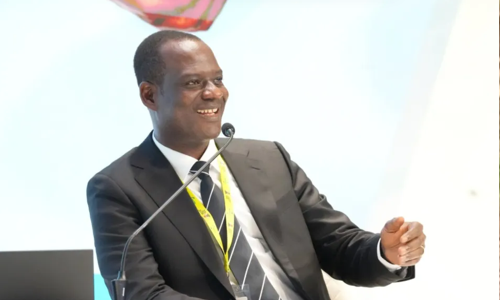
Minister of State for Finance Taiwo Oyedele has denied acknowledging errors in Nigeria’s new tax laws despite the existence of video evidence from a public event showing him describing in detail how the legislative process led to “problems we identified,” multiple versions requiring review, discrepancies including a reduction in the small business threshold, and a process he described as “a nightmare” that “cannot guarantee quality assurance.”

The contradiction between what Oyedele said on camera at the NBA Section on Legal Practice conference in Lagos and what his office subsequently posted on his official X account has deepened public confusion about the integrity of the tax reform laws and whether the versions available to Nigerians are the same as those passed by the National Assembly.
At a fireside chat during the NBA-SLP conference in Lagos, Oyedele made detailed and candid remarks about the problems he encountered during the law-making process for the new tax legislation.
“This process cannot guarantee quality assurance. There are just too many stages of manual editing, updating,” Oyedele stated on camera.
He described a chaotic legislative process involving multiple stages of manual drafts, committee meetings, harmonisation between the House and Senate, transmission to the Ministry of Justice, presidential signing, and gazetting with each stage introducing the possibility of errors, lobbying, and inconsistencies.
“You have a meeting, right? It might be a house committee, it might be a senate committee. You make your contributions, and somebody is making the notes, and those people will go and update. You don’t know how many people are lobbying them. When they finish updating, they bring it back,” Oyedele explained.
@thenigerialawyer "It Was A Nightmare" — Oyedele Caught On Video Describing Errors In Tax Laws And "Problems We Identified," Then Issues Statement Denying He Ever Admitted Errors
“You harmonise between house and senate. When you finish harmonising, you send it. When you send it, usually, it will go to the ministry of justice, it goes to the president. The president will sign. You send the information to the gazette. In each of those stages, if you know how many versions I reviewed, it was a nightmare,” the minister stated.
Oyedele specifically acknowledged finding discrepancies in the gazetted version of the legislation, including a reduction in the small business threshold from N100 million to N50 million that differed from what was agreed during the legislative process.
“When this allegation of alteration was made, it didn’t come to me as a surprise because my surprise happened before then. My surprise is, being very much involved with the lawmaking process, I wasn’t impressed,” Oyedele stated in the video.
He disclosed that his team pushed back on several inconsistencies, leading to a revised version — but acknowledged that not all problems were corrected.
“At that point, about 90 percent of the problems we identified had been corrected but not all of it, and that was already three months. So I said, if you want to wait to have this thing to be perfected, we will not have the transition period,” Oyedele stated.
In perhaps his most revealing comment, the minister admitted hoping that the public controversy over alleged alterations to the tax laws would force a systemic fix to the legislative process — but said that never happened.
“When they raised the issue of alteration, I said to myself, maybe someone will pay attention that this is a process problem, and let’s use the opportunity and the national embarrassment to fix this problem once and for all. That never happened,” Oyedele stated.
On April 10, 2026, a statement from the fiscal reforms committee confirmed that Oyedele acknowledged errors in the tax laws.
The statement said Oyedele acknowledged that errors occurred due to manual processes and multiple stages of review during the law-making process, adding that steps were underway to correct the issues through a proposed finance bill.
This statement was consistent with the video evidence and appeared to represent the minister taking a transparent position on the imperfections in the legislation.
However, just three days later on Sunday, April 13, a different statement posted on the minister’s official X account reversed course entirely.
The fiscal committee said reports suggesting Oyedele “finally admitted errors” in the new tax laws were “misleading and misrepresented his comments.”
“These publications misrepresent the Minister’s statements, falsely alleging that he urged Nigerians to await the outcome of a ‘legislative probe,’ a process that has long been concluded and the gazetted copies certified by the National Assembly published since early January 2026,” the statement read.
“This twisted narrative is unhelpful as it risks distorting public understanding and misleading the very people the reforms were designed to benefit,” the committee added.
The statement reframed Oyedele’s remarks as simply noting that “no law is perfect” and that “ongoing stakeholder engagement is essential to identify and address any errors or gaps for appropriate legislative updates through Finance Bills as part of a continuous improvement process.”
The two statements issued within 72 hours of each other are difficult to reconcile.
In the first statement, the committee acknowledged that Oyedele identified errors caused by manual processes and multiple stages of review. In the second statement, the committee denied that Oyedele admitted errors and accused media reports of misrepresentation.
The video evidence, however, speaks for itself. On camera, Oyedele described “problems we identified,” a process that was “a nightmare,” quality assurance failures, discrepancies between versions, and corrections that addressed only “90 percent” of the issues found language that clearly constitutes an acknowledgment of errors in the legislation, regardless of how his office subsequently characterises his remarks.
The controversy traces back to December 17, 2025, when Abdussamad Dasuki, a member of the House of Representatives from Sokoto State, claimed that the gazetted tax laws available to Nigerians are different from the ones passed by the National Assembly.
The allegation of alteration that the published versions of the tax laws contain provisions that were not approved by lawmakers struck at the fundamental integrity of the legislative process and raised questions about whether the laws being implemented are the same laws that the people’s representatives voted on.
Oyedele’s video comments, in which he described reviewing multiple versions, encountering discrepancies, and identifying “problems” that were only partially corrected, appeared to lend credibility to concerns about the integrity of the final gazetted versions even though the minister stopped short of directly confirming that the gazetted laws were altered.
In the midst of the controversy, Oyedele highlighted what he described as early positive impacts from the tax reforms. He stated that the number of individuals registered for tax purposes has increased from fewer than 10 million before the reforms to over 100 million, while more informal businesses are now seeking registration with the Corporate Affairs Commission.
These figures, if accurate, would represent a significant expansion of Nigeria’s tax base though critics have questioned whether the increase in registrations has translated into actual revenue collection and whether the reforms have benefited ordinary Nigerians or primarily served to increase the tax burden on those already in the formal sector.
The Oyedele contradiction raises fundamental questions about transparency and accountability in Nigeria’s tax reform process.
If the minister identified errors in the tax laws as his video remarks clearly indicate the public has a right to know what those errors are, which provisions are affected, and what steps are being taken to correct them through the proposed finance bill.
The attempt to deny what was said on camera, in a video that remains publicly available, risks further eroding public trust in the reform process at a time when the government is asking Nigerians to accept significant changes to the country’s tax framework.
For a government that has staked much of its economic reform agenda on tax restructuring, the credibility of the laws underpinning that agenda is not a minor matter — it is foundational.
 Interested buyers are encouraged to place their orders and enquiries via:
0704 444 4777, 0704 444 4999, 0818 199 9888
Website: www.alexandernigeria.com
Interested buyers are encouraged to place their orders and enquiries via:
0704 444 4777, 0704 444 4999, 0818 199 9888
Website: www.alexandernigeria.com
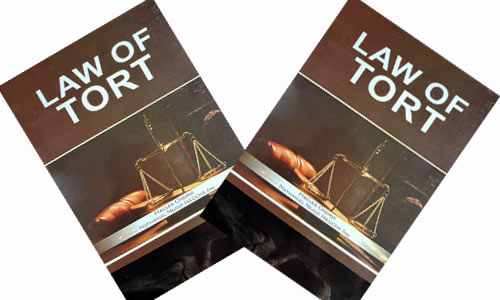 The book, titled The Law of Torts in Nigeria: A Functional Approach, authored by Professor Hagler Sunny Okorie Ph.D and Ikeocha, Nathaniel Ngozi Esq, offers law students, practitioners, and academics a comprehensive guide to understanding and applying tort law in Nigerian courts. Interested buyers can place orders via the following contact numbers: 08028636615, 08037667945, 08032253813, or +234 902 196 2209.
_______________________________________________________________________
The book, titled The Law of Torts in Nigeria: A Functional Approach, authored by Professor Hagler Sunny Okorie Ph.D and Ikeocha, Nathaniel Ngozi Esq, offers law students, practitioners, and academics a comprehensive guide to understanding and applying tort law in Nigerian courts. Interested buyers can place orders via the following contact numbers: 08028636615, 08037667945, 08032253813, or +234 902 196 2209.
_______________________________________________________________________
 ARTIFICIAL INTELLIGENCE FOR LAWYERS: A COMPREHENSIVE GUIDE
Reimagine your practice with the power of AI “...this is the only Nigerian book I know of on the topic.” — Ohio Books Ltd
Authored by Ben Ijeoma Adigwe, Esq., ACIArb (UK), LL.M, Dip. in Artificial Intelligence, Director, Delta State Ministry of Justice, Asaba, Nigeria.
Bonus:
Get a FREE eBook titled “How to Use the AI in Legalpedia and Law Pavilion” with every purchase.
ARTIFICIAL INTELLIGENCE FOR LAWYERS: A COMPREHENSIVE GUIDE
Reimagine your practice with the power of AI “...this is the only Nigerian book I know of on the topic.” — Ohio Books Ltd
Authored by Ben Ijeoma Adigwe, Esq., ACIArb (UK), LL.M, Dip. in Artificial Intelligence, Director, Delta State Ministry of Justice, Asaba, Nigeria.
Bonus:
Get a FREE eBook titled “How to Use the AI in Legalpedia and Law Pavilion” with every purchase.
How to Order: 📞 Call, Text, or WhatsApp: 08034917063 | 07055285878 📧 Email: benadigwe1@gmail.com 🌐 Website: www.benadigwe.com
Ebook Version: Access directly online at: https://selar.com/prv626
________________________________________________________________________ [A MUST HAVE] Evidence Act Demystified With Recent And Contemporary Cases And Materials