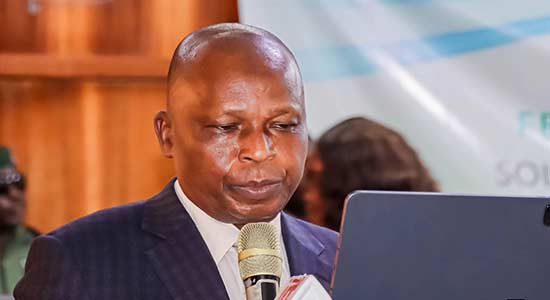
Nigeria’s Attorney General and Minister of Justice, Mr. Lateef Fagbemi (SAN), has called for urgent structural reforms in the country’s correctional system to address the growing public health challenges among inmates, especially the spread of HIV, tuberculosis, hepatitis, and mental health conditions.

Speaking at the UNDP Justice Sector High-Level Observatory Meeting on Public Health in Custodial Services in Abuja, the Minister, represented by the Director of Public Prosecution, Mr. B.O. Babandoko, emphasized that addressing health issues in prisons goes beyond medical interventions.
He stressed the need to confront underlying issues such as overcrowding, under-resourcing, and broader social determinants that contribute to both offending behaviour and poor health outcomes.
“Custodial environments worldwide house millions of individuals, many of whom enter facilities with untreated mental health conditions, substance use disorders, infectious diseases, and chronic illnesses,” he said.
“The prevalence of HIV, tuberculosis, hepatitis, and mental health conditions in correctional settings often exceeds that of the general population by significant margins. This reality demands immediate and sustained attention.”
Fagbemi outlined five critical areas for reform: early intervention and prevention, continuity of care between custodial and community health services, comprehensive mental health integration, infectious disease control using evidence-based strategies, and capacity-building for correctional healthcare staff.
“The health of those in custody is integral to public health. Every individual in custody eventually returns to society. Their health outcomes affect us all,” he said.
He challenged stakeholders to reimagine custodial healthcare from the ground up, guided by principles of equity, innovation, and human dignity.
Also speaking at the event, Mr. Ibrahim Tajudeen, Executive Secretary of the Country Coordinating Mechanism Nigeria (CCMN), which oversees grants on HIV/AIDS, TB, malaria, and health systems strengthening, disclosed that over $4.8 billion had been mobilized since 2002, with more than $3.9 billion disbursed to relevant stakeholders across Nigeria.
Tajudeen acknowledged past assessments (2008–2015) that rated Nigeria’s handling of human rights and public health in correctional centers as poor but noted significant improvements in recent years.
“From 2015 to date, three separate assessments have shown measurable progress. Arrests and denial of care have reduced significantly. Nigeria is now on the right path,” he noted.
Representing UNAIDS, Human Rights and Law Adviser Oluwafisayo Fakayode emphasized that custodial settings must not become zones where rights are suspended. She reminded stakeholders that international human rights instruments, such as the International Covenant on Civil and Political Rights (ICCPR) and the Nelson Mandela Rules, mandate the humane treatment of prisoners.
“Custodial facilities must reflect the highest standards of humanity, human rights, and justice,” Fakayode said.
“People in detention are among the most vulnerable to HIV and other diseases but often the least served. This is not just a public health issue—it’s a human rights crisis.”
She urged Nigeria to continue reviewing arrest and detention protocols, eliminate stigma against persons living with HIV, and foster multi-sectoral collaboration to ensure detention facilities are health-enabling, secure, and just.
UNAIDS commended the Nigerian government, civil society, UN agencies, and affected communities for their ongoing efforts and pledged continued support for inclusive, evidence-based, and rights-respecting reforms in the justice and health sectors.

 ARTIFICIAL INTELLIGENCE FOR LAWYERS: A COMPREHENSIVE GUIDE
Reimagine your practice with the power of AI “...this is the only Nigerian book I know of on the topic.” — Ohio Books Ltd
Authored by Ben Ijeoma Adigwe, Esq., ACIArb (UK), LL.M, Dip. in Artificial Intelligence, Director, Delta State Ministry of Justice, Asaba, Nigeria.
Bonus:
Get a FREE eBook titled “How to Use the AI in Legalpedia and Law Pavilion” with every purchase.
ARTIFICIAL INTELLIGENCE FOR LAWYERS: A COMPREHENSIVE GUIDE
Reimagine your practice with the power of AI “...this is the only Nigerian book I know of on the topic.” — Ohio Books Ltd
Authored by Ben Ijeoma Adigwe, Esq., ACIArb (UK), LL.M, Dip. in Artificial Intelligence, Director, Delta State Ministry of Justice, Asaba, Nigeria.
Bonus:
Get a FREE eBook titled “How to Use the AI in Legalpedia and Law Pavilion” with every purchase.
How to Order: 📞 Call, Text, or WhatsApp: 08034917063 | 07055285878 📧 Email: benadigwe1@gmail.com 🌐 Website: www.benadigwe.com
Ebook Version: Access directly online at: https://selar.com/prv626
________________________________________________________________________ The Law And Practice Of Redundancy In Nigeria: A Practitioner’s Guide, Authored By A Labour & Employment Law Expert Bimbo Atilola _______________________________________________________________________
"You Don't Need To Be Rich, You Just Need To Start" — Victoria Ezeigwe, Esq Launches Investment Handbook For Nigerians Starting With ₦5,000
_______________________________________________________________________
"You Don't Need To Be Rich, You Just Need To Start" — Victoria Ezeigwe, Esq Launches Investment Handbook For Nigerians Starting With ₦5,000

Get your copy today and take the first step toward financial growth:👉 https://selar.co/4f16676016
_______________________________________________________________________