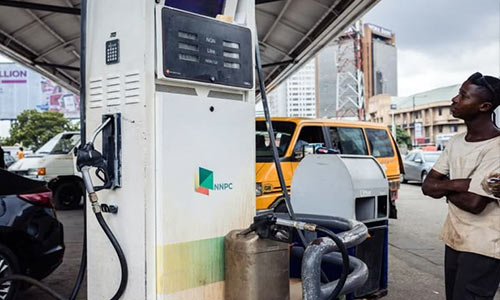
The World Bank has disclosed that imported Premium Motor Spirit (PMS), otherwise called petrol, is currently cheaper than the one supplied by the Dangote Petroleum Refinery, a development the Bank says could deepen inflationary pressures in Nigeria’s economy.

In its latest Nigeria Development Update, the World Bank revealed that imported petrol costs about 12 per cent less than locally refined fuel from Dangote, exposing distortions in the country’s downstream pricing framework amid elevated global crude oil prices.
This comes as the refinery vehemently denied a petrol price hike, saying the commodity remains N1,200/litre across its outlets.
A statement from Dangote Refinery, which quoted a source within the company, disclosed that its current pricing structure is still in place, with the gantry price fixed at N1,200 per litre, while the coastal price stands at N1,153 per litre.
According to the source, no adjustments have been made to pricing. “We are maintaining our existing price and have not introduced any new pricing for our customers,” the source stated.
The refinery further emphasised its commitment to ensuring consistent supply of refined petroleum products across Nigeria and other African markets, highlighting its role in promoting stability in the sector.
As of March 23, 2026, Dangote refinery’s ex-depot price stood at approximately N1,275 per litre, compared to an estimated import parity price of around N1,122 per litre, creating a significant price advantage for imported fuel.
The report noted that the disparity comes despite Dangote refinery emerging as the dominant supplier of petrol in Nigeria following the halt in issuance of import licences earlier in 2026. It said the pricing gap underscores broader inefficiencies in the domestic fuel market at a time of heightened global oil volatility.
According to the bank, rising crude oil prices, driven largely by geopolitical tensions in the Middle East, are compounding pressures within Nigeria’s energy market and could further widen inflationary risks if sustained.
It warned that an increase in global oil prices to about $80 per barrel could directly add roughly 3.1 percentage points to Nigeria’s headline inflation, assuming full pass-through to domestic fuel prices.
The World Bank explained that energy-related components, particularly transport, which accounts for about 10.1 per cent of Nigeria’s Consumer Price Index (CPI), serve as a key transmission channel for fuel price shocks across the broader economy.
Beyond fuel, the report highlighted the risk of rising food prices, linked to higher global costs of food and fertilisers stemming from the same geopolitical disruptions affecting oil markets.
Speaking during the report presentation in Abuja, World Bank Country Director for Nigeria, Mathew Verghis, acknowledged improvements in Nigeria’s macroeconomic outlook through 2025 and early 2026, driven by ongoing reforms. However, he cautioned that external shocks continue to pose serious risks to price stability.
He noted that higher global energy and shipping costs are already feeding into domestic prices, particularly within the fuel and transport sectors.
Verghis added that while rising oil prices may boost government revenues due to Nigeria’s status as a net oil exporter, the overall fiscal gains remain limited, stressing that curbing inflation is critical to protecting household incomes and purchasing power.
Also speaking, World Bank Lead Economist for Nigeria, Fiseha Haile, said petrol price increases have already transmitted across transport and logistics chains, amplifying cost pressures across sectors.
While acknowledging improvements in Nigeria’s external position, including stronger reserves and exchange rate unification, he warned that vulnerabilities persist due to volatile global financing conditions and weaker capital inflows.
Despite the easing in oil prices, the World Bank maintained that Nigeria’s economy remains vulnerable to external shocks, warning that persistent global uncertainties could sustain pressure on inflation and household welfare in the months ahead.
Meanwhile, global oil prices recorded a sharp decline following a ceasefire agreement between the United States and Iran, easing immediate supply concerns.
U.S. benchmark West Texas Intermediate crude for May delivery dropped over 17.3 per cent to $93.69 per barrel, while Brent crude for June fell 15.3 per cent to $93.03 per barrel, marking their steepest one-day declines since early 2020.
The price drop followed an announcement by Donald Trump that both countries had agreed to a temporary ceasefire, allowing the Strait of Hormuz to reopen for two weeks while hostilities are suspended.
[A MUST HAVE] Evidence Act Demystified With Recent And Contemporary Cases And Materials

Available now for NGN 40,000 at ASC Publications, 10, Boyle Street, Onikan, Lagos. Beside High Court, TBS. Email publications@ayindesanni.com or WhatsApp +2347056667384. Purchase Link: https://paystack.com/buy/evidence-act-complete-annotation
______________________________________________________________________ ARTIFICIAL INTELLIGENCE FOR LAWYERS: A COMPREHENSIVE GUIDE
Reimagine your practice with the power of AI “...this is the only Nigerian book I know of on the topic.” — Ohio Books Ltd
Authored by Ben Ijeoma Adigwe, Esq., ACIArb (UK), LL.M, Dip. in Artificial Intelligence, Director, Delta State Ministry of Justice, Asaba, Nigeria.
Bonus:
Get a FREE eBook titled “How to Use the AI in Legalpedia and Law Pavilion” with every purchase.
ARTIFICIAL INTELLIGENCE FOR LAWYERS: A COMPREHENSIVE GUIDE
Reimagine your practice with the power of AI “...this is the only Nigerian book I know of on the topic.” — Ohio Books Ltd
Authored by Ben Ijeoma Adigwe, Esq., ACIArb (UK), LL.M, Dip. in Artificial Intelligence, Director, Delta State Ministry of Justice, Asaba, Nigeria.
Bonus:
Get a FREE eBook titled “How to Use the AI in Legalpedia and Law Pavilion” with every purchase.
How to Order: 📞 Call, Text, or WhatsApp: 08034917063 | 07055285878 📧 Email: benadigwe1@gmail.com 🌐 Website: www.benadigwe.com
Ebook Version: Access directly online at: https://selar.com/prv626
______________________________________________________________________ “Bridging Theory And Courtroom Practice” — Hagler Sunny Okorie, Nathaniel Ngozi Ikeocha Unveil ‘Functional’ Tort Law Book For Nigerian Legal System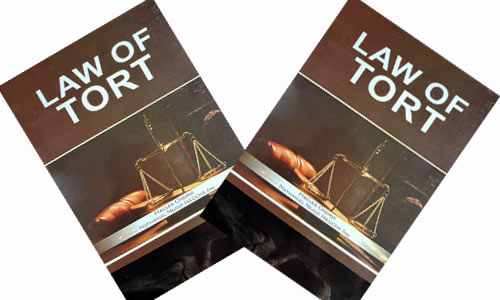 The book, titled The Law of Torts in Nigeria: A Functional Approach, authored by Professor Hagler Sunny Okorie Ph.D and Ikeocha, Nathaniel Ngozi Esq, offers law students, practitioners, and academics a comprehensive guide to understanding and applying tort law in Nigerian courts. Interested buyers can place orders via the following contact numbers: 08028636615, 08037667945, 08032253813, or +234 902 196 2209.
______________________________________________________________________
“Enhance Legal Practice With Authoritative Reports” — Alexander Payne Offers Comprehensive Law Reports, Spanning Over A Century Of Nigerian Jurisprudence
The book, titled The Law of Torts in Nigeria: A Functional Approach, authored by Professor Hagler Sunny Okorie Ph.D and Ikeocha, Nathaniel Ngozi Esq, offers law students, practitioners, and academics a comprehensive guide to understanding and applying tort law in Nigerian courts. Interested buyers can place orders via the following contact numbers: 08028636615, 08037667945, 08032253813, or +234 902 196 2209.
______________________________________________________________________
“Enhance Legal Practice With Authoritative Reports” — Alexander Payne Offers Comprehensive Law Reports, Spanning Over A Century Of Nigerian Jurisprudence
 Interested buyers are encouraged to place their orders and enquiries via:
0704 444 4777, 0704 444 4999, 0818 199 9888
Website: www.alexandernigeria.com
Interested buyers are encouraged to place their orders and enquiries via:
0704 444 4777, 0704 444 4999, 0818 199 9888
Website: www.alexandernigeria.com