*Says Tinubu Government Lacks Fidelity to the Budget Process and Is Hiding a Revenue Problem from Nigerians

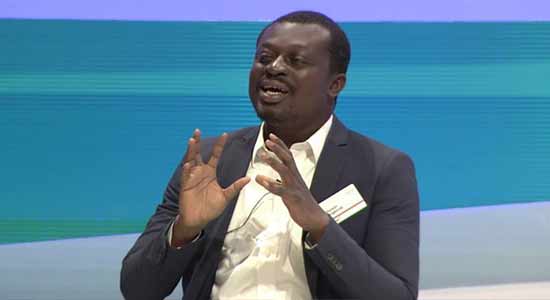
The co-founder of BudgIT, Seun Onigbinde, has delivered a comprehensive indictment of the Tinubu administration’s fiscal management, declaring that the government “does not have fidelity to the budget process,” that it is concealing a significant revenue problem from Nigerians, that it is simultaneously running four budget years with outstanding payments dating back to 2023, that it removed fuel subsidy and devalued the naira without properly understanding the implications for debt servicing, and that this represents “the worst management of the budget in the country” since BudgIT began monitoring national budgets in 2011.
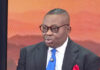
Onigbinde spoke during an interview on Channels Television’s Politics Today programme, addressing the paradox of a government reporting record revenues while ministries, contractors, and even the military complain of inadequate funding, and while capital releases remain minimal.
Asked to explain what has gone wrong with Nigeria’s budgeting since the Tinubu administration took office, Onigbinde was direct.
“I don’t think the current government has fidelity to the budget process. Or possibly the managers they put in place do not even properly understand how a budgeting process should be done,” Onigbinde stated.
“The budgeting process must be time-bound. It’s not an endless loop. If you say we budget, there’s a fiscal year. A fiscal year exists for a purpose. And averagely, that’s like 12 months. Maybe you stretch it 15 months. Now, when it becomes an endless loop where people keep going back into the budget and picking what they choose to implement, that’s a problem,” he stated.
Onigbinde described a situation in which the Federal Government is running multiple budget years at once, contrary to the President’s own commitment.
“When the President presented the 2026 budget at the National Assembly, he made a promise that the era of running multiple budgets was coming to an end. And that by April this year, we were going to have a budget, the 2026,” Onigbinde recalled.
He noted that the National Assembly had given the executive leeway to execute 30 per cent of the 2025 budget by March so that it could wrap up 2025 and move on to 2026.
“But even as at March 2026, they had not even done anything on the 2025 budget. So they have moved into 2026. And if you ask around, we still have outstanding payments for the 2023 budget. Then we have 2024, 2025, 2026,” Onigbinde stated.
He clarified what is actually being delayed: “Let’s not make any mistake. These funds are capital expenditure components of the budget. Most of the recurring side of the budget, which is salaries, overheads, debt servicing costs, statutory payments to government agencies like the National Assembly, the NJC and all of that, all of that is running unscheduled.”
“What is happening is that the money that is meant to build roads, to build schools, to build hospitals, those are the things getting delayed, because in the order of public expenditure, capital gets the least priority,” he stated.
Onigbinde criticised the inclusion of items in the federal budget that he said serve no developmental purpose.
“There are so many items you find in the budget that have no priority. They don’t make any developmental sense to the Nigerian people. For example, you are putting palaces in the budget. The Federal Government, as big as the Federal Government is, is trying to build palaces. Or the Federal Government is investing in churches and mosques. Or the Federal Government is buying musical instruments for a church. You are going to ask me, what developmental opportunity does that give?” Onigbinde asked.
He argued that where a project has genuinely not been executed, the government should make a decision rather than perpetually rolling it over: “If you had not executed a project in the budget, choose and decide, is this project a priority to the Federal Government? If it’s a priority, you can add it to the supplementary budget of the current budget. You don’t need to continue to roll the budget over and over.”
Onigbinde’s central economic argument was that the Federal Government has a revenue crisis it is not disclosing to Nigerians.
He laid out the arithmetic: “The debt servicing cost, because of the devaluation of the currency, has skyrocketed. It’s around 17 trillion naira as at last year. So if you only make 23 trillion naira, the Federal Government is not meeting its revenue goals.”
“If the Federal Government has 23 trillion and it pays 17 trillion on debt servicing cost, and it pays salaries for its workers which is around 7 trillion naira, what exactly is left to run capital projects?” Onigbinde asked.
“The Federal Government still has a significant revenue problem that it is refusing to tell the Nigerian people, because of the debt servicing component. And now we are issuing new debt. We are issuing new debt at 16 to 18 per cent. So the debt servicing cost is not slowing down anytime soon,” he stated.
Challenged on reports that revenue-generating agencies had exceeded their targets by mid-year, Onigbinde explained why aggregate figures tell a different story.
“The Federal Government set a target of revenue and I’m looking at the aggregate revenue here. If FIRS can meet its revenue, does NNPC meet its revenue? Can Customs meet its revenue? And the independent agencies, are they meeting their revenue? Because the same Federal Government that will say we have a target revenue of 38 trillion naira, and you can’t even bring 25 trillion naira to the table,” Onigbinde stated.
He also cautioned against taking FIRS figures at face value: “Let’s not forget FIRS collections sometimes include customs collections in terms of the VAT they collect on behalf of Customs. Also, sometimes it includes payment for the Federation.”
“So if you say you have revenue, okay, show us the revenue,” he challenged.
Onigbinde identified a transparency deficit that makes it impossible to verify the government’s revenue claims.
“As of now, we do not have the budget implementation report for 2025, the full year. So you can’t even see the total. If you say you have met the revenue, show it to us openly. You don’t have Q1 2026. We just finished Q2 2026. So you can’t even properly analyse,” Onigbinde stated.
“So when people say it on TV, on radio, and say, ‘Oh, we have met our revenues,’ we do not even have a factual document,” he stated.
He offered his own assessment of the minimum revenue the Federal Government requires: “The Federal Government has to spend on debt servicing. It has another 7 trillion to spend on salaries. Then it’s still going to run what you call consolidated expenses. It’s going to service what it must service. It’s going to pay pensions. It’s going to run statutory transfers. Minimum revenue for the Federal Government to even run its overhead and recurring side of things is around 30 trillion. The Federal Government does not have 30 trillion in revenue.”
He added a note about the sub-national level: “I’m not talking about the states. The states are worse with cash.”
Asked to characterise the Tinubu administration’s economic management, whether they are bad managers, victims of an inherited disaster, or simply lacking the ability to control what they met on ground, Onigbinde chose the first.
“You start with the fact that on the fiscal side of things, they have been bad managers of the fiscal policies of this country,” Onigbinde stated.
“The second thing you also see is that they removed subsidy and devalued the currency and they did not properly understand the wider implication of that on debt service,” he stated.
He illustrated the point: “If I borrow money from foreign sources at 400 naira to a dollar, when I’m about to pay back, I’m paying back at 1,400 naira to a dollar. So you ought to understand that your debt servicing cost is going to rise.”
Onigbinde raised a further concern about capital projects being executed outside the budget framework.
“They have also not sat down and prioritised capital projects. You cannot do everything, but if you continue to do things outside the budget, for example, we have a lot of projects that this administration is doing under its Renewed Hope agenda that we do not see in the budget,” Onigbinde stated.
“That’s why I say there’s no proper fidelity to the budget. You put a budget there. The projects that you want to do, you take them and say, okay, these are the projects I want to prioritise, and it seems that those projects don’t sit in the budget. So you’re executing capital projects, you’re building some roads, you’re doing a few things, but it’s not properly situated in the budget,” he stated.
Asked whether this is the most disastrous budget management he has seen in his years of monitoring national budgets, Onigbinde answered without hesitation.
“Yeah, it’s a fair point to make that this is the most disastrous. We have run the budget since the Jonathan period, that was the founding in 2011. And you have to credit that administration. Their budget might not be big on numbers. Let’s not forget that we also had a stronger currency then. But they understood that there was fiscal discipline,” Onigbinde stated.
“Nowadays, if I’m a member of an MDA, I just put whatever I like in the budget. If the budget has a Renewed Hope agenda, let us see it in the budget,” he stated.
“For me, this is the worst management of the budget in the country,” Onigbinde concluded.
Onigbinde connected the breakdown in budget scrutiny to the PFIPC scandal, in which a purported presidential agency that the government has disowned secured a N1.303 billion appropriation in the 2026 budget.
“Let’s not forget, in previous times the executive and the legislature used to go back and forth on the budget, and all of these arguments about how do I ensure that what exactly makes it into the budget is in the interest of the Nigerian people,” Onigbinde recalled.
“The executive do not have control over the budget in any way. They do not analyse it, they do not ask, is this programme a priority? And that’s how we ended up with that fake agency issue where that also got into the budget as well,” he stated.
Onigbinde was asked to respond to Senator Tahir Monguno’s description of the failure to implement the Appropriation Act as a breach of the law and an “impeachable offence,” and to Finance Minister Wale Edun’s defence on debt and debt servicing.
“If you do not implement the budget, and you willfully do not implement the budget, it’s an impeachable offence. It’s an offence. Because it means that what you swore to, in terms of your covenant with Nigerians on development, you veer off it and you choose to do whatever you like,” Onigbinde stated.
“For me, I feel that the lawmakers are doing their job. They are holding the government and the executive accountable. And they should continue to do that,” he added.
He noted that his organisation had recently engaged the Finance Minister directly: “Mr Edun is new on this job. My organisation visited him last week, where we shared our thoughts with him around what we think he can do differently on the budgeting side of things and also on the finance side of things. The issues that his administration faces are not new. We already have an understanding of that.”
Onigbinde set out what the executive must do.
“What the executive needs to do is let them have budget credibility. Let them focus on what matters. Let them have capital budget prioritisation. And let them also figure out a way to raise revenues and improve the revenue standard,” he stated.
“And not just this talk on radio, ‘I’ve met my revenue.’ Show us the evidence. Publish the budget implementation report so that we know if you have actually met your revenue or not. And then we can understand the prescription to give to you,” Onigbinde concluded.
[A MUST HAVE] Evidence Act Demystified With Recent And Contemporary Cases And Materials

Available now for NGN 40,000 at ASC Publications, 10, Boyle Street, Onikan, Lagos. Beside High Court, TBS. Email publications@ayindesanni.com or WhatsApp +2347056667384. Purchase Link: https://paystack.com/buy/evidence-act-complete-annotation
______________________________________________________________________ “Enhance Legal Practice With Authoritative Reports” — Alexander Payne Offers Comprehensive Law Reports, Spanning Over A Century Of Nigerian Jurisprudence Interested buyers are encouraged to place their orders and enquiries via:
0704 444 4777, 0704 444 4999, 0818 199 9888
Website: www.alexandernigeria.com
Interested buyers are encouraged to place their orders and enquiries via:
0704 444 4777, 0704 444 4999, 0818 199 9888
Website: www.alexandernigeria.com