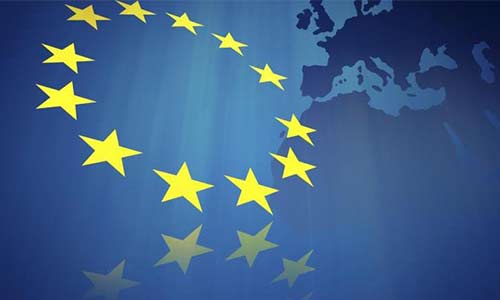
The European Commission has removed Nigeria from its list of high-risk jurisdictions on Anti-Money Laundering and Countering the Financing of Terrorism (AML/CFT).

The delisting, contained in an updated list of high-risk jurisdictions, follows decisions taken at the Financial Action Task Force (FATF) plenaries of June and October 2025.
The EU regulation takes effect from January 29, 2026.
The European Commission also confirmed the removal of Burkina Faso, Mali, Mozambique, South Africa and Tanzania from the EU high-risk list after their successful exit from the FATF list of Jurisdictions under Increased Monitoring.
It acknowledged that Nigeria and the other delisted countries have strengthened the effectiveness of their AML/CFT regimes, closed key technical and operational gaps, and fulfilled the commitments set out in their FATF action plans.
The Commission is mandated to identify high-risk third countries with strategic deficiencies in their regimes on anti-money laundering and countering the financing of terrorism. Entities covered by the AML framework are required to apply enhanced vigilance in transactions involving listed countries to protect the integrity of the EU financial system.
The delisted countries demonstrated sufficient progress in addressing AML/CFT deficiencies and implementing agreed action plans. Their removal means that automatic country-based enhanced due diligence under Article 9 of AMLD IV no longer applies.
However, institutions must continue to apply risk-based measures where justified by customer, product or transaction risk, the Commission said.
Nigeria’s Minister of State for Finance, Doris Uzoka-Anite, described the development as a big win for the country.
“Removed from the EU’s financial ‘high-risk’ list. Congratulations to President @officialABAT on this achievement. As Minister of State for Finance, I’m proud of this boost to trade and investor confidence,” she wrote on X.
In a statement on Friday, the Chief Executive Officer of the Nigerian Financial Intelligence Unit (NFIU), Hafsat Bakari, described the decision as a significant affirmation of Nigeria’s collective reform efforts.
“This decision represents an important external validation of Nigeria’s steady progress in strengthening its AML/CFT/CPF framework. It demonstrates that consistent reforms, effective coordination and strong national ownership can translate into tangible international outcomes,” Bakari said.
Nigeria’s removal from the EU high-risk list means financial transactions between Nigeria and the European Union will no longer be subject to enhanced due diligence requirements associated with high-risk jurisdictions.
This is expected to ease compliance burdens, support smoother cross-border financial flows and enhance Nigeria’s attractiveness for trade, investment and financial partnerships with EU member states.
In an increasingly competitive global trade environment, the delisting will strengthen Nigeria’s positioning as a reliable economic partner, reinforcing Europe’s role as a key destination for Nigerian exports and a source of investment and financial services.
“Beyond the immediate economic benefits, this outcome strengthens international confidence in Nigeria’s financial system and underscores our standing as a cooperative and responsible participant in the global financial architecture,” Bakari said.
She highlighted the role of the NFIU in coordinating national AML/CFT/CPF efforts, enhancing the quality and use of financial intelligence, and supporting supervisory, investigative and prosecutorial authorities across the country.
“This achievement is the product of collective national effort. While we welcome this progress, it also places a clear responsibility on all stakeholders to sustain momentum, guard against complacency and continue strengthening our systems in response to evolving financial crime risks,” she added.
“The achievement is also the result of sustained collaboration among key stakeholders, including the National Assembly, law enforcement agencies, regulators, supervisors, the judiciary, the private sector and development partners.”
The NFIU reaffirmed its commitment to continuous engagement with the FATF, GIABA, the European Union and other international partners, and to working closely with domestic stakeholders to ensure that Nigeria not only maintains compliance but continues to deepen the effectiveness and resilience of its AML/CFT/CPF framework.
If a country appears on the EU list, obliged entities including banks, payment institutions, crypto-asset service providers, auditors and legal professionals must apply enhanced customer due diligence in accordance with Articles 18 and 18a of Directive (EU) 2015/849, perform enhanced transaction monitoring, obtain and assess source of funds and source of wealth, conduct deeper analysis of beneficial ownership and control structures, apply senior management approval and consider risk-based restrictions or termination of business relationships.
In October 2025, Nigeria was removed from the FATF grey list. The global body had placed Nigeria on the list in February 2023, a move authorities described as unfair.
The FATF, an intergovernmental organisation that sets global standards to protect the financial system, assesses countries’ compliance with Anti-Money Laundering, Countering the Financing of Terrorism and Proliferation (AML/CFT/P) standards.
Grey-listing carries significant implications. It discourages foreign investment, damages reputation and increases borrowing costs. It can also lead to the loss of correspondent banking services and, if unaddressed, escalation to the FATF blacklist of high-risk jurisdictions.
A 2021 report by the International Monetary Fund found that grey-listed countries experienced “a large and statistically significant reduction in capital inflows.”
Nigeria was first listed among FATF’s Non-Cooperative Countries and Territories in 2001. The country responded by repealing the Money Laundering Decree of 1995, enacting the Money Laundering (Prohibition) Act 2003, and later establishing the Economic and Financial Crimes Commission (EFCC). FATF delisted Nigeria in 2006.
Since then, Nigeria has continued to strengthen its legal framework, culminating in the enactment of the 2022 laws. The country is scheduled for its third mutual evaluation exercise in 2027, marking the next major test of its commitment to financial transparency.
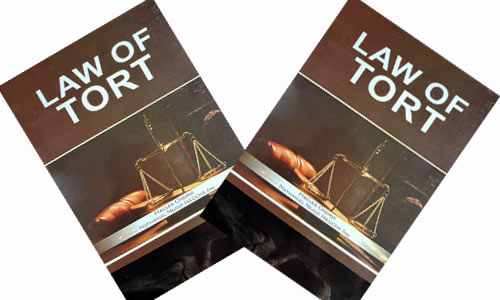 The book, titled The Law of Torts in Nigeria: A Functional Approach, authored by Professor Hagler Sunny Okorie Ph.D and Ikeocha, Nathaniel Ngozi Esq, offers law students, practitioners, and academics a comprehensive guide to understanding and applying tort law in Nigerian courts. Interested buyers can place orders via the following contact numbers: 08028636615, 08037667945, 08032253813, or +234 902 196 2209.
______________________________________________________________________
[A MUST HAVE] Evidence Act Demystified With Recent And Contemporary Cases And Materials
The book, titled The Law of Torts in Nigeria: A Functional Approach, authored by Professor Hagler Sunny Okorie Ph.D and Ikeocha, Nathaniel Ngozi Esq, offers law students, practitioners, and academics a comprehensive guide to understanding and applying tort law in Nigerian courts. Interested buyers can place orders via the following contact numbers: 08028636615, 08037667945, 08032253813, or +234 902 196 2209.
______________________________________________________________________
[A MUST HAVE] Evidence Act Demystified With Recent And Contemporary Cases And Materials

 ARTIFICIAL INTELLIGENCE FOR LAWYERS: A COMPREHENSIVE GUIDE
Reimagine your practice with the power of AI “...this is the only Nigerian book I know of on the topic.” — Ohio Books Ltd
Authored by Ben Ijeoma Adigwe, Esq., ACIArb (UK), LL.M, Dip. in Artificial Intelligence, Director, Delta State Ministry of Justice, Asaba, Nigeria.
Bonus:
Get a FREE eBook titled “How to Use the AI in Legalpedia and Law Pavilion” with every purchase.
ARTIFICIAL INTELLIGENCE FOR LAWYERS: A COMPREHENSIVE GUIDE
Reimagine your practice with the power of AI “...this is the only Nigerian book I know of on the topic.” — Ohio Books Ltd
Authored by Ben Ijeoma Adigwe, Esq., ACIArb (UK), LL.M, Dip. in Artificial Intelligence, Director, Delta State Ministry of Justice, Asaba, Nigeria.
Bonus:
Get a FREE eBook titled “How to Use the AI in Legalpedia and Law Pavilion” with every purchase.
How to Order: 📞 Call, Text, or WhatsApp: 08034917063 | 07055285878 📧 Email: benadigwe1@gmail.com 🌐 Website: www.benadigwe.com
Ebook Version: Access directly online at: https://selar.com/prv626
________________________________________________________________________ The Law And Practice Of Redundancy In Nigeria: A Practitioner’s Guide, Authored By A Labour & Employment Law Expert Bimbo Atilola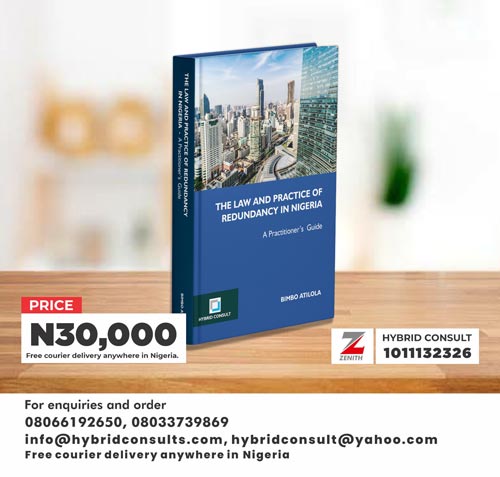 _______________________________________________________________________