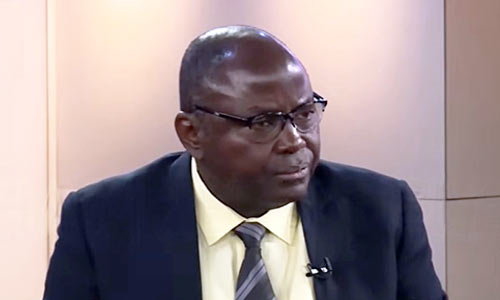
Senior Advocate of Nigeria Chief Jibrin Samuel Okutepa has waded into the controversy surrounding the courtroom confrontation between activist Omoyele Sowore and Senior Advocate Musibau Adetunbi SAN at the Federal High Court, Abuja, saying he watched the altercation with “grave anxious moment” and declaring that while courtrooms are public places, they are not market places where “anyhow activities” are permitted.

In a detailed statement that drew vivid analogies to underscore the sanctity of judicial premises, Okutepa SAN said the right of members of the public to attend court proceedings does not carry with it the right to transact any other business in court halls, hold press conferences, engage in noise-making, or exhibit conduct that denigrates and undignifies the hallowed premises.
Okutepa acknowledged that much had already been said about the incident by the NBA through President Osigwe SAN, by Daudu SAN, and by various commentators, but said he felt compelled to add his own perspective.
“I watched the altercations between Mr Omoyele Sowore and my learned brother Misbau Adetunbi SAN with grave anxious moment. A lot has been said on this unfortunate episode and I do not need to belabour the points anymore,” Okutepa stated.
“But be that as it may, my intervention is not whether the halls are public places. Yes they are. But the halls of courts are not public places where anyone can do what he or she likes without restrictions or respect for the etiquette and ethics of the legal profession.”
The Senior Advocate drew a sharp distinction between the right of public access to courts and the right to do anything one pleases inside them.
“While courts buildings are public places and the Nigerian Constitution allows the rights of members of the general public to attend courts and watch proceedings, that right does not carry with it the right to transact any other business in the court halls,” Okutepa stated.
He went further, listing in vivid terms the kinds of conduct that are impermissible in courtrooms, regardless of the public nature of the premises.
“Court halls though public places are not market places where anyhow activities are permitted. With respect, court halls are not public spaces or galleries where press conferences are to be held. It is not a place to bring masquerade to dance. It is not a place for noise making. It is a solemn and hallowed place for dignified and respected conduct and court proceedings that does not give appearance of aggression or violence or hooliganism. It is not a place where political soap opera is allowed or tolerated,” Okutepa declared.
Okutepa addressed the legal argument that has been central to Sowore’s defence — that no written law prohibits what he did. The Senior Advocate acknowledged this but argued that the courtroom is governed by something more fundamental than written rules.
“The code that prohibits or restricts the public from doing anything they like in the court halls is an unwritten rule or code of honour and respect of considerable antiquity,” Okutepa stated.
He described the courts as institutions regulated by customs and traditions that predate any modern procedural rules.
“There are certain conducts that by the customs and traditions of the courts are not allowed to be exhibited by any members of the public who have the right to attend court to watch proceedings or as litigants in the proceedings,” he stated.
In some of the most eloquent language used in the debate, Okutepa described the character of the courtroom in terms that elevated it far above ordinary public spaces.
“The courts of law by every standard and practice of considerable antiquity is a palace of awe and reverence. It is a place to be treated with deep respect and dignity. Courts halls are hallowed temple of justice that needs to be treated with respect and decency and decorum,” the Senior Advocate stated.
“It is not a place to be treated like any other public places like garage where conduct undignified is allowed. Many things that are permitted in other public places are not permitted in courts.”
Okutepa reminded the public that disrespectful conduct in the premises of the judiciary carries legal consequences, noting that the courts possess the inherent power to punish contempt.
“That is why those who exhibit disrespectful conduct in the premises of the judiciary can be sent to prison for contempt until they purge themselves of their misconduct,” the Senior Advocate stated.
While he did not directly state that Sowore’s conduct amounted to contempt, the reference to the contempt power in the context of the Sowore incident carries an implicit warning about the potential consequences of similar conduct in the future.
Okutepa used a particularly vivid illustration to drive home his point about the limits of public access to courtrooms.
“That is why you cannot hire drummers to beat drums in the courts halls. Courts are hallowed temple of justice and any conduct that can lower the dignity and respect for the courts are not allowed even if it falls within the rights to be exercised by general members of the public. That is the correct position,” Okutepa concluded.
Okutepa’s statement represents the third major intervention by a Senior Advocate in support of the NBA’s position and Adetunbi SAN’s conduct during the confrontation, following earlier statements by Daudu SAN and the official NBA statement by President Osigwe SAN.
The emerging legal consensus among senior members of the Bar is that while Sowore may have had the constitutional right to be present in the courtroom, his use of the space for media interviews, press briefings, and what the NBA described as preparation for a broadcast — including having team members fan his face, entering the inner bar, and sitting on lawyers’ tables — exceeded the boundaries of acceptable conduct in a judicial setting.
The debate continues to highlight the tension between the right of public access to the courts, the freedom of expression and press freedom, and the customs, traditions, and dignity requirements that govern conduct within judicial premises — a tension that has no easy resolution and that the Sowore case has brought into sharp public focus.
 _______________________________________________________________________
[A MUST HAVE] Evidence Act Demystified With Recent And Contemporary Cases And Materials

Available now for NGN 40,000 at ASC Publications, 10, Boyle Street, Onikan, Lagos. Beside High Court, TBS. Email publications@ayindesanni.com or WhatsApp +2347056667384. Purchase Link: https://paystack.com/buy/evidence-act-complete-annotation
______________________________________________________________________ ARTIFICIAL INTELLIGENCE FOR LAWYERS: A COMPREHENSIVE GUIDE
Reimagine your practice with the power of AI “...this is the only Nigerian book I know of on the topic.” — Ohio Books Ltd
Authored by Ben Ijeoma Adigwe, Esq., ACIArb (UK), LL.M, Dip. in Artificial Intelligence, Director, Delta State Ministry of Justice, Asaba, Nigeria.
Bonus:
Get a FREE eBook titled “How to Use the AI in Legalpedia and Law Pavilion” with every purchase.
ARTIFICIAL INTELLIGENCE FOR LAWYERS: A COMPREHENSIVE GUIDE
Reimagine your practice with the power of AI “...this is the only Nigerian book I know of on the topic.” — Ohio Books Ltd
Authored by Ben Ijeoma Adigwe, Esq., ACIArb (UK), LL.M, Dip. in Artificial Intelligence, Director, Delta State Ministry of Justice, Asaba, Nigeria.
Bonus:
Get a FREE eBook titled “How to Use the AI in Legalpedia and Law Pavilion” with every purchase.
How to Order: 📞 Call, Text, or WhatsApp: 08034917063 | 07055285878 📧 Email: benadigwe1@gmail.com 🌐 Website: www.benadigwe.com
Ebook Version: Access directly online at: https://selar.com/prv626