China is seeking to limit children’s smartphone usage to a maximum of two hours a day, in an effort to curb the young population’s internet addiction.

The Cyberspace Administration of China (CAC) issued draft guidelines saying that device makers, tech companies and service providers should introduce a “minor mode” function that would bar users under 18 from accessing the internet on mobile devices from 10pm to 6am.
The proposed rules say that children and teens using devices on minor mode would automatically see online applications close when respective time limits are up. They would also be offered “age-based content”.
Teenagers between the ages of 16 and 18 would only be able to use the internet for two hours a day, while those aged eight to 15 would be allowed only an hour a day. Children under eight would only be allowed 40 minutes.
Those under 18 would also receive pop-ups reminding them to rest after 30 minutes of usage.
According to the guidelines, only certain services, such as apps or platforms that are deemed suitable for the physical and mental development of minors, will be exempt.
“To effectively strengthen the online protection of minors, the CAC has in recent years pushed for the establishment of a youth mode on internet platforms, expanding its coverage, optimising its functions and enriching it with age-appropriate content,” the CAC said.
It said the rules would push internet groups to classify content into five different categories based on age, and children aged between 16 and 18 would be provided with “healthy content”.
The guidelines are Beijing’s latest effort to limit internet usage among the young. In 2021, rules were put in place allowing children only an hour a day of online game play on Fridays, weekends and public holidays. That was a tightening of earlier rules.
Since then, a number of companies – including ByteDance, which runs popular short-video platform Douyin – have offered “teenage modes” that restrict the users’ access to content and the duration of use.
The release of the guidelines on Wednesday led to a drop in shares in firms like Tencent, China’s largest online game company, and ByteDance.
Xia Hailong, a lawyer at the Shanghai Shenlun law firm, told Reuters that the rules would be a headache for internet companies.
It would require “a lot of effort and additional costs to properly implement these new regulatory requirements”, he said.
“And the risk of non-compliance will also be very high. So I believe that many internet companies may consider directly prohibiting minors from using their services.”
The Chinese internet watchdog has said the draft guidelines are open to public feedback until 2 September.
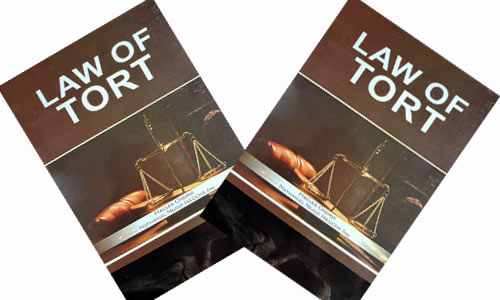 The book, titled The Law of Torts in Nigeria: A Functional Approach, authored by Professor Hagler Sunny Okorie Ph.D and Ikeocha, Nathaniel Ngozi Esq, offers law students, practitioners, and academics a comprehensive guide to understanding and applying tort law in Nigerian courts. Interested buyers can place orders via the following contact numbers: 08028636615, 08037667945, 08032253813, or +234 902 196 2209.
______________________________________________________________________
[A MUST HAVE] Evidence Act Demystified With Recent And Contemporary Cases And Materials
The book, titled The Law of Torts in Nigeria: A Functional Approach, authored by Professor Hagler Sunny Okorie Ph.D and Ikeocha, Nathaniel Ngozi Esq, offers law students, practitioners, and academics a comprehensive guide to understanding and applying tort law in Nigerian courts. Interested buyers can place orders via the following contact numbers: 08028636615, 08037667945, 08032253813, or +234 902 196 2209.
______________________________________________________________________
[A MUST HAVE] Evidence Act Demystified With Recent And Contemporary Cases And Materials

 ARTIFICIAL INTELLIGENCE FOR LAWYERS: A COMPREHENSIVE GUIDE
Reimagine your practice with the power of AI “...this is the only Nigerian book I know of on the topic.” — Ohio Books Ltd
Authored by Ben Ijeoma Adigwe, Esq., ACIArb (UK), LL.M, Dip. in Artificial Intelligence, Director, Delta State Ministry of Justice, Asaba, Nigeria.
Bonus:
Get a FREE eBook titled “How to Use the AI in Legalpedia and Law Pavilion” with every purchase.
ARTIFICIAL INTELLIGENCE FOR LAWYERS: A COMPREHENSIVE GUIDE
Reimagine your practice with the power of AI “...this is the only Nigerian book I know of on the topic.” — Ohio Books Ltd
Authored by Ben Ijeoma Adigwe, Esq., ACIArb (UK), LL.M, Dip. in Artificial Intelligence, Director, Delta State Ministry of Justice, Asaba, Nigeria.
Bonus:
Get a FREE eBook titled “How to Use the AI in Legalpedia and Law Pavilion” with every purchase.
How to Order: 📞 Call, Text, or WhatsApp: 08034917063 | 07055285878 📧 Email: benadigwe1@gmail.com 🌐 Website: www.benadigwe.com
Ebook Version: Access directly online at: https://selar.com/prv626
________________________________________________________________________ “Enhance Legal Practice With Authoritative Reports” — Alexander Payne Offers Comprehensive Law Reports, Spanning Over A Century Of Nigerian Jurisprudence Interested buyers are encouraged to place their orders and enquiries via:
0704 444 4777, 0704 444 4999, 0818 199 9888
Website: www.alexandernigeria.com
Interested buyers are encouraged to place their orders and enquiries via:
0704 444 4777, 0704 444 4999, 0818 199 9888
Website: www.alexandernigeria.com