A sworn affidavit filed by the Independent National Electoral Commission at the Federal High Court in Abuja on September 12, 2025, has exposed a devastating contradiction at the heart of INEC’s April 1, 2026 decision to withdraw recognition from the David Mark-led leadership of the African Democratic Congress. In its own court filing, INEC told the court under oath that it had monitored the ADC’s NEC meeting, recognised the Mark-led leadership, uploaded their names to its website, and argued that the court should not interfere because the acts were already completed. Six months later, INEC reversed everything.

In an affidavit deposed at the Federal High Court in Abuja on September 12, 2025, Jacob Ayuba, an assistant executive officer at INEC, laid out the commission’s position in clear and unambiguous terms. The affidavit was filed in response to the suit brought by Nafiu Bala (Suit No. FHC/ABJ/CS/1819/2025) seeking to stop members of the Mark-led ADC national working committee from parading themselves as party leaders.
INEC’s position in the affidavit was straightforward: it opposed Bala’s application and asked the court not to interfere in the domestic affairs of the ADC.
Here is what INEC told the court under oath:
Ayuba stated in the affidavit that INEC received a letter from the ADC on July 4, 2025, inviting the commission to monitor the party’s National Executive Council (NEC) meeting fixed for July 29, 2025, at the ADC global campus in Abuja. The venue was later changed to Chelsea Hotel in Abuja, and INEC deployed its officials to monitor the meeting.
“The INEC officials who monitored the ADC NEC meeting filed a report and submitted it at the commission’s headquarters.”
The monitoring report, according to the affidavit, indicated that the ADC NEC effected changes in its leadership on July 29, 2025, by appointing David Mark as national chairman and Rauf Aregbesola as national secretary.
Ayuba went further, confirming that following the leadership changes, INEC uploaded the names of Mark, Aregbesola, and all the new national officers of the ADC onto its website.
“The 4th Defendant, in furtherance of the change of leadership in the 1st Defendant’s National Working Committee, also uploaded the names of all the National Officers of the Party on its website.”
INEC attached the list of the national officers as Exhibit “INEC 3” to the affidavit, confirming that it had formally recognised the Mark-led leadership and published their names for the world to see.
In what is now the most damning paragraph of the entire affidavit, INEC told the court that the acts Bala was seeking to restrain had already been completed and that an injunction cannot lie to stop a completed act.
“The acts the Plaintiff/Applicant seeks to restrain by the ex parte application have already been completed, to wit: The National Executive Committee Meeting of the 1st Defendant fixed for 29th July, 2025 has been held wherein the 5th Defendant and his other national officers of the Party resigned their positions and appointed 2nd and 3rd Defendants as interim National Chairman and National Secretary respectively.”
“Based on the outcome of the 1st Defendant’s NEC Meeting of 29th July, 2025, the 4th Defendant has already accorded recognition to the 2nd and 3rd Defendants as the National Chairman and National Secretary respectively of the Party and reflected same on the 4th Defendant’s Website.”
“I know as a fact that an injunction cannot lie to stop a completed act that is, recognition of the 2nd and 3rd Defendants as National Chairman and National Secretary of the 1st Defendant and the publication of their names on the 4th Defendant’s website.”
INEC further argued in the affidavit that Bala’s application was an invitation to the court to delve into the internal and domestic affairs of the ADC as a political party, and urged the court not to do so.
“The Plaintiff’s application is in substance an invitation to this Honourable Court to delve into issues of internal/domestic affairs of the 1st Defendant as a political party. I know as a fact that a Court of record should not dabble into a political question which remains the exclusive preserve of political parties which should be allowed to do their things.”
“The Plaintiff’s grievances as contained in his Originating Summons relate solely to the 1st Defendant’s internal processes of changing National Officers of the Party. I know as a fact that the jurisdiction of the Court in party affairs is limited to where its complaint is about the conduct of its primaries for the selection/nomination of a candidate, and which is not the case of the Plaintiff in this case.”
On April 1, 2026 approximately six months after filing the affidavit described above INEC issued a press statement announcing that it would refrain from engaging with either the David Mark-led faction or the Nafiu Bala faction of the ADC. It said it would not attend meetings, congresses, or conventions of either group pending the determination of the case before the Federal High Court, and cited the March 12, 2026 judgment of the Court of Appeal.
In other words, the very same INEC that had sworn under oath in September 2025 that it had recognised the Mark-led leadership, uploaded their names, and argued that the acts were “completed” and could not be reversed by an injunction — turned around six months later and effectively reversed those very completed acts.
How can INEC swear under oath that recognition of the Mark-led leadership was a “completed act” that cannot be undone by an injunction, and then six months later undo that exact act by withdrawing recognition? How can INEC tell the court “don’t dabble into party affairs” and then dabble into those same party affairs itself by de-recognising both factions? How can INEC argue that the court should not grant Bala’s application, and then, without any court ordering it to do so, give Bala exactly what he wanted — the de-recognition of Mark?
The central question that INEC has not answered is: what changed? Between September 12, 2025, when INEC filed the affidavit defending the Mark-led leadership, and April 1, 2026, when it withdrew recognition from both factions, only one significant legal event occurred: the Court of Appeal’s March 12, 2026 ruling.
But the Court of Appeal did not order INEC to withdraw recognition from the Mark-led leadership. It dismissed Mark’s appeal challenging the jurisdiction of the Federal High Court, holding that the appeal was incompetent because there was no substantive ruling to appeal from — the trial judge had merely directed that parties be put on notice. The Court of Appeal then ordered the parties to “maintain status quo ante bellum.”
As Senator David Mark has argued, the status quo ante bellum — the state that existed before the dispute — was the Mark-led leadership that INEC had already recognised, monitored, and uploaded. INEC’s own affidavit confirms this.
If the Court of Appeal did not order INEC to de-recognise Mark, and INEC’s own affidavit confirmed that it had already recognised Mark as a completed act, then who or what caused INEC to reverse its own sworn position? Was it the “people” who were calling the INEC Chairman? Was it the serving governor and former minister that Senator Abbo has alleged are behind the crisis? Or was it something else entirely?
For clarity, here is what the Court of Appeal actually decided:
A three-member panel led by Justice Uchechukwu Onyemenam dismissed Mark’s appeal in its entirety, holding that it was incompetent and unmeritorious. The court found that there was no substantive ruling by the Federal High Court on the ex parte application — the trial judge, Justice Emeka Nwite, had merely ordered that parties be put on notice to show cause why the application should not be granted. As such, there was no valid decision upon which an appeal could properly be anchored.
The court faulted Mark for relying on an enrolled order rather than the actual proceedings and ruling of the trial court, noting that only the judge’s pronouncement constitutes the authentic record of the court.
The court then directed parties to maintain the status quo ante bellum and refrain from taking any action capable of undermining the proceedings before the trial court.
Crucially, the Court of Appeal did not order INEC to de-recognise anyone. It did not order INEC to remove names from its website. It did not order INEC to treat both factions equally. It simply said: maintain the status quo. And INEC’s own affidavit confirms what that status quo was: the Mark-led leadership, recognised, uploaded, and completed.
The underlying case was filed by Nafiu Bala on September 2, 2025 (Suit No. FHC/ABJ/CS/1819/2025) at the Federal High Court, Abuja. Bala, who was the ADC Deputy National Chairman at the time, sought to stop members of the Mark-led NWC from parading themselves as party leaders.
The respondents in the suit are: ADC (first defendant), David Mark (second defendant), Rauf Aregbesola (third defendant), INEC (fourth defendant), and Ralph Nwosu (fifth defendant).
Bala sought an order restraining INEC from recognising the Mark-led NWC and to compel INEC to recognise him as acting national chairman. He also filed motions to stop the party from holding meetings, congresses, or conventions pending determination of the suit.
The motion ex parte was heard on September 4, 2025. Justice Emeka Nwite directed that the respondents, including INEC, be put on notice to show cause why the application should not be granted. It was in response to this that INEC filed the September 12 affidavit described above the very affidavit in which INEC defended the Mark-led leadership and told the court not to interfere.
The emergence of INEC’s September 12 affidavit has drawn fierce condemnation from lawyers, political analysts, and ADC supporters who say it proves beyond doubt that INEC’s April 1 action was not based on the law, not based on the Court of Appeal’s ruling, and not based on its own records but on external pressure.
“For INEC to depose to this affidavit of facts and eventually made a 180-degree turn around to lie and withdraw recognition from the ADC national leadership, it shows that they are a rogue organisation that is bereft of integrity and easily compromised by vested interests! This is too shameful and unconscionable!”
The contradiction is stark and irreconcilable. In September 2025, INEC’s position, sworn under oath, was: we monitored the meeting, we recognised the leadership, we uploaded the names, the acts are completed, the court should not interfere, and party affairs are domestic matters. In April 2026, INEC’s position was: we are withdrawing recognition from both factions, we will not attend their events, and we will not engage with either group.
These two positions cannot both be true. Either INEC was telling the truth in September 2025 when it swore under oath that the Mark-led leadership was legitimate and recognised, or it was telling the truth in April 2026 when it withdrew that recognition. It cannot be both. And the question that INEC has not answered and may never answer is: what force was powerful enough to make the electoral commission of the Federal Republic of Nigeria contradict its own sworn affidavit?
Timeline: From Recognition to Reversal
- July 2, 2025: Ralph Nwosu resigned as ADC National Chairman and endorsed interim leadership headed by David Mark.
- July 4, 2025: INEC received letter inviting it to monitor ADC NEC meeting.
- July 29, 2025: ADC NEC meeting held at Chelsea Hotel, Abuja. INEC officials monitored. Leadership changes effected. Mark appointed chairman, Aregbesola secretary.
- Post-July 29: INEC uploaded names of all new ADC national officers on its website.
- September 2, 2025: Nafiu Bala filed suit (FHC/ABJ/CS/1819/2025) to stop Mark-led NWC.
- September 4, 2025: Justice Emeka Nwite directed respondents to show cause.
- September 12, 2025: INEC filed affidavit defending Mark-led leadership, opposing Bala’s application, arguing acts were “completed.”
- March 12, 2026: Court of Appeal dismissed Mark’s appeal, ordered “status quo ante bellum.”
- April 1, 2026: INEC issued press statement withdrawing recognition from both factions — directly contradicting its own September 12 affidavit.
The Questions INEC Must Answer
- How does INEC reconcile its September 12, 2025 affidavit in which it swore under oath that recognition of the Mark-led leadership was a “completed act” with its April 1, 2026 decision to withdraw that recognition?
- If the Court of Appeal’s order was to “maintain status quo ante bellum,” and INEC’s own affidavit confirms the status quo was the Mark-led leadership, why did INEC reverse that status quo?
- Who or what caused INEC to contradict its own sworn affidavit?
- Did INEC receive any directives, instructions, or communications from any government official, political figure, or external party between September 2025 and April 2026 that influenced its decision?
- Is INEC aware that contradicting its own sworn affidavit could constitute perjury or contempt of court?
- Does INEC accept that its April 1 action gave Nafiu Bala exactly what he asked for in his suit the de-recognition of Mark — which is the very relief that INEC itself told the court should not be granted?
These are questions that INEC has not answered. Based on its track record, it may never answer them. But the affidavit is a court document. It is sworn. It is on the record. And it tells a story that INEC cannot retract, deny, or explain away.
 Interested buyers are encouraged to place their orders and enquiries via:
0704 444 4777, 0704 444 4999, 0818 199 9888
Website: www.alexandernigeria.com
Interested buyers are encouraged to place their orders and enquiries via:
0704 444 4777, 0704 444 4999, 0818 199 9888
Website: www.alexandernigeria.com
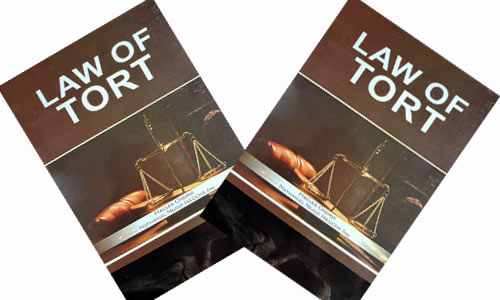 The book, titled The Law of Torts in Nigeria: A Functional Approach, authored by Professor Hagler Sunny Okorie Ph.D and Ikeocha, Nathaniel Ngozi Esq, offers law students, practitioners, and academics a comprehensive guide to understanding and applying tort law in Nigerian courts. Interested buyers can place orders via the following contact numbers: 08028636615, 08037667945, 08032253813, or +234 902 196 2209.
_______________________________________________________________________
The book, titled The Law of Torts in Nigeria: A Functional Approach, authored by Professor Hagler Sunny Okorie Ph.D and Ikeocha, Nathaniel Ngozi Esq, offers law students, practitioners, and academics a comprehensive guide to understanding and applying tort law in Nigerian courts. Interested buyers can place orders via the following contact numbers: 08028636615, 08037667945, 08032253813, or +234 902 196 2209.
_______________________________________________________________________
 ARTIFICIAL INTELLIGENCE FOR LAWYERS: A COMPREHENSIVE GUIDE
Reimagine your practice with the power of AI “...this is the only Nigerian book I know of on the topic.” — Ohio Books Ltd
Authored by Ben Ijeoma Adigwe, Esq., ACIArb (UK), LL.M, Dip. in Artificial Intelligence, Director, Delta State Ministry of Justice, Asaba, Nigeria.
Bonus:
Get a FREE eBook titled “How to Use the AI in Legalpedia and Law Pavilion” with every purchase.
ARTIFICIAL INTELLIGENCE FOR LAWYERS: A COMPREHENSIVE GUIDE
Reimagine your practice with the power of AI “...this is the only Nigerian book I know of on the topic.” — Ohio Books Ltd
Authored by Ben Ijeoma Adigwe, Esq., ACIArb (UK), LL.M, Dip. in Artificial Intelligence, Director, Delta State Ministry of Justice, Asaba, Nigeria.
Bonus:
Get a FREE eBook titled “How to Use the AI in Legalpedia and Law Pavilion” with every purchase.
How to Order: 📞 Call, Text, or WhatsApp: 08034917063 | 07055285878 📧 Email: benadigwe1@gmail.com 🌐 Website: www.benadigwe.com
Ebook Version: Access directly online at: https://selar.com/prv626
________________________________________________________________________ The Law And Practice Of Redundancy In Nigeria: A Practitioner’s Guide, Authored By A Labour & Employment Law Expert Bimbo Atilola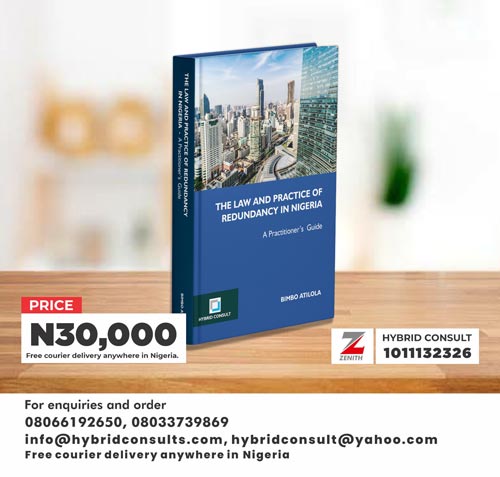 _______________________________________________________________________
[A MUST HAVE] Evidence Act Demystified With Recent And Contemporary Cases And Materials
_______________________________________________________________________
[A MUST HAVE] Evidence Act Demystified With Recent And Contemporary Cases And Materials