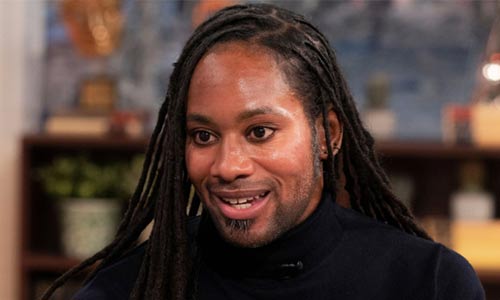
British academic Jason Arday has resigned from the University of Cambridge amid allegations of plagiarism, questions over his academic qualifications and scrutiny of claims about his personal history, even as he insists he has been unfairly portrayed as a liar and academic fraud.

Arday, who became Cambridge University’s youngest Black professor in 2023 when he was appointed Professor of Sociology of Education at the age of 37, also resigned his fellowship at Jesus College following mounting controversy over his academic work and credentials.
Cambridge said it would continue investigating the circumstances surrounding his appointment and tenure despite his resignation, while separate complaints relating to alleged academic misconduct remain under consideration under the university’s research misconduct procedures.
The controversy comes as Arday’s memoir, Great and Unfortunate Things, was published in the United States on Tuesday. Its British publication is scheduled for August 27.
The memoir recounts Arday’s life story, including his diagnosis with autism, his claim that he was non-verbal until around the age of 11 and that he did not learn to read and write until he was 18, before eventually pursuing an academic career.
His British publisher has maintained that no plagiarism allegation has been made concerning the memoir itself.
The academic controversy began after allegations emerged that portions of Arday’s doctoral thesis contained material similar to an earlier thesis by another researcher.
Arday obtained his PhD from Liverpool John Moores University in 2015. His thesis was titled An Exploration of Peer-Monitoring Among Student Teachers to Inform Reflective Practice Within the Context of Action Research.
Reports said plagiarism analysis identified more than 100 passages in Arday’s thesis that allegedly bore similarities to a thesis written by Paula Zwozdiak-Myers at Brunel University about six years earlier.
Dave Harris, an emeritus professor at Plymouth Marjon University, was also reported to have raised concerns with Cambridge and Liverpool John Moores University in 2023 about what he regarded as possible plagiarism in Arday’s doctoral thesis and some subsequent academic publications.
The allegations were later publicly amplified by Nathan Cofnas, an academic who describes himself as a “race realist” and whose research affiliation with Emmanuel College, Cambridge, was terminated in 2024 amid controversy over comments relating to race.
Arday has acknowledged making mistakes but rejected allegations that he deliberately deceived universities or fabricated his academic career.
He said he had been unfairly “portrayed to be a liar and a fantasist and an academic fraud” and alleged that efforts to remove him from Cambridge were racially motivated.
The controversy has subsequently expanded beyond the plagiarism allegations to include scrutiny of claims Arday has made about his life, charitable activities and experiences following his rise to prominence.
Among the claims questioned were accounts that he had raised more than £5 million for charities through endurance running, completed dozens of marathons within a short period and experienced racially motivated threats after his Cambridge appointment.
Arday later clarified that the reported £5 million fundraising figure reflected efforts involving numerous fundraising groups over approximately two decades.
Questions were also raised over his account that an armed and masked person had once appeared at his workplace to threaten him. Reports said investigators reviewing available information were unable to find supporting evidence from CCTV or other staff members.
Another account concerning an alleged pig’s head being sent to his parents’ home in South London was also challenged after reports said the Metropolitan Police could not substantiate claims that it had carried out the investigation described by Arday.
Arday has rejected suggestions that discrepancies in aspects of his personal story make him dishonest.
He has also argued that the intensity of the scrutiny surrounding him has gone far beyond legitimate academic criticism.
In his resignation letter published on August 5, Arday said the continuing accusations, speculation and public commentary had taken a serious personal toll on him and his family.
“While criticism is an inevitable part of academic life, what I have experienced has gone far beyond scholarly disagreement,” he wrote.
“The relentless accusations, speculation and public commentary have taken a profound toll on me and on those I love.”
Arday said stepping down should not be regarded as an admission of wrongdoing or abandonment of the principles that brought him to Cambridge.
“This decision should not be interpreted as a loss of faith in scholarship or in the values that first brought me to Cambridge. Nor should it be mistaken for an acceptance of the narratives that have surrounded me,” he stated.
He said he needed time to recover from the controversy but suggested he intended to return to public life.
“I need time to simply be myself again. And when that time comes, I will return,” he said.
The controversy has also reopened debate over Cambridge University’s recruitment procedures and diversity policies.
When Arday was appointed in 2023, Cambridge celebrated him as the youngest Black person ever appointed to a professorship at the university and highlighted his life story as an example of overcoming educational and socioeconomic disadvantage.
His appointment received significant national and international publicity, with Cambridge officials describing him at the time as an exceptional scholar whose work would contribute to research on race, inequality and education.
However, following the emergence of the allegations, some academics called for an independent investigation into how he was appointed.
A letter led by senior academics, including Cambridge professor Priyamvada Gopal, reportedly raised concerns that Arday may have been appointed as part of an effort to quickly improve the university’s record on diversity and warned that the controversy could damage progress in addressing the underrepresentation of minority academics.
Cambridge subsequently confirmed that its investigation would examine the circumstances surrounding Arday’s appointment and tenure.
“The University will continue to investigate the circumstances around Jason Arday’s appointment and tenure,” the institution said.
Cambridge added that the findings would contribute to a wider review of procedures governing the appointment of senior academics, while its Research Policy Committee would separately review the university’s misconduct-in-research policy.
The controversy has also become part of a wider political debate over diversity, equality and inclusion policies in British institutions, with right-wing commentators arguing that Arday benefited from preferential treatment because of his race and background.
Others have warned against turning unresolved allegations into a broader attack on Black academics or diversity programmes.
Arday continues to deny deliberate wrongdoing and maintains that some of the campaign against him has been motivated by racial hostility.
His memoir remains scheduled for publication in the United Kingdom later in August, although several planned promotional appearances have reportedly been cancelled amid the continuing controversy.
Cambridge’s investigation remains ongoing, and the allegations against Arday have not yet resulted in a final institutional finding of academic misconduct.
[A MUST HAVE] Evidence Act Demystified With Recent And Contemporary Cases And Materials

Available now for NGN 40,000 at ASC Publications, 10, Boyle Street, Onikan, Lagos. Beside High Court, TBS. Email publications@ayindesanni.com or WhatsApp +2347056667384. Purchase Link: https://paystack.com/buy/evidence-act-complete-annotation
______________________________________________________________________ “Enhance Legal Practice With Authoritative Reports” — Alexander Payne Offers Comprehensive Law Reports, Spanning Over A Century Of Nigerian Jurisprudence Interested buyers are encouraged to place their orders and enquiries via:
0704 444 4777, 0704 444 4999, 0818 199 9888
Website: www.alexandernigeria.com
Interested buyers are encouraged to place their orders and enquiries via:
0704 444 4777, 0704 444 4999, 0818 199 9888
Website: www.alexandernigeria.com