The Federal Government has completed a comprehensive review of 932 federal enactments and 731 subsidiary legislations, identifying hundreds of obsolete, repealed and spent laws for exclusion from the proposed Laws of the Federation of Nigeria (LFN) 2025.

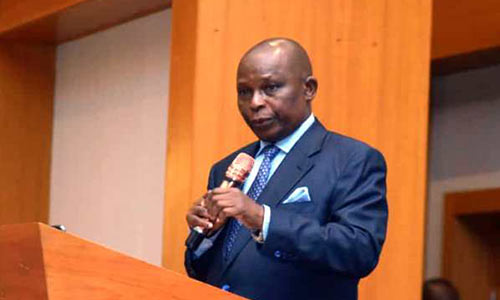
The Attorney-General of the Federation and Minister of Justice, Prince Lateef Fagbemi, SAN, disclosed this on Thursday, November 12, 2026, in Abuja during the presentation of the final report of the Committee on the Review, Update and Consolidation of the Laws of the Federation of Nigeria.
According to Fagbemi, the exercise identified 663 enactments for inclusion in the proposed 2025 compilation, while 269 were classified as obsolete, spent or repealed.
The development forms part of efforts to modernise Nigeria’s federal legislation, eliminate outdated provisions, correct inconsistencies and make existing laws more accessible to legal practitioners, government institutions and the public.
The Attorney-General explained that the review was necessary to ensure that federal legislation remained coherent, current and responsive to Nigeria’s changing legal, economic and institutional circumstances.
He observed that the last major consolidation of federal laws took place more than two decades ago, making the current exercise necessary to address the accumulation of amendments, repealed enactments and legislative inconsistencies.
Fagbemi maintained that the Federal Government must establish a permanent system for reviewing and updating federal legislation rather than allowing such exercises to occur only after prolonged intervals.
“The gap of more than twenty years between the last consolidation and the present exercise should not be repeated,” he declared.
He stressed the importance of strengthening institutional arrangements for tracking newly enacted laws, amendments to existing statutes and subsidiary legislation made by relevant government authorities.
According to the Attorney-General, the completion of the committee’s assignment represents an important step towards producing an updated and consolidated collection of federal laws.
He disclosed that the next stage would involve presenting the committee’s final report to President Bola Tinubu for consideration and onward transmission to the National Assembly.
Fagbemi explained that the legislature would be required to consider and take necessary action on the proposed legislative measures arising from the review.
He consequently appealed for the cooperation of the National Assembly to ensure timely consideration of the recommendations and facilitate the completion of the exercise.
The Attorney-General also emphasised that the proposed LFN 2025 should not be treated as a one-off project.
Rather, he maintained that the government should establish a sustainable framework for continuous law revision, ensuring that future amendments and new enactments are incorporated without unnecessary delays.
Earlier, the Chairman of the Committee, Olawale Fapohunda, SAN, described the submission of the final report as the conclusion of an extensive nationwide legal review and the beginning of a new phase of law reform.
Fapohunda explained that the committee was mandated to examine federal legislation enacted up to 2025 and determine which laws should be retained, updated, harmonised or excluded from the new compilation.
He said the committee’s assignment included identifying obsolete, redundant, repealed and spent legislation, incorporating enactments omitted from the 2004 edition of the Laws of the Federation and ensuring consistency with constitutional developments and relevant judicial decisions.
The committee was also required to examine amendments to existing laws and address inconsistencies capable of creating uncertainty in the interpretation or application of federal legislation.
According to Fapohunda, 14 working groups and supporting technical teams were established to ensure a systematic examination of the laws.
He explained that the exercise involved checking the accuracy of legislative drafting, harmonising related statutory provisions, consolidating amendments, correcting errors in numbering and cross-references, and standardising commencement dates and legislative headings.
Fapohunda disclosed that the committee examined 932 federal enactments and 731 subsidiary legislations.
However, while the Attorney-General’s figures indicated that 663 enactments were selected for inclusion and 269 excluded, the committee chairman gave slightly different figures.
Fapohunda stated that 664 enactments and their accompanying subsidiary legislation had been cleared for inclusion in the proposed 2025 edition, while 268 enactments were identified as obsolete, spent or repealed.
Both sets of figures account for the 932 enactments reviewed, although the difference of one enactment between the two accounts was not explained during the presentation.
The committee chairman also identified several longstanding deficiencies in Nigeria’s federal legislation.
These included archaic statutory language, complicated cross-references, inconsistent numbering and outdated fines and fees that no longer reflected prevailing economic realities.
Fapohunda disclosed that some statutory fines and fees remained as low as ₦10 or ₦50, despite changes in the value of money and the economic circumstances under which the provisions were originally enacted.
He maintained that such outdated provisions required legislative attention to ensure that statutory penalties and administrative charges remained appropriate and effective.
The committee chairman consequently called for legislative intervention to address the affected provisions.
He further disclosed that the committee recommended that the Attorney-General issue an advisory note to Ministries, Departments and Agencies (MDAs) setting out established procedures for reviewing their enabling laws and subsidiary legislation.
According to him, the recommendation followed recurring deficiencies in the drafting of statutory instruments initiated by government institutions.
He explained that improved drafting standards and better coordination between government agencies and the Federal Ministry of Justice would help prevent errors and inconsistencies in future legislation.
Fapohunda also advocated the establishment of a centralised national repository of federal legislation to provide a reliable platform for accessing existing laws and facilitating continuous revision.
He observed that the absence of a consolidated and easily accessible platform for obtaining federal statutes had complicated the committee’s work.
According to him, the difficulty of obtaining accurate and complete legislative materials demonstrated the need for an organised national system for collecting, preserving and updating federal laws.
He maintained that such a repository would improve legal research, support legislative drafting and make federal legislation more accessible.
The committee chairman explained that digital technology played an important role in facilitating the review.
He disclosed that cloud-based document management systems, shared working platforms and virtual meetings were used to coordinate the activities of committee members operating from different locations.
The technological arrangements, he said, enabled the working groups to exchange documents, examine legislative materials and collaborate throughout the consolidation process.
Fapohunda also highlighted the contributions of institutions consulted during the exercise.
He disclosed that the committee engaged with the National Assembly, the Nigerian Law Reform Commission, the National Institute for Advanced Legal Studies and the Lagos State Law Reform Commission.
Other institutions consulted included the Law Commission of England and Wales, LexisNexis South Africa and LawPavilion.
According to him, the consultations provided technical assistance and comparative perspectives on legislative consolidation, legal drafting and the organisation of statutory materials.
He explained that the committee drew from these engagements in developing recommendations intended to improve the accuracy, accessibility and sustainability of Nigeria’s federal law revision process.
Beyond producing the new compilation, Fapohunda urged the Federal Ministry of Justice to establish a mechanism for receiving and correcting errors or omissions that might subsequently be identified in the published laws.
He maintained that preserving the accuracy and integrity of the Laws of the Federation would require continuous examination, rather than assuming that the publication of the new edition would eliminate every drafting or compilation problem.
The committee consequently recommended institutionalising a structured process for regular law revision.
According to Fapohunda, such a mechanism would prevent the recurrence of lengthy intervals between consolidation exercises and ensure that federal legislation remained up to date.
He formally presented the committee’s final report and draft copies of the proposed 20-volume Laws of the Federation of Nigeria 2025 to the Attorney-General for consideration and further executive action.
The proposed compilation is expected to provide an updated reference for federal legislation, incorporating enactments passed since the previous consolidation while excluding laws identified as no longer applicable.
However, the committee’s classification of particular enactments as obsolete or spent does not, by itself, constitute their formal repeal where legislative action is legally required.
The recommendations remain subject to the necessary executive and legislative processes before the proposed compilation is finalised.
With the committee’s work concluded, the next stage will depend on the consideration of its report by President Tinubu and the National Assembly.
The exercise represents an attempt to address longstanding problems in Nigeria’s federal statute books, including outdated provisions, fragmented amendments, drafting inconsistencies and difficulties in accessing authoritative legislative texts.
Both Fagbemi and Fapohunda maintained that the ultimate objective should extend beyond publishing the LFN 2025 to establishing a permanent system capable of maintaining the accuracy, coherence and accessibility of federal laws.
[A MUST HAVE] Evidence Act Demystified With Recent And Contemporary Cases And Materials

Available now for NGN 40,000 at ASC Publications, 10, Boyle Street, Onikan, Lagos. Beside High Court, TBS. Email publications@ayindesanni.com or WhatsApp +2347056667384. Purchase Link: https://paystack.com/buy/evidence-act-complete-annotation
______________________________________________________________________ “Enhance Legal Practice With Authoritative Reports” — Alexander Payne Offers Comprehensive Law Reports, Spanning Over A Century Of Nigerian Jurisprudence Interested buyers are encouraged to place their orders and enquiries via:
0704 444 4777, 0704 444 4999, 0818 199 9888
Website: www.alexandernigeria.com
“A Comprehensive Guide To Evidence Law” — Releases Second Edition In Three Volumes, Covering 4,051 Cases
For enquiries and orders, contact: 08035526491 Email: jerryamadisilk@gmail.com
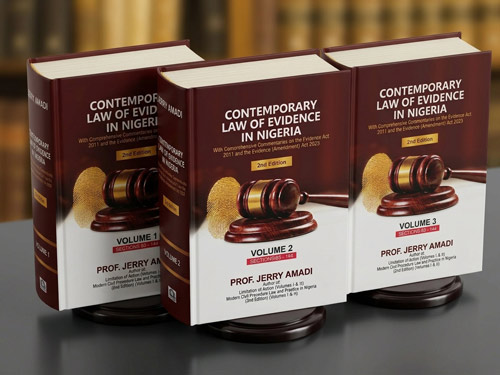 Prof. Jerry Amadi’s Evidence Law, Second Edition (2026), contains 3,314 pages in three volumes, covering the Evidence Act 2011, its 2023 amendment, and 4,051 Nigerian and English cases.