*Says “You Cannot Cut The Price Of Petrol To ₦400, Not ₦500, Not ₦800, Not ₦1,000”

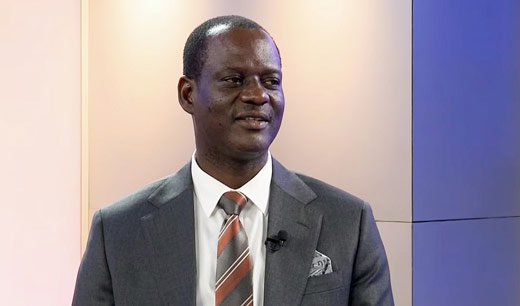
Nigeria’s Minister of Finance and Coordinating Minister of the Economy. Mr. Taiwo Oyedele has defended the Federal Government’s thirty-day petrol discount on Channels Television’s Politics Today, rejecting the description of it as a subsidy by any name and saying the measure gives away only NNPC Retail’s own profit margin on product it buys at market price.
The interview was broadcast with 97 days remaining to the presidential and National Assembly elections, which the programme said are slated for 16 January 2027.
Asked whether the government had quietly copied the production-subsidy proposal it had attacked, Mr. Oyedele began with the purpose of the press conference.
“Politicians will always be politicians, and many of them tend to say what they think people want to hear, even when they know it is wrong.”
“When this subsidy matter came up, we all thought it was a joke, because there’s a level of knowledge that you expect of certain people. You say, well, this person shouldn’t be saying that, they should know better. But we saw it was gaining momentum. Other people were jumping on it. Some people were changing their position. And Mr. President remained consistent that this is the wrong thing to do.”
“The whole essence of the press briefing we had yesterday was to demonstrate to Nigerians with data why it’s such a dangerous idea to bring back subsidy in the way that was being proposed.”
“A production subsidy is not what they are proposing”
“Some of them were trying to be clever. They say it is production subsidy. When you say it’s production, people will say, oh, that’s a good thing. But guess what? A production subsidy is a subsidy that reduces your cost of production so that you can compete at market price.”
“That’s not what they’re doing. What they’re going to do is they want to pass consumption subsidy through the refiners. The refineries — they don’t know how they’re going to control it. They don’t know how the crude price fits into the pump price.”
Petrol follows the exchange rate
“The pump price of petroleum products, PMS, is the most sensitive. It follows the exchange rate. So imagine if naira was 500 naira to the dollar, one litre of PMS would be like 400. So anything you do that affects the exchange rate would affect the pump price of product.”
What investors ask
“I have travelled around the world speaking to investors who invest in Nigeria, both short-term, long-term, and people that are planning to invest, and their number one question is always: I hope you guys will not reverse your reforms.”
“There was a time we were not attracting anything, whether it’s foreign portfolio or foreign direct — it dried up. The CBN said recently that the net reserve was under $1 billion. Scary. It wasn’t even up to one month of import cover. People could no longer pay for softwares, just an app of $20. Letters of credit were being disregarded. Companies were exiting — like Emirates — to say, what’s the point doing business in Nigeria if you can’t get your FX?”
“Reforming that FX meant that we needed to recognise the real value of the naira. So it depreciated. It wasn’t devalued.”
The crash scenario
“Now, if you do anything that will lead to panic or foreign exchange exiting Nigeria, naira will crash. Our estimation is within months it will get to 3,000 naira to USD, and the pump price — our estimation — to be at least 2,000.”
What it would cost
“If you take the subsidy back to where it was before the reform, it will cost about 20 trillion naira a year. It doesn’t matter what you call it, whether it’s production or not, it’s coming to the treasury. If you take it to 500 that some people are proposing, it will cost about 16 trillion. Those amounts are almost equivalent of the entire net distribution of FAAC for 2025.”
“A subsidy the way it was being proposed will not solve the problem, it will hide it, and it will show up with full force in salaries we are unable to pay — as we saw before, 27 states were struggling to pay salaries — in pensions, in the schools you can no longer build, in medical that you cannot provide.”
He said the World Bank, in an update delivered the previous day, had acknowledged that poverty rates were reducing and that more was being spent on infrastructure, especially roads, across the states.
Pressed on Nigeria’s production, Mr. Oyedele corrected the anchor’s figure.
“With condensate we’re at about 1.8 million per day.”
Why 1.8 million barrels is not Nigeria’s to give
“If you do 1.8 million barrels per day, that does not belong to Nigeria alone. Under the production sharing contract and joint venture they share these things and the ratios vary. Let’s say roughly 45-55. Then there’s a cost to produce it, to get it out of the ground. You take it in cost oil — that’s also barrels that are going away. Then you take the one for royalty, before you now start talking about profit oil that you share.”
“Long and short of what I’m telling you is, whatever is left for Nigeria, we exhausted it almost entirely because of subsidy.”
The disclosure about borrowing against future crude
“Before Mr. President introduced the reform, the NNPC that are holding our crude on our behalf had less than 100,000 barrels free crude left, because when we exhausted all our revenues, government started printing money. That wasn’t enough. Guess what we started doing? We’re using future production of crude oil to make commitments… to borrow. So that we can subsidise current consumption. This is gunpowder waiting to explode.”
“As at the time Mr. President introduced the reform in 2023, May, we did not have free crude — less than 100,000.”
What has changed since
“What the government has done now is the combined impact of increasing production, reducing oil theft… Mr. Tony Elumelu went on social media out of frustration to say whatever we are producing, we can’t even get — 20 per cent of it is being stolen. He came back again online to say now it’s down to 5 per cent.”
“So reduction in oil theft, increased production, and some of the commitments that took our crude away were renegotiated to free some barrels. But we are still not at a point where we can give Dangote 700,000 barrels. So the people that are saying we’ll discount it, we’ll do cost of production — they don’t know what they’re talking about. We don’t have enough to service [domestic refining without] imports.”
Asked how much crude Nigeria controls:
“I can’t give you the specific number because I don’t have it. But I just know it’s less than what Dangote needs.”
“Even if we have 700,000 barrels today to give Dangote, the Nigerian crude is the sweet crude. It would not be the most optimal input for Dangote. Dangote needs to still import some heavy crude.”
“That’s why when Mr. President introduced the naira-for-crude, it was meant to help us gain some stability, and it has worked. But we don’t have enough quantity to give as of yet. As we ramp up production and we free up some barrels, we’ll get to a point where we’ll be able to give Dangote everything he wants and other refiners will be able to get enough. I even hope personally that we get to a point in Nigeria where all the crude we produce will be refined in Nigeria and we only export refined products.”
“As of the past few days our consumption is close to 50 million litres of PMS per day. There were months when Dangote supplied 70 per cent of that. There were months that it was less. And so whatever it was, we complemented with import.”
“What the Petroleum Industry Act requires is that you take care of domestic consumption first based on domestic production, and you only then close the gap with imports, and that varies. There are months when it will be 10 per cent, 15 per cent. But generally we’ve been consuming more of the one produced locally than the one that we import.”
On exports, he said Dangote is a private business: “He can’t control whether he exports or whether he does only 100 per cent domestic consumption. He has really helped the country… availability is the highest level of affordability. He has made it possible for us not to have to queue for 5 hours. But then he’s entitled to the fact that he could export part of his product.”
On quality:
“Before the Dangote refinery was launched, we were importing 100 per cent. Not only was it that we were importing 100 per cent, we were importing bad products.”
He said the midstream and downstream regulatory authority had commissioned its first laboratory as part of measures to ensure quality standards for imported and locally produced fuel, “so that when the average Nigerian buys fuel they can go to sleep that their engine will not knock.” Under-dispensing, he said, is also being addressed.
“One thing that worries me, and I’ll be very honest about our country sometimes, is that we take national policy matters and we turn them into jokes. When people say, oh, if only we just refine locally prices will be down — this was the same argument that was advanced that led to us wasting billions trying to renovate and turn around refineries that refined nothing.”
“There are countries that have more than 100 refineries. Are they selling lower today? It is not airtime we are talking about here.”
Asked for examples, he named the United States and India, and distinguished the subsidising states: “We’re not talking about countries that provide subsidy.”
“By the way, Nigeria ranks in the top 25 lowest pump price today in the world without subsidy. And that’s because, as Mr. President was introducing the reform, we were very intentional. We took away taxes. Within Africa, the taxes on fuel products range between six to 10 different taxes. Many countries, what they are doing has been, oh, we used to have 40 per cent tax, let’s take away 10. We took all of it away.”
“When you buy a litre of petrol today and you pay 1,400, if not for the waivers of taxes and levies you’ll be paying at least 1,800. The savings per litre is between 400 to 600 naira. Data is there to show. We’re not making any of this up.”
“That has saved the Nigerian people 3.3 trillion naira in the first nine months.”
Seventeen measures, one story
“What happened yesterday at the press briefing was that we discussed seven measures that government had already introduced… and 10 that are being considered, making 17. And I have to say I was personally disappointed that the whole narrative about this effort was somebody not understanding what we call margin discount. This is Accounting 101. The first thing you start when you get to university for accounting is what is a discount and they say it is subsidy, and then we all jump at it. It’s concerning for me.”
“I challenge anybody find any country on earth that their response to this crisis is anywhere close to what Nigeria has done, unless you go to Qatar, Saudi, where they have enough to be able to subsidise.”
The flat refusal
“You cannot cut the price of petrol to 400 naira. Not 500, not 800, not 1,000. It’s simple arithmetic.”
“Refining is one of those businesses with the tiniest margin in the world. They just survive on volumes. You can do 50 million litres a day, you can do 100 million litres a day. It’s volume. So it’s not like they’re making so much money. So where would the reduction come from?”
On the inputs:
“To refine, when you see petrol, the major component that goes into it is crude oil. That crude oil, you have to buy it. That’s why with the crisis in Iran and price per barrel of crude going up, pump prices of products are going up. Dangote will take whatever he’s able to get at whatever price. Freight has gone up because the number of vessels available around the world is constrained. Insurance has gone up, financing cost is there. Before you bring the crude here, before you refine it, you pay 30 per cent interest rate. You have to factor it in.”
Why discounted crude would be a subsidy
“If you give that crude at lower than market price one, you lose the revenue that is supposed to go to the treasury. That’s when you start defaulting in paying salaries. Number two, you create market distortion. There was a time our consumption was close to 90 million litres a day. You think it was all consumed in Nigeria? When Mr. President removed the subsidy, they were protesting in I think it was Cameroon.”
“America is the most powerful country in the world. They haven’t been able to secure their border 100 per cent.”
“Some of them say we’ll fight the corruption and then we’ll bring back the subsidy. I say with what Mr. President has done, he has removed the corruption. So would you bring the corruption back so that he can fight it, remove it, and then bring back subsidy? It’s not adding up.”
The per-capita argument
“Qatar has 500,000 people, 2 million foreigners 2.5 million. They have the largest gas reserve in the world. What would it cost them? Nigeria has more than 200 million people. We are barely doing 1.8 million barrels. Divide it per capita and we are not even qualified to call ourselves an oil producing country.”
“America produces more than 10 million barrels a day. Have you seen them going around saying we’re an oil producing country? It’s expensive there. The price of diesel has gone up in the US by 73 per cent. It’s $6.50 per gallon. So we should stop deceiving ourselves. Let’s face reality of what our problem is. Understanding what the problem is is halfway towards solving it.”
Asked what happens when the thirty days end, Mr. Oyedele first restated the distinction.
“A subsidy brings the amount you pay below market price. So you pay a portion, government pays the balance. That’s why you don’t call what the private sector [does], if they decide to cut prices don’t call it a subsidy. Number one.”
“Number two, when you say margin discount margin means profit. Which means when you buy the refined product you can either buy it from the refinery, from the gantry, you take it from there, or you import it. You have the landing cost. Then you transport it — that’s a huge cost. Sometimes you may have the dealer’s cost before you get to the retailer. The retailer will add their own profit and then they will sell. That’s the amount you pay when you drive into the filling station.”
NNPC Retail’s original purpose
“The NNPC retail was set up around 2001, 2002. At that time I remember very well that we had filling stations all over the country and they were hoarding. So NNPC said we’re going to distribute, and there were instances where it was only NNPC filling station that was selling. Someone like me said NNPC was being distracted by going into retail, but that was the purpose. It was for distribution, availability and affordability. It wasn’t primarily to maximise profit. That’s why NNPC retail has been the lowest price mostly all over.”
The promo was NNPC’s own idea
“You know what they now did on 1st of October? They said Nigeria is turning 66. They did an app they wanted people to adopt it, a promo. They said if you come and buy fuel and you download our app, you get 66 naira less.”
“So I called them. I said, this your 66 naira are you sure you’re not over-recovering, that you tell me that you’re taking money from the Federation Account? He said no. I said okay.”
“Now, since we are doing this, why don’t you go and calculate how much is your profit and limit that discount to your profit, so that it’s not costing you anything. And when I even asked them to send me the numbers, I saw their volume. They only make about 70 million litres a month. It’s very small it’s about 5 per cent of what we do.”
“So I said, what would this even cost you? It’s not a lot of money. And maybe if you do this promo people would then want to continue to buy from you and you can make more money and even remit more dividend to the Federation Account by way of dividend.”
The pricing chain, in his own figures
“What NNPC is selling at after the discount is still market reflective, because they told me they are buying all of it from Dangote. Dangote is not giving subsidy. So when they buy at 1,325 from Dangote, they add their own cost to it and profit and they sell. For this period they are taking out only their own profit element. That’s why we call it margin discount. It is not a subsidy. We should stop embarrassing ourselves.”
Put to him that NNPC was bearing the loss, and that the money would otherwise have gone to the Federation Account:
“It’s not suffering. When they say buy one get one free, and you say 10 per cent off, and you say students can get 80 per cent of the ticket price — you’re not losing money. You’re doing marketing strategy. It’s a marketing strategy, because people will want to go there that haven’t been going to an NNPC [station]. There were times that you go to a filling station and they wash your car for you. When you are leaving, they give you some gifts. They were not giving subsidy. It’s marketing strategy, promo.”
What government changed
“The federal government just said let’s make this more targeted. We said: don’t go and do subsidy limit it to your profit. That’s number one principle that is very important. Number two: can you please prioritise transporters. And limit it to 30 days.”
“After 30 days, God forbid if anything happens between Iran, US, and Israel and it goes up to 150 [dollars], you review it. If crude oil comes down to $80, we’re fine, we don’t need it any more. So every country where they have introduced any form of trying to ensure that there’s no volatility have used a standard period of 30 days.”
“Imagine that NNPC wanted to do it for one week. So first we changed how it’s being done so that it’s not a subsidy. Number two, we extended it to 30 days. Number three, we said target transporters. What else do you want us to do?”
On the charge that the measure is electoral:
“I think that there’s some politicians who think that Nigerians are stupid. Election is in January. This discount is for one month. Are we that dumb that we give you a discount for one month so that you can vote for us in January? How does it even add up? We need to start respecting the average Nigerian as being smart enough to process information.”
“But if I just overlook that the point is that NNPC is owned by the government. What is wrong in saying give people a discount, limit it to your profit? Aren’t we trying to help the Nigerian people? So if something is right, how does it matter whether you do it before or after?”
“By the way, I told you that the measures that the government has introduced or is considering are 17. How come it is only this one we are doing before the election?”
“My brother any opportunity to help the Nigerian people, we will not hesitate. That’s the essence of government.”
Asked directly whether the government wants to control price, he answered: “No.”
“Because if you control price that’s what we’ve done almost our entire life. We say don’t let PMS be more than this. One of the poorest countries in the world is Venezuela. Do you know they have the largest crude oil reserve in the world? Because they are controlling price. When you suppress price, market cannot function properly. If market can’t function, you can’t grow.”
“I hope that any of those politicians that want to be president will promise that a tuber of yam will be 100 naira, and let’s see whether farmers will continue to produce.”
“We want to monitor the price. We want to make sure that there is stability. So if you charge me 1,500 naira per litre of PMS today because something happens between Iran and there’s a tweet from Mr. Trump, and tomorrow he changes his mind to say we are now close to resolution and then you charge me 1,300 I’ve paid 1,500 day one, 1,300 day two. Do you know that they will increase the price of transportation based on 1,500, and it will not come down as quickly to 1,300 on day two?”
“Now compare that with: you charge me 1,400 day one, you charge me 1,400 day two. For my two litres, for the two days, I’m paying the same 2,800. But option two of 1,400 day one, 1,400 day two ensures that prices are not going up and refusing to come down. This is actually a very creative way of solving a serious problem.”
Asked whether suppliers recovering today’s shortfall from tomorrow’s price means consumers lose part of the benefit whether costs are being reduced or merely moved across time, and who carries the risk if prices stay high:
“We spoke to the refiners, and I have to also commend Aliko Dangote they agreed to do this. And of course the NMDPRA is also discussing with importers. So it’s ex-gantry and landing cost.”
“If you allow market without any regulation, monitoring you pay 1,500 today, you pay 1,300 tomorrow, you have paid 2,800.”
Put to him that this is pegging:
“No, we’re not pegging. When you do pegging and price control you say: do not sell more than 1,350. End of story. When it goes above that, you bear the cost.”
“In the capital market they will regulate to say we don’t want a share or stock to lose 90 per cent in one day. When you get to a certain limit they say stop, you continue tomorrow because when you allow significant volatility, volatility itself creates uncertainty.”
Asked what the principle is called in economic terms:
“That is price modulation. Not price control. It’s not price control. There are two different [things]. People can Google it, because we need to be educating ourselves.”
“What we’re saying is, instead of selling for 1,500 on day one, please keep the 100 naira just in this my example and whenever you need to reduce by up to 100, recover your 100 first. The person that is buying it hasn’t lost anything, but he has gained a lot: he has been saved from volatility. The person selling it also hasn’t lost so much, because he can recover the cost later.”
Asked what he says to Nigerians who do not follow the technicalities and are concerned with money in their pocket and food on their table:
“It’s wrong to say that government is talking about macro this, macro that, and what’s the need for the average Nigerian. Every single thing about this reform has always been about the average Nigerian. When we did the scorecard we gave the data. Many people didn’t even bother to engage with it, because for them it’s intellectual.”
“The largest item that the federal government has spent money on not only the savings, it was twice the amount of savings from subsidy — went into salary increases and wage awards, [the education loan] fund, credit to small businesses discounted. So it has always been about the ordinary person.”
“The only thing we are saying is we need to accelerate it so that people can feel that their living standard has increased. We want to get to a point where whatever the right price is, your income is higher than that. That’s how societies are built. So this has always been about the Nigerian people. It will continue to be about them. We accelerate prosperity and we will all be happy together — if we stay the course.”
The broadcast also carried the inauguration of the African Democratic Congress presidential campaign council in Abuja; remarks by the Director-General of the APC Presidential Campaign Council, former Zamfara governor Senator Abdulaziz Yari, on the north-south arithmetic of the contest; a warning from the APC National Chairman that proposals to reintroduce fuel subsidy would impose an unsustainable burden without a clear funding source and return the country to excessive recurrent spending; an exchange between the Minister of the Federal Capital Territory and the ADC vice-presidential candidate over projects and spending in Rivers State, in which figures were cited that the transcript renders unreliably and which are therefore not reproduced here; the inauguration of local government election petition and appeal tribunals by a state chief judge; and the presentation by the Governor of Gombe State of gratuity cheques to 6,665 retired civil servants.
[A MUST HAVE] Evidence Act Demystified With Recent And Contemporary Cases And Materials

Available now for NGN 40,000 at ASC Publications, 10, Boyle Street, Onikan, Lagos. Beside High Court, TBS. Email publications@ayindesanni.com or WhatsApp +2347056667384. Purchase Link: https://paystack.com/buy/evidence-act-complete-annotation
______________________________________________________________________ “Enhance Legal Practice With Authoritative Reports” — Alexander Payne Offers Comprehensive Law Reports, Spanning Over A Century Of Nigerian Jurisprudence Interested buyers are encouraged to place their orders and enquiries via:
0704 444 4777, 0704 444 4999, 0818 199 9888
Website: www.alexandernigeria.com
Interested buyers are encouraged to place their orders and enquiries via:
0704 444 4777, 0704 444 4999, 0818 199 9888
Website: www.alexandernigeria.com