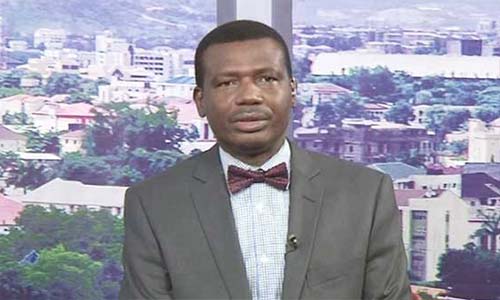
Senior Advocate of Nigeria, Ebun Adegboruwa, has called on President Bola Tinubu to urgently review the reported realignment of the Lagos-Calabar Coastal Highway away from coastal communities in Ondo and Delta States, warning that the changes could undermine the original development objectives of the project.

Adegboruwa, in a statement issued on October 12, 2026, titled “Lagos-Calabar Coastal Highway: Time For President Tinubu To Call Umahi To Order,” urged the President to intervene and ensure that decisions on the highway are based on transparent technical, economic and environmental assessments.
The senior lawyer said the Lagos-Calabar Coastal Highway was conceived as a major infrastructure corridor intended to connect communities and economic centres along Nigeria’s Atlantic coastline, adding that the reported movement of portions of the road inland raises questions about whether coastal communities would still derive the anticipated benefits.
According to him, coastal communities in Ondo and Delta States depend significantly on fishing, maritime activities, tourism and other businesses linked to the Atlantic coastline and waterways.
He warned that moving the highway substantially away from such communities could deny residents direct access to emerging commercial corridors and limit opportunities for businesses, farmers, fishers, transport operators and investors.
“For the people of Ilaje and other coastal communities in Ondo State, as well as coastal communities in Delta State, the concern is not merely about where a road passes,” Adegboruwa said.
“It is about whether the promise of national infrastructure will translate into tangible development for the people whose geographical position makes them natural stakeholders in a coastal highway project.”
He described the reported realignment as potentially damaging to the interests of the affected communities, stating that “the reported realignment will be nothing short of sabotage.”
Adegboruwa acknowledged that the Federal Government had cited engineering considerations, including difficult terrain, weak subsoil conditions, construction costs and flood resilience, in reviewing portions of the alignment.
However, he argued that such challenges should lead to a proper consideration of alternatives rather than automatically excluding coastal communities from the project.
“There is nothing special about the coastlines of Ondo and Delta States when compared with Lagos,” he said.
The senior advocate maintained that a project described as a coastal economic corridor should be evaluated not merely by the number of kilometres constructed but by its ability to connect coastal settlements, stimulate maritime commerce, promote tourism and generate economic opportunities along the shoreline.
He therefore urged the Federal Government to undertake a comparative assessment of the original coastal route and the revised inland alignment, taking into consideration construction and maintenance costs, journey times, environmental consequences, employment opportunities and the distribution of economic benefits.
Adegboruwa also called for greater transparency regarding the environmental implications of the project, noting that coastal erosion, flooding, wetlands, mangrove ecosystems, fisheries and climate change must be taken into account in determining the final route.
He urged the government to make relevant technical and environmental studies available to the public and consult communities that could be affected before irreversible decisions are taken.
According to him, excluding important coastal settlements in Ondo and Delta from the direct route could also create concerns about unequal distribution of the economic opportunities expected from the project.
He appealed to President Tinubu to order an independent technical review of the reported realignment, direct the Federal Ministry of Works to explain the approved route publicly and identify the communities that would either be served or bypassed.
Adegboruwa further called for the retention or restoration of a viable coastal alignment through Ondo and Delta wherever technically, environmentally and economically feasible.
He also proposed a stakeholder meeting involving the Federal Government, Ondo and Delta State governments, traditional rulers, coastal communities, engineers, environmental experts and investors.
For communities that may ultimately not be directly served by the highway, the senior lawyer urged the government to provide complementary access roads and other economic infrastructure to ensure they are not isolated from the opportunities associated with the project.
“I am not asking the Federal Government to disregard legitimate engineering considerations,” Adegboruwa said.
“I am asking that those considerations be weighed transparently against the original objectives of the project and the rights and development aspirations of the affected communities.”
He added: “A coastal highway should create opportunities for coastal communities, not leave them wondering whether the promise of development has passed them by.”
[A MUST HAVE] Evidence Act Demystified With Recent And Contemporary Cases And Materials

Available now for NGN 40,000 at ASC Publications, 10, Boyle Street, Onikan, Lagos. Beside High Court, TBS. Email publications@ayindesanni.com or WhatsApp +2347056667384. Purchase Link: https://paystack.com/buy/evidence-act-complete-annotation
______________________________________________________________________ “Enhance Legal Practice With Authoritative Reports” — Alexander Payne Offers Comprehensive Law Reports, Spanning Over A Century Of Nigerian Jurisprudence Interested buyers are encouraged to place their orders and enquiries via:
0704 444 4777, 0704 444 4999, 0818 199 9888
Website: www.alexandernigeria.com
Interested buyers are encouraged to place their orders and enquiries via:
0704 444 4777, 0704 444 4999, 0818 199 9888
Website: www.alexandernigeria.com