The Presidency has cautioned Nigerians in the diaspora against allowing opposition to the government of the day to translate into actions capable of undermining Nigeria’s stability or economic interests, insisting that political disagreements should not become an excuse to work against the country.

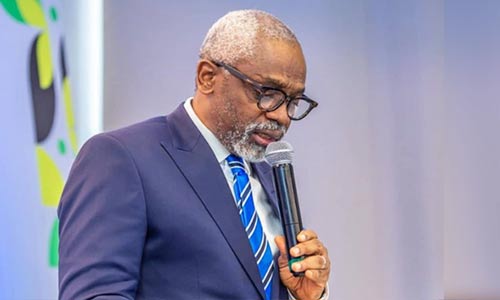
Chief of Staff to the President, Femi Gbajabiamila, delivered the message while representing President Bola Tinubu at the Nigeria Diaspora Economic Conference, NIDEC 2026, in Canada.
The conference, themed “Invest Nigeria, Thrive Abroad,” brought together Nigerians in the diaspora, business leaders, professionals, investors and institutions to discuss ways of converting diaspora resources, expertise and networks into sustainable investment, job creation and economic development in Nigeria. NiDCOM had described the gathering as an investment-focused platform intended to move diaspora engagement beyond consumption-based remittances to structured investments.
Speaking at the Apollo Convention Centre in Mississauga, Ontario, Gbajabiamila told Nigerians abroad that while political parties, governments and citizens were entitled to disagree, such disagreements should not become permanent opposition to governance or efforts capable of hurting Nigeria itself.
“As our democracy enters another season of political contest, we must remember that campaigns are seasonal, but citizenship is permanent,” he said.
“Elections will produce winners and losers. Nigeria must always win.
“Political parties may oppose one another, and citizens may disagree profoundly with the government. That is democracy. But political activity must never become a permanent veto on governance or an excuse to work against the country itself.”
Gbajabiamila went further, warning Nigerians against lending their influence, platforms or resources to activities the government considers capable of promoting instability or economic sabotage.
“No disappointment with an administration, no loyalty to a political figure, and no partisan ambition justifies lending one’s name, platform, network, or resources to those who project instability, economic sabotage, or the deliberate impoverishment of the Nigerian people,” he said.
@thenigerialawyer“You May Oppose A Government, But Must Never Wish Nigeria To Fail” — Gbajabiamila Tells Diaspora As Nigerians Push Back At Presidency
“Chaos has no partisan address, and its first victims are always people with low incomes.”
He maintained that citizens did not have to support every government policy but should distinguish between opposing an administration and seeking outcomes that could damage the country.
“You do not have to agree with every policy to defend Nigeria’s peace, institutions and economic future,” he said.
“You may oppose a government; you must never wish the country to fail merely to prove your political rights.”
The comments were made as the Tinubu administration sought to persuade Nigerians abroad to deepen their economic engagement with the country, particularly through direct and structured investments rather than limiting their financial contributions to remittances for family consumption.
NiDCOM had said ahead of the conference that Nigerians abroad remit more than $20 billion annually and that NIDEC was designed to channel more of that financial capacity, as well as diaspora expertise and international networks, towards businesses and development projects in Nigeria.
Gbajabiamila argued that remittances used for school fees, medical expenses and the daily needs of relatives should become the starting point rather than the limit of diaspora economic engagement.
The government wants Nigerians overseas to increase investments in areas including manufacturing, agriculture and agro-processing, technology and fintech, infrastructure, renewable energy, healthcare, real estate and capital markets.
NiDCOM’s official outline of the conference similarly identified fintech, ICT, agriculture and agro-processing, mining, renewable energy, infrastructure, healthcare, pharmaceuticals, real estate, banking and capital markets among the sectors being targeted for diaspora investment.
Gbajabiamila also defended the economic policies pursued by the Tinubu administration, arguing that difficult reforms undertaken over the past three years were beginning to produce measurable results.
He cited Nigeria’s real Gross Domestic Product growth of 3.89 per cent in the first quarter of 2026 and manufacturing sector growth of 3.29 per cent during the same period. Those figures correspond with data published by the National Bureau of Statistics.
He also pointed to inflation, which stood at 15.91 per cent according to the latest data displayed by the National Bureau of Statistics, as evidence that some macroeconomic indicators were moving in the government’s desired direction.
Gbajabiamila further cited Nigeria’s improved external reserves position. The Central Bank of Nigeria has reported gross external reserves above $45 billion, describing the buildup as an improvement in the country’s capacity to withstand external shocks.
He also referenced the International Monetary Fund’s projection that the Nigerian economy would grow by 4.1 per cent in 2026. The IMF’s July 2026 outlook places Nigeria’s projected real GDP growth at 4.1 per cent, while noting that higher prices could continue to worsen poverty and food insecurity despite improved macroeconomic stability.
The Chief of Staff presented the figures as evidence that the administration’s reforms were beginning to rebuild confidence in the Nigerian economy.
He said he had worked closely enough with Tinubu to see a President prepared to bear the political consequences of difficult economic decisions.
“I have had the privilege of serving President Tinubu at close quarters,” Gbajabiamila said.
“I have seen a leader prepared to spend political capital to rebuild Nigeria’s economic capital, a President willing to absorb criticism for decisions he believes future generations will vindicate, and a man who does not claim infallibility but accepts responsibility.”
According to him, Tinubu was prepared to listen and modify policies when evidence justified doing so but would not abandon reforms merely because they were politically difficult.
“He listens, he adjusts where evidence requires it, but he will not surrender Nigeria’s future to the politics of postponement,” Gbajabiamila said.
He argued that the choice confronting Nigeria was not between the administration’s reforms and a hardship-free alternative, but between completing what he described as a difficult recovery and returning to economic arrangements that had become unsustainable.
“The choice before Nigeria is not between reform and an imaginary world without hardship,” he said.
“It is between completing a difficult recovery and returning to arrangements whose comfort was purchased by hidden costs, weak production, and dwindling national capacity.”
Gbajabiamila acknowledged that the government was not suggesting that economic hardship had disappeared.
“President Tinubu’s argument is not that all is well,” he said.
Rather, he said the government’s position was that the economic foundation was being rebuilt, that the economy had begun responding and that the reforms needed to be consolidated until ordinary Nigerians experienced their full benefits.
He consequently urged Nigerians abroad to judge the conference not merely by speeches, applause or its final communiqué but by actual investment commitments and businesses established as a result of the gathering.
The remarks, particularly the warning against Nigerians using their platforms to project instability or economic sabotage, however, generated pushback from some Nigerians in the diaspora.
Critics rejected what they interpreted as an attempt by the Presidency to blame Nigerians abroad for the country’s image and economic difficulties.
Some argued that rather than questioning citizens who criticise the government internationally, the administration should address allegations of corruption and misuse of public resources, worsening hardship and concerns about Nigeria drifting towards one-party dominance.
They maintained that Nigerians abroad should remain free to criticise government policies and expose what they consider wrongdoing without such criticism being characterised as an attempt to “demarket” Nigeria.
The criticism included allegations that public officials were presiding over the looting of the country’s resources while simultaneously blaming Nigerians abroad for highlighting governance failures. Those assertions remain political allegations and were not established as findings in the material accompanying the reactions.
Others also pointed to recent defections and political realignments as grounds for their concerns about what they described as an emerging one-party political system, while accusing the government of seeking to discourage dissent ahead of the 2027 elections.
Gbajabiamila’s speech itself, however, expressly acknowledged the right of citizens to disagree with the government and of political parties to oppose one another, drawing the line at conduct which, in the Presidency’s view, deliberately promotes instability, economic sabotage or national failure.
The clash of views therefore underscored a broader debate over the distinction between legitimate criticism of a government and actions that authorities may portray as damaging to the national interest.
For the Tinubu administration, the conference was principally an attempt to persuade one of Nigeria’s most economically important communities abroad to become more directly involved in investment and development at home.
For some of its critics in the diaspora, however, attracting that investment will require not only appeals to patriotism but stronger accountability, political pluralism, institutional confidence and answers to concerns about governance at home.
[A MUST HAVE] Evidence Act Demystified With Recent And Contemporary Cases And Materials

Available now for NGN 40,000 at ASC Publications, 10, Boyle Street, Onikan, Lagos. Beside High Court, TBS. Email publications@ayindesanni.com or WhatsApp +2347056667384. Purchase Link: https://paystack.com/buy/evidence-act-complete-annotation
______________________________________________________________________ “Enhance Legal Practice With Authoritative Reports” — Alexander Payne Offers Comprehensive Law Reports, Spanning Over A Century Of Nigerian Jurisprudence Interested buyers are encouraged to place their orders and enquiries via:
0704 444 4777, 0704 444 4999, 0818 199 9888
Website: www.alexandernigeria.com
Interested buyers are encouraged to place their orders and enquiries via:
0704 444 4777, 0704 444 4999, 0818 199 9888
Website: www.alexandernigeria.com