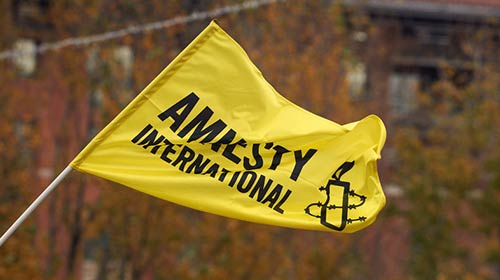
Amnesty International and seven human rights and environmental organisations have alleged that internal Shell documents disclosed in ongoing United Kingdom litigation reveal years of neglected infrastructure, weakened safety controls and unresolved decommissioning obligations linked to the company’s former onshore operations in Nigeria’s Niger Delta.

The allegations are contained in a report titled Nigeria: Lifting the Lid: Internal Documents Expose Shell’s Negligent Oil Operations, published on Wednesday by Amnesty International, The Corner House, Hawkmoth, HEDA Resource Centre, Kebetkache Women Development and Resource Centre, Miideekor Environmental Development Initiative, ReCommon and Social Action.
The report analysed internal emails, technical audits, confidential reviews and presentations covering Shell’s Nigerian operations between 2008 and 2014.
According to Amnesty, 27 redacted documents were released in April 2026 after civil society organisations applied for their publication on public-interest grounds. Further information emerged from a court filing by claimants in May.
The documents were disclosed in litigation instituted in 2015 by residents of the Bille and Ogale communities in Rivers State against Shell Plc and its former Nigerian subsidiary, Shell Petroleum Development Company of Nigeria Limited.
Amnesty said the documents raised questions about the maintenance of pipelines and wells, the effectiveness of leak-detection systems, the management of oil theft points and the accuracy of investigations into the causes and extent of spills.
The coalition alleged that Shell knew some of its pipelines were ageing and leaking, including one internally described as a “basket case,” but continued production despite concerns about the environmental consequences.
One internal presentation considered by senior company officials in 2013 reportedly questioned whether production should continue when further environmental damage was anticipated.
According to the report, Shell officials discussed whether to shut pipelines temporarily to remove illegal connections and repair damage or continue production under a stop-start arrangement.
The coalition alleged that senior officials allowed some illegal taps to remain on pipelines because removing them would require substantial production downtime, thereby interrupting crude oil flows.
It said the approach prompted security personnel responsible for pipeline protection to accuse the company of complicity in oil theft because identified bunkering points were allegedly not being removed.
The report acknowledged that organised oil theft, pipeline vandalism and illegal refining were serious problems in the region but argued that the disclosed documents challenged Shell’s longstanding position that criminal interference was responsible for most of the pollution.
Amnesty also alleged that Shell’s Nigerian subsidiary obtained exemptions from elements of the company’s global health, safety, security and environmental standards, allowing production to continue through pipelines considered unsafe under its general operating rules.
The documents reportedly showed that temporary clamps placed on leaking pipelines were sometimes allowed to become permanent repairs.
More than 1,600 clamps were reportedly registered, while the locations of some older ones could not be established.
The report further alleged that Shell had inadequate records concerning the location and condition of hundreds of oil wells, leading SPDC to commence what was described internally as a “well hunt campaign” in 2014.
A 2011 internal security review reportedly described SPDC’s security arrangements as seriously deficient, while company officials suspected that employees and contractors might be providing operational information to persons involved in oil theft.
The report cited an internal communication warning that the company had to proceed on the assumption that oil thieves had access to SPDC’s planning information.
The coalition also referred to an internal allegation of collusion, nepotism and corruption within the Nigerian subsidiary, claiming that Shell’s internal code of conduct was regularly disregarded.
Amnesty maintained that the disclosed documents also indicated the direct involvement of Shell’s parent company in operational decisions concerning SPDC, contrary to arguments previously advanced that the Nigerian subsidiary operated autonomously.
The report said Shell had considered selling its Nigerian onshore operations for more than a decade before the transaction was completed in 2025.
According to Amnesty, an internal document sent to Shell’s then-Chief Executive in 2014 estimated that decommissioning all existing SPDC assets could take several decades and cost approximately $10.9 billion.
The report said the figure would be equivalent to approximately $14 billion in current value and appeared to exclude the cost of cleaning up existing pollution.
A separate internal presentation reportedly identified about 375 square kilometres of mangrove forest affected by pollution and questioned whether the company was prepared to confront the potentially open-ended problem.
Shell completed the sale of SPDC to Renaissance Africa Energy Company in March 2025. The former subsidiary was subsequently renamed Renaissance Africa Energy Company Limited.
Director of Amnesty International Nigeria, Isa Sanusi, said the documents raised serious questions about what Shell knew, the risks it allegedly permitted to continue and whether its eventual divestment was partly intended to avoid the costs associated with ageing infrastructure and environmental damage.
He accused the company of prioritising profits over the rights of Niger Delta communities and accepting environmental risks in Nigeria that would not have been tolerated in other jurisdictions.
Social Action Director Isaac Osuoka warned that Shell’s divestment should not become a means of transferring ageing infrastructure and historical pollution liabilities to affected communities or a new operator.
HEDA Resource Centre Chairman Olanrewaju Suraju said communities should not be left with the environmental consequences after decades of oil extraction and demanded truth, remediation and compensation.
Dr Emem Okon of Kebetkache Women Development and Resource Centre argued that a company unable to confirm the location and integrity of hundreds of wells and pipeline clamps could not reasonably claim to have maintained effective control over pollution.
Celestine Akpobari of Miideekor Environmental Development Initiative said inaccurate spill investigations could deny affected residents compensation and leave contaminated communities without adequate remediation.
The coalition called on the Federal Government to reform regulation of the oil industry, conduct transparent audits of active and decommissioned infrastructure and establish a properly funded Niger Delta environmental restoration fund.
It also demanded the public disclosure of Shell’s divestment agreement with Renaissance, including the assets and liabilities transferred and the communities affected.
The organisations urged the Nigerian government to ensure that companies and their joint-venture partners provide adequate funding for decommissioning, environmental remediation and compensation.
They also called on authorities in the United Kingdom and the Netherlands to investigate whether Shell misled regulators, shareholders or affected communities about the condition of its Nigerian assets and the extent of its liabilities.
Shell, however, rejected Amnesty’s characterisation of the documents, accusing the organisation of selectively presenting information in a way that created a misleading impression.
The company said the report failed to reflect the difficult operating environment in the Niger Delta, including large-scale oil theft, sabotage and illegal refining carried out by organised criminal groups.
Shell maintained that its former Nigerian subsidiary worked with government authorities, its state-owned joint-venture partner and local communities to respond to spills and clean affected sites, irrespective of the cause, as required by Nigerian law.
It added that the Bille and Ogale claims involved complex and disputed issues that would be tested during the ongoing proceedings before the English courts.
Shell maintains that oil theft, sabotage and illegal refining caused most of the pollution forming the subject of the communities’ claims and has said it will vigorously defend the cases.
Renaissance Africa Energy did not respond to Amnesty’s request for comments before the publication of the report.
The Bille and Ogale communities are seeking compensation and environmental remediation over pollution they allege destroyed farmland, fisheries, drinking-water sources and livelihoods.
The Bille aspect of the litigation is scheduled for a four-month factual trial beginning in March 2027, when the English High Court is expected to consider selected claims, the alleged causes of the environmental damage and the parties’ respective liabilities.
[A MUST HAVE] Evidence Act Demystified With Recent And Contemporary Cases And Materials

Available now for NGN 40,000 at ASC Publications, 10, Boyle Street, Onikan, Lagos. Beside High Court, TBS. Email publications@ayindesanni.com or WhatsApp +2347056667384. Purchase Link: https://paystack.com/buy/evidence-act-complete-annotation
______________________________________________________________________ “Enhance Legal Practice With Authoritative Reports” — Alexander Payne Offers Comprehensive Law Reports, Spanning Over A Century Of Nigerian Jurisprudence Interested buyers are encouraged to place their orders and enquiries via:
0704 444 4777, 0704 444 4999, 0818 199 9888
Website: www.alexandernigeria.com
Interested buyers are encouraged to place their orders and enquiries via:
0704 444 4777, 0704 444 4999, 0818 199 9888
Website: www.alexandernigeria.com