*As Millions Of Nigerians Endure Daily Blackouts And Soaring Costs

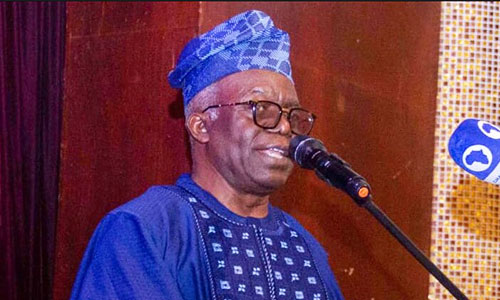
Senior Advocate of Nigeria Femi Falana has ignited a fierce national debate over energy inequality in Nigeria, questioning why solar-powered comfort appears reserved for the political elite at the Presidential Villa, Aso Rock, while millions of Nigerians remain trapped in a relentless cycle of blackouts, collapsing national grids, soaring electricity costs, and dependence on expensive generators.
Falana’s intervention came in response to reports that solar power systems have been installed at the Presidential Villa a revelation that has triggered widespread outrage in a country where darkness has become a defining feature of daily life for the vast majority of citizens.
The senior lawyer framed his criticism not merely as outrage but as a constitutional and moral argument: that energy access is not a privilege to be enjoyed by those at the apex of power but a right tied to dignity, economic survival, and national development.
Falana argued that if public funds were used to install solar infrastructure at the Presidential Villa, then equity demands that similar solutions be scaled across the country not confined to government enclaves insulated from the harsh realities facing ordinary Nigerians.
His central question is both simple and devastating: if renewable energy is viable and effective enough for the seat of power, why is it not a national priority for the people who fund that seat of power through their taxes?
The argument reframes the Aso Rock solar installation from a routine government procurement into a symbol of the inequality that defines Nigeria’s power sector where those who govern enjoy uninterrupted electricity while those they govern navigate darkness, rationing, and the punishing costs of self-generation.
Falana insisted that renewable energy particularly solar offers a practical and proven pathway out of Nigeria’s chronic electricity crisis. Nigeria, located in the tropics with abundant sunlight year-round, has one of the highest solar energy potentials in the world, yet solar adoption remains negligible compared to the country’s needs.
However, Falana warned that without deliberate government policy to democratise access to renewable energy, solar risks becoming yet another symbol of inequality available to the wealthy, to government officials, and to the politically connected, while the masses continue to burn fuel in generators or simply sit in darkness.
He argued that what is needed is not token projects or pilot programmes but a comprehensive national renewable energy strategy that brings clean, affordable power to homes, businesses, schools, and hospitals across all 36 states and the Federal Capital Territory.
Falana’s remarks land at a time when public frustration with Nigeria’s electricity situation has reached boiling point.
The national grid continues to suffer frequent collapses — incidents that plunge entire cities into darkness, shut down businesses, disrupt hospitals, and render millions of Nigerians helpless. Grid collapses have become so routine that they barely qualify as news, yet their cumulative economic and social impact is devastating.
For many Nigerians, electricity is no longer a basic utility — it is a luxury. Households that receive power for a few hours a day consider themselves fortunate. Businesses budget more for diesel generators than for rent. Manufacturers relocate to countries with stable power. Small traders lose perishable goods to every outage. Students study by candlelight or phone torchlight. Hospitals conduct procedures during blackouts.
Yet while ordinary Nigerians endure these conditions, reports of massive government expenditure on generators, alternative power solutions, and now solar installations within government circles continue to fuel public anger and deepen the perception that those in power have insulated themselves from the consequences of the system they have failed to fix.
The frustration is compounded by the scale of investment that has been poured into Nigeria’s power sector with minimal results. Successive administrations civilian and military have committed billions of dollars to power generation, transmission, and distribution with little improvement in the daily experience of ordinary Nigerians.
The privatisation of the power sector in 2013, the various interventions through the Niger Delta Power Holding Company, the Transmission Company of Nigeria, and multiple reform programmes have all failed to deliver reliable electricity to the majority of the population.
Critics argue that the Aso Rock solar installation epitomises this failure: rather than fixing the system for everyone, the government fixes it for itself and leaves the people to cope with the consequences.
Falana’s position has found widespread support across social media and policy circles, with Nigerians echoing a common refrain: why should the government enjoy uninterrupted, clean energy while citizens are left to navigate darkness and rising costs?
The backlash has been swift and extensive, with commentators describing the situation as a moral indictment of governance in Nigeria.
Some analysts have cautioned that scaling solar infrastructure nationwide requires significant investment, coordination, long-term planning, and institutional capacity that Nigeria currently lacks. The cost of equipping 200 million people with reliable solar power would be substantial, and the logistical challenges of distribution, installation, maintenance, and financing in a country with Nigeria’s infrastructure deficits should not be underestimated.
But even among sceptics, there is consensus on one fundamental point the current system is unsustainable. A country that is Africa’s largest economy and the continent’s most populous nation cannot continue to function with a power sector that delivers less electricity than many smaller African nations.
Stakeholders are demanding transparency over the funding and scope of the Aso Rock solar project, including the total cost of the installation, the procurement process, the contractors involved, and whether the project was budgeted for and approved through proper channels.
They are also demanding a clear, actionable roadmap for expanding renewable energy access across Nigeria not as a future aspiration but as an immediate priority backed by specific funding, timelines, and implementation mechanisms.
For Falana and for millions of Nigerians, the Aso Rock solar controversy is more than a policy debate about energy infrastructure. It is a defining test of governance of whether those who lead Nigeria are willing to share in the conditions they impose on the people, or whether they will continue to build islands of comfort for themselves while the nation they govern remains in darkness.
Because in a country where the lights keep going out, the question is no longer whether Nigeria can fix its power crisis. The technology exists. The resources exist. The sunlight is abundant.
The question is whether the political will exists to fix it for everyone not just those at the top.
[A MUST HAVE] Evidence Act Demystified With Recent And Contemporary Cases And Materials

Available now for NGN 40,000 at ASC Publications, 10, Boyle Street, Onikan, Lagos. Beside High Court, TBS. Email publications@ayindesanni.com or WhatsApp +2347056667384. Purchase Link: https://paystack.com/buy/evidence-act-complete-annotation
______________________________________________________________________ “Enhance Legal Practice With Authoritative Reports” — Alexander Payne Offers Comprehensive Law Reports, Spanning Over A Century Of Nigerian Jurisprudence Interested buyers are encouraged to place their orders and enquiries via:
0704 444 4777, 0704 444 4999, 0818 199 9888
Website: www.alexandernigeria.com
Interested buyers are encouraged to place their orders and enquiries via:
0704 444 4777, 0704 444 4999, 0818 199 9888
Website: www.alexandernigeria.com