*Blames INEC For Misinterpreting Court Order,And Warns Leadership Crisis Could Cost Party Everything

Lawyer and public affairs analyst Liborous Oshoma has advised the African Democratic Congress against proceeding with its planned national convention while multiple leadership cases remain unresolved in the courts, warning that doing so could prove “fatal” for the party citing the examples of Zamfara APC and Rivers State in 2019, where candidates who emerged from disputed conventions ultimately lost their seats at the Supreme Court.
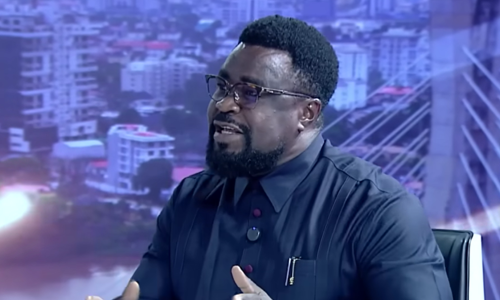
Speaking on Arise Television’s Morning Show on Sunday, Oshoma delivered a comprehensive analysis of the ADC crisis, blaming INEC for misinterpreting the Court of Appeal’s order, calling on Nigerian courts to stop using Latin maxims like “status quo ante bellum” that create confusion and allow politicians to claim victory from both sides of a ruling, and lamenting that Nigeria’s political leaders consistently demonstrate an inability to determine leadership among themselves — forcing the judiciary to do a job it was never designed to do.
Oshoma’s most direct advice to the Mark-led ADC faction was clear: do not insist on holding a convention while the Nafiu Bala Gombe suit and other challenges remain pending before the courts.
“While you are preparing for your convention, go ahead, but make sure your eye on the ball is on that matter in court because you can’t rule out what your opponent will use against you even before they get to the election,” Oshoma stated.
He drew specific parallels to warn of the consequences.
“In Zamfara, the Supreme Court said where the convention was conducted outside the requirement and the laid-down procedures, to that extent all of the candidates that emerged from that process, even though they won the election, they all lost their seats. It also happened in Rivers State in 2019,” Oshoma recalled.
He pointed to the PDP convention in Ibadan as a more recent cautionary tale, noting that the Ibadan court refused to validate the convention because it was conducted in disobedience of a court order.
“The court said no, you went in disobedience of a court order. And so to that extent, you cannot be asking me to rubber stamp what you did in disobedience of a court order,” Oshoma stated.
He warned: “At the end of the day the case can go either way, and that might be very fatal.”
Oshoma acknowledged that the ADC’s decision not to proceed with the convention immediately was actually the right call, despite the frustration it has caused.
“It would have been even worse if they had gone ahead since there’s a leadership crisis. The man who was alleged to have resigned said ‘I didn’t resign, my signature was forged.’ Let the court look at all of those documents before them,” Oshoma stated.
He explained that the suit is an originating process based on affidavit evidence that does not require witnesses meaning the court can examine all the documentary evidence and determine the matter relatively quickly if given the opportunity.
“It’s an originating process. You don’t need witnesses. The court will look at all the affidavit evidence and determine,” Oshoma stated.
Oshoma placed significant blame on INEC for deepening the crisis through what he described as a flawed interpretation of the Court of Appeal’s “status quo ante bellum” order.
He pointed to a critical fact: INEC itself, in its counter-affidavit filed at the Federal High Court, had stated that it recognised the Mark-Aregbesola leadership following the July 2025 NEC meeting. Having taken that position under oath, Oshoma argued, INEC should have maintained that recognition as the status quo.
“Having deposed to that affidavit that you believe that these people had conducted a NEC meeting and they had recognised and we have recognised them — that’s your position. So now we will maintain that position as it were before you brought us to court,” Oshoma stated.
“Mind you, that position was in July. The suit was in September. So we’ll maintain that position until the court determined otherwise. But however, don’t do anything. Don’t hold convention. We will not recognise any convention that you hold because the court had said we shouldn’t take steps further until we deal with this,” he explained.
Oshoma said this interpretation would have saved all sides from the current crisis of derecognition and calls for resignation.
“But when you now decide that I’m going to apply the big stick the way I’ve been applying it, forgetting the moment and not gauging the mood, certainly you’re going to be caught in trouble and all of this backlash would come. So INEC actually also faltered in that interpretation. That’s my opinion,” Oshoma concluded on this point.
In a notable observation, Oshoma suggested that the entire crisis could have been avoided if the ADC leadership had handled Gombe more carefully before the falling out.
“I think also in my honest opinion that the man, Nafiu Bala, should have properly been managed far better than this before he fell out. Because when I listened to Senator Abu and when he explained the crisis that led to him disagreeing with the party, and what was promised and eventually reneged, I felt no, it would have been better managed,” Oshoma stated.
He acknowledged he had not heard the other side’s full account but suggested that better internal management could have prevented the suit that has now paralysed the party.
Oshoma made a broader advocacy point about the use of Latin phrases in Nigerian court orders, arguing that expressions like “status quo ante bellum” create unnecessary confusion that politicians exploit.
He explained the distinction between the terms: “Status quo means as you were. Status quo ante bellum is the position you were before the war, before the crisis. Status quo ante is the position you were before litigation that’s why we say pendente lite, meaning pending litigation.”
But he argued that regardless of the technical distinctions, the use of such language in a Nigerian political context is counterproductive.
“The problem is, I think it is high time in Nigeria that courts should stop using some of these Latin maxims. Make judgments in plain English,” Oshoma advocated.
He noted that in today’s political environment, where “everybody is almost a lawyer,” politicians will always look for loopholes to claim victory and interpret judgments to suit their positions. Clear, unambiguous language would reduce the scope for manipulation.
“A judgment that will be subject to various interpretations the courts should be as clear as possible so as not to create confusion,” Oshoma stated.
Oshoma delivered a sweeping critique of Nigeria’s political class, arguing that the recurring pattern of parties running to courts to resolve leadership disputes reveals a fundamental failure of political leadership.
“The problem in Nigeria is that our leadership have consistently shown that they lack the integrity to select leaders amongst themselves. And so that is why they indirectly donate this power to a few persons called members of the judiciary,” Oshoma stated.
He noted that at every turn whether primaries, conventions, congresses, or nominations political parties run back to the courts to determine who should lead, a situation he described as shameful.
“I’m ashamed that all of them, they are the same. They are not able to determine their leaders among themselves, and these are the people who want to solve our complex problems,” Oshoma declared.
Oshoma took the discussion back to fundamentals by referencing the Electoral Reform Committee chaired by retired Justice Mohammed Uwais, set up by the late President Umaru Yar’Adua.
He recalled that the committee recommended that the National Judicial Council should advertise INEC positions, shortlist candidates, and send nominations to the National Council of State removing the president entirely from the selection process. The committee also recommended delisting INEC from among executive bodies to make it truly independent.
“Unfortunately, some of the people who are protesting today were in the shadows at that time. They didn’t know that this day would come. And the most unfortunate part is that those who are in government today were the ones shouting ‘Uwais Panel Report! Implement it!’ They are in government and they have closed their eyes to that same report,” Oshoma stated.
“And those who are shouting today, the tables will always turn someday. They also had that opportunity and they didn’t do it,” he added.
Oshoma analysed the contradiction within Section 83 of the Electoral Act 2026, which bars courts from interfering in internal party matters but simultaneously prescribes that courts should not grant interlocutory injunctions implying that courts may still hear such cases but cannot grant interim relief.
“Section 83 gave with one hand and took with the other. It also prescribed that the court should not grant interlocutory injunctions and that the court should wait for final determination. So you’re saying don’t interfere in interparty matters, but however if you interfere, don’t grant interlocutory injunctions,” Oshoma observed.
He said this internal contradiction reflects the legislature’s understanding that there are areas where court intervention is necessary, even in party affairs particularly where criminality is alleged or where there is non-compliance with the provisions of the Electoral Act and the Constitution.
Oshoma concluded by warning that if the ADC fails to resolve its leadership crisis quickly, the political consequences could be severe.
Asked whether there would be political implications if the Mark-led faction fails to secure the legal standing to nominate candidates before the primary window closes, Oshoma was direct.
“Yes. A big one. I gave you the example with Zamfara, I gave you the example with Rivers. The heavens will not fall. They better put their house in order,” Oshoma stated.
He noted that the ADC leadership is already exploring alternatives, including meetings with the PRP, but questioned the wisdom of those choices.
“I don’t know why these people keep looking for political parties with issues,” Oshoma observed, referencing the PRP’s own internal leadership controversies.
“The next six weeks will be interesting,” Oshoma concluded.
Would you like me to adjust any of the headlines or the story?
[A MUST HAVE] Evidence Act Demystified With Recent And Contemporary Cases And Materials

Available now for NGN 40,000 at ASC Publications, 10, Boyle Street, Onikan, Lagos. Beside High Court, TBS. Email publications@ayindesanni.com or WhatsApp +2347056667384. Purchase Link: https://paystack.com/buy/evidence-act-complete-annotation
______________________________________________________________________ “Enhance Legal Practice With Authoritative Reports” — Alexander Payne Offers Comprehensive Law Reports, Spanning Over A Century Of Nigerian Jurisprudence Interested buyers are encouraged to place their orders and enquiries via:
0704 444 4777, 0704 444 4999, 0818 199 9888
Website: www.alexandernigeria.com
Interested buyers are encouraged to place their orders and enquiries via:
0704 444 4777, 0704 444 4999, 0818 199 9888
Website: www.alexandernigeria.com