The United States District Court for the District of Columbia has dismissed a lawsuit filed by Nigerian businessman Ted Iseghohi Edwards and his assignee, Boston Legal Partners Inc., seeking to enforce payment on promissory notes totaling $159 million issued by the Federal Republic of Nigeria, ruling that the court lacks subject-matter jurisdiction over the claims.
Presiding Judge Colleen Kollar-Kotelly granted Nigeria’s motion to dismiss, holding that the West African nation enjoys presumptive immunity from suits in American courts under the Foreign Sovereign Immunities Act and that the plaintiffs failed to establish any applicable exception to that immunity.
The ruling marks the second time a US court has thrown out Edwards’ attempts to enforce the notes, following a similar dismissal by the District of Massachusetts in 2018, and reinforces Nigeria’s sovereign immunity defences in foreign jurisdictions.
The dispute has its roots in the Paris Club debt refund process — a programme through which Nigerian local governments and states received refunds for over-deductions from foreign debt repayments made by the federal government in the mid-2010s.
Edwards claimed entitlement to a 10 per cent legal and consultancy fee for services he said he provided to the Association of Local Governments of Nigeria in securing the Paris Club refunds. When he allegedly faced difficulties collecting his fees through domestic channels, the matter escalated to the federal level.
In September 2021, Nigeria’s Debt Management Office issued 10 promissory notes worth $15.9 million each, totaling $159 million, in Edwards’ favour. The notes were backed by the full faith and credit of the Federal Government of Nigeria, governed by Nigerian law, and payable through the Central Bank of Nigeria.
Edwards subsequently assigned the notes to Boston Legal Partners Inc., a Massachusetts-registered entity.
When no payment was made on the first maturing note, which was due on October 15, 2022, the businessman and his assignee turned to US courts to enforce payment.
This was not Edwards’ first attempt to use American courts to collect on the notes. In 2018, he filed an enforcement suit in the District of Massachusetts, but that case was dismissed on grounds of FSIA immunity and failure to state a claim.
Undeterred, Edwards and Boston Legal Partners filed a fresh suit in the District of Columbia in April 2023, naming the Federal Republic of Nigeria, its Attorney-General and Minister of Justice, and the Debt Management Office as defendants. They sought payment on the first note and initially requested summary judgment, which the court denied as premature.
Nigeria moved to dismiss the suit, arguing that it enjoys sovereign immunity under the FSIA as a foreign state, that no applicable exception to immunity existed, and that the court lacked personal jurisdiction over certain named officials.
The federal government’s legal team contended that the promissory notes were improperly charged against federal rather than state or local government assets, and that no valid consideration existed for the notes because consultants like Edwards were not engaged directly by the federal government.
Judge Kollar-Kotelly agreed with Nigeria’s arguments on all critical points.
The court emphasized that foreign states enjoy presumptive immunity from suits in US courts unless a specific exception under the FSIA applies. The burden falls on the plaintiff to establish such an exception.
The plaintiffs had attempted to invoke the “commercial activity exception” to sovereign immunity, which requires demonstrating that the foreign state’s conduct had a “direct effect” in the United States. However, the court found that Edwards and Boston Legal Partners failed to meet this threshold.
Critically, the court held that the mere fact that the promissory notes were denominated in US dollars does not, by itself, establish a sufficient connection to the United States to confer jurisdiction. The judge noted that the US dollar is a widely used global currency for international transactions and that the notes did not necessarily contemplate performance within the United States.
Since the alleged non-payment of the notes had no direct effect in the US, the court concluded it lacked jurisdiction to hear the case.
The US court dismissal comes against the backdrop of a parallel legal battle in Nigeria. In September 2023, the federal government filed suit in the Federal High Court in Abuja seeking to declare the promissory notes — including those issued to Edwards — invalid and unlawfully issued.
The Nigerian government argued that the notes were improperly charged against federal assets rather than state or local government assets, and that no valid consideration existed because the consultants were not engaged directly by the federal government.
The Paris Club consultancy fee controversy has been a recurring issue in Nigerian public finance, with hundreds of millions of dollars in disputed fees generating political controversy and legal battles. Past administrations, including that of former President Muhammadu Buhari, had intervened to halt certain payments connected to the Paris Club refund process.
The ruling has several significant implications for cross-border enforcement of claims against sovereign nations.
It reinforces the principle that foreign sovereign immunity remains a formidable barrier in US courts, particularly for claims rooted in agreements governed by foreign law and lacking a clear American nexus.
It also demonstrates the limitations of denominating obligations in US dollars as a basis for establishing American jurisdiction, a strategy sometimes employed by creditors seeking to bring claims in US courts against foreign governments.
For Nigeria, the ruling provides important legal protection against what the government has characterized as improperly issued obligations arising from the Paris Club refund process.
For Edwards and other consultants who claim entitlements from the Paris Club refund programme, the ruling effectively closes off US courts as a viable forum for enforcement, leaving them to pursue their claims through Nigerian domestic courts — where the federal government is actively challenging the validity of the notes.
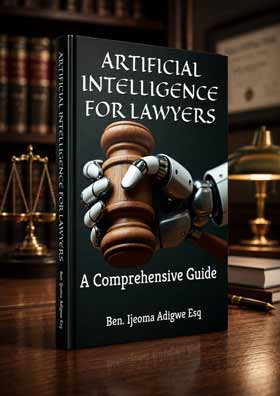 The book also examines Nigeria's legal ecosystem, focusing on the LPELR and NBA AI Guidelines. As a bonus, every purchase comes with a FREE eBook titled: How to Use the AI Features in LegalPedia and LawPavilion.
Ohio Books Ltd praises the publication, stating:
"....this is the only Nigerian book I know of on the topic."
How to Order:
📞 Call, Text, or WhatsApp: 08034917063 | 07055285878
📧 Email: benadigwe1@gmail.com
🌎 Website: www.benadigwe.com
Ebook Version: Access it directly online at https://selar.com/prv626
Authored by Ben Ijeoma Adigwe Esq., ACIarb (UK), LL.M, Dip. in Artificial Intelligence, Director at the Delta State Ministry of Justice, Asaba, Nigeria.
______________________________________________________________________
[A MUST HAVE] Evidence Act Demystified With Recent And Contemporary Cases And Materials
The book also examines Nigeria's legal ecosystem, focusing on the LPELR and NBA AI Guidelines. As a bonus, every purchase comes with a FREE eBook titled: How to Use the AI Features in LegalPedia and LawPavilion.
Ohio Books Ltd praises the publication, stating:
"....this is the only Nigerian book I know of on the topic."
How to Order:
📞 Call, Text, or WhatsApp: 08034917063 | 07055285878
📧 Email: benadigwe1@gmail.com
🌎 Website: www.benadigwe.com
Ebook Version: Access it directly online at https://selar.com/prv626
Authored by Ben Ijeoma Adigwe Esq., ACIarb (UK), LL.M, Dip. in Artificial Intelligence, Director at the Delta State Ministry of Justice, Asaba, Nigeria.
______________________________________________________________________
[A MUST HAVE] Evidence Act Demystified With Recent And Contemporary Cases And Materials

 Interested buyers are encouraged to place their orders and enquiries via:
0704 444 4777, 0704 444 4999, 0818 199 9888
Website: www.alexandernigeria.com
Interested buyers are encouraged to place their orders and enquiries via:
0704 444 4777, 0704 444 4999, 0818 199 9888
Website: www.alexandernigeria.com