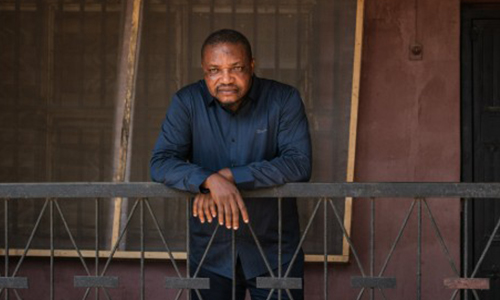
The International Society for Civil Liberties and Rule of Law (Intersociety) has accused the New York Times of falsifying parts of its report that examined how the United States relied on often “unverified” information to assert claims of a Christian genocide in Nigeria.
The controversy centers on a New York Times investigation published on Sunday which scrutinized the data sources used by U.S. Republican lawmakers to support claims of systematic Christian persecution in Nigeria claims that led to U.S. air strikes in the country.
In the report, the New York Times said Emeka Umeagbalasi, Intersociety founder, admitted that he “often does not verify his data.”
“He acknowledged that his research was mainly based on ‘secondary sources’, including Christian interest groups, Nigerian news reports and Google searches,” the report stated.
Umeagbalasi was quoted as saying he has documented 125,000 Christian deaths in Nigeria since 2009 and claimed 100,000 churches exist in Nigeria, with about 20,000 of them destroyed in the past 16 years, based on his internet crawling.
According to the report, the screwdriver salesman is “an unlikely source of research that U.S. Republican lawmakers have used to promote the misleading idea that Christians are being singled out for slaughter” in Nigeria.
The report also alleged that Umeagbalasi claimed the 25 schoolgirls recently kidnapped in Kebbi were mostly Christian despite authorities saying they were all Muslim.
Additionally, the New York Times reported that the Intersociety leader called the Fulani “animals” and said all Fulanis should be confined to one Nigerian state, “a move that would be tantamount to ethnic cleansing.”
The report was filed from an interview with Umeagbalasi in his Onitsha home.
However, in a statement on Monday, Intersociety accused the American newspaper of spinning a “perfidy of lies” in its report.
The statement, co-signed by Umeagbalasi and other Intersociety officials, said the organization was “shocked and totally disappointed” at the “lies injuriously credited” to it, saying they were never part of the interview that lasted for not less than three hours.
“New York Times lied when it falsely claimed that ‘our Board Chair admitted that he often does not verify his data’,” the statement reads.
The organisation listed its data collection processes, allegedly mentioned during the interview, to include “primary or directly generated and secondary or indirectly or third party generated.”
Intersociety named a team of “expert-volunteers and field research assistants” who are volunteers working to document cases of direct data collection across the country in line with international best practices.
The organisation said it explained how they established or identified religious identities of Christian victims such as knowing the Christian populated areas especially across the north, using credible media reports and relying on information from Christian communities and their leaders.
On the number of churches attacked, Intersociety stated: “Contrary to New York Times, we said 19,100 churches were attacked, including burned down or destroyed since 2009, and did not say ‘close to 20,000 churches’. We peripherally mentioned that 100,000 churches were likely to be in Nigeria as of 2021, out of which, estimated 19,100 had gone in the hands of Islamic Jihadists.”
Regarding Boko Haram victims, the New York Times had stated that many of the terrorist group’s victims are Muslim.
“This is totally incorrect. Available statistics especially from 2009-2017, most victims of BH were found to be Christians including estimated 3000-4000 pastoral Igbo Christians living in the North and killed by Boko Haram,” Intersociety countered in its statement.
Intersociety also denied saying many of the 24 abducted Kebbi school girls were Christians, “but that we strongly suspected that some Christian girls were likely to be involved especially when the School is not an Islamic School, but a Government School and that the victim area: Danko/Wasagu Local Govt., is an indigenous Christian populated despite being an Emirate Council.”
The organization vehemently denied calling Fulanis animals.
According to Intersociety, “She (the reporter) had asked to clarify why we opposed ‘Nigerian Government Fulani Pastoralist Cattle Ranching Settlements across the country and we replied that ‘if the Nigerian Government is sincere that the policy does not have jihadist intent that it should designate Niger State, Nigeria’s largest landmass State which is also agriculturally fertile and turn it into one of the Africa’s largest modern cattle and milk producing areas'”.
The controversy gained prominence after it emerged that the United States relied on information and reports from Emeka Umeagbalasi, a screwdriver trader in Onitsha, Anambra state, to launch air strikes in Nigeria.
In October, U.S. President Donald Trump redesignated Nigeria as a “country of particular concern” in response to allegations of a Christian genocide in the country.
“Christianity is facing an existential threat in Nigeria. Thousands of Christians are being killed,” Trump said, blaming radical Islamists for the “mass slaughter.”
A month later, he threatened that the U.S. department of war would invade Nigeria “guns-a-blazing,” to completely wipe out the Islamic terrorists if the Nigerian government did nothing to curtail the alleged genocide.
On December 26, the U.S. launched air strikes on ISIS terrorists in north-western Sokoto state “at the request of Nigerian authorities.”
According to the New York Times report, Umeagbalasi, alongside his wife, run the non-governmental organisation from his home.
The report said U.S. lawmakers Riley Moore and Ted Cruz, whom Trump had asked to probe the Christian genocide claims in Nigeria, alongside congressman Chris Smith of New Jersey, “have all cited his work.”
In the New York Times interview, Umeagbalasi was quoted as saying he has documented 125,000 Christian deaths in Nigeria since 2009, based on research from Google searches, Nigerian media reports, secondary sources, and advocacy groups like Open Doors, a Christian organisation whose data Trump has cited.
He told the New York Times that he rarely verifies his data and acknowledged that he seldom travels to the regions where attacks have occurred and usually assumes the victims’ religion based on the location of the attack.
“If a mass abduction or killing happens in an area where he thinks many Christians live, he assumes the victims are Christians,” the report stated.
In an interview with The Sun, Umeagbalasi, when asked about the source of his data, pointed to “location and space of an incident or crime scene” and described his methodology as “one of the oldest natural methods in the world.”
The salesman said he has degrees in security studies, peace and conflict resolution from the National Open University of Nigeria and described himself as a very “powerful” and “knowledgeable” investigator.
Notably, Intersociety said Umeagbalasi is proudly a successful, lawful and legitimate screwdriver salesman, appearing to embrace rather than reject the characterization of his business activities.
The dispute between Intersociety and the New York Times raises important questions about data verification, sourcing, and the international implications of unverified or contested information—particularly when such data influences foreign policy decisions including military intervention.
As of press time, the New York Times had not issued a response to Intersociety’s allegations of misrepresentation.
[A MUST HAVE] Evidence Act Demystified With Recent And Contemporary Cases And Materials

Available now for NGN 40,000 at ASC Publications, 10, Boyle Street, Onikan, Lagos. Beside High Court, TBS. Email publications@ayindesanni.com or WhatsApp +2347056667384. Purchase Link: https://paystack.com/buy/evidence-act-complete-annotation
______________________________________________________________________ “Enhance Legal Practice With Authoritative Reports” — Alexander Payne Offers Comprehensive Law Reports, Spanning Over A Century Of Nigerian Jurisprudence Interested buyers are encouraged to place their orders and enquiries via:
0704 444 4777, 0704 444 4999, 0818 199 9888
Website: www.alexandernigeria.com
Interested buyers are encouraged to place their orders and enquiries via:
0704 444 4777, 0704 444 4999, 0818 199 9888
Website: www.alexandernigeria.com