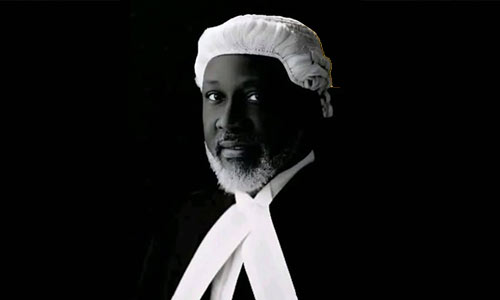
By Senator Dino Daniel Melaye, Esq.

Introduction
The Supreme Court of Nigeria occupies an exalted constitutional position as the final court of the land and the ultimate interpreter and guardian of the Constitution. Its authority derives not merely from hierarchy but from its constitutional mandate to uphold the rule of law without fear or favor. By virtue of section 1(1) of the Constitution of the Federal Republic of Nigeria, 1999 (as amended), the Constitution is supreme and binding on all authorities and persons throughout the Federation.
The Court has consistently recognized this duty. In Attorney-General of Abia State & 35 others v. Attorney-General of the Federation (2002) 6 NWLR (Pt. 763) 264, the Supreme Court held that:
“The Constitution is the grundnorm and the fons et origo of all laws. All acts of government are circumscribed by its provisions.”
It is against this backdrop that the decision of the Supreme Court in Attorney-General of Adamawa State & 10 Others v. Attorney-General of the Federation & National Assembly must be examined.
The Duty of Constitutional Interpretation
The sole and primary duty of the Supreme Court is the interpretation of the Constitution. This duty is not discretionary; it is mandatory. Once the Constitution is invoked, the Court is constitutionally bound to pronounce on its meaning and effect. In Attorney-General of the Federation v. Abubakar (2007) 10 NWLR (Pt. 1041) 1, the Court stated unequivocally that:
“The duty of the court, once the Constitution is invoked, is to interpret its provisions and give them their clear and ordinary meaning.”
Similarly, in Attorney-General of Ondo State v. Attorney-General of the Federation (2002) 9 NWLR (Pt. 772) 222, the Supreme Court held:
“Where the Constitution has spoken, no arm of government, not even the executive or legislature, can act in defiance of it.”
In the Adamawa case, the Court was invited to interpret constitutional provisions relating to executive discretion and its limits. While the Court commendably cautioned against the excessive exercise of presidential discretion, it declined to make binding and conclusive pronouncements on the substantive constitutional issues raised. This hesitation is difficult to reconcile with the Court’s settled jurisprudence.
Judicial Restraint and Constitutional Abdication
Judicial restraint, though a recognized doctrine, must never translate into judicial abdication. The Supreme Court is not merely an advisory body; it is the constitutional umpire. To acknowledge that a constitutional wrong has occurred while refusing to attach legal consequences to that wrong is akin to accepting misconduct yet shielding the offender from accountability.
The Supreme Court itself warned against such outcomes in Military Governor of Lagos State v. Ojukwu (1986) 1 NWLR (Pt. 18) 621, where Eso, JSC, held:
“The rule of law presupposes that the state is subject to the law, and the judiciary is the interpreter of that law. The government itself must act within the law and not above it.”
Where the judiciary retreats from this responsibility, constitutional supremacy is weakened and executive excess is inadvertently legitimized.
Inconsistency With The Local Government Autonomy Case
The concerns raised by the Adamawa decision are further heightened when contrasted with the Supreme Court’s approach in Attorney-General of the Federation v. Attorney-General of Abia State & 35 others, the Local Government Autonomy case. In that case, the Court entertained and determined the matter on its merits, acknowledging that the plaintiff’s claim had merit. despite arguments that the Attorney-General of the Federation had no direct administrative responsibility over local governments.
In doing so, the Court affirmed the principle that constitutional interpretation is not constrained by narrow questions of interest or convenience. This approach aligns with the Court’s long-standing view that anyone with sufficient interest may approach the Court for constitutional interpretation.
However, when the Supreme Court adopts a robust interpretive stance in one politically sensitive case and a restrained or evasive approach in another, it risks inconsistency. Such inconsistency gives the impression that constitutional interpretation may vary depending on the actors involved, thereby undermining public confidence in the judiciary.
As Oputa, JSC, cautioned in Attorney-General of the Federation v. Guardian Newspapers Ltd. (1999) 9 NWLR (Pt. 618) 187: “Justice must not only be done but must manifestly and undoubtedly be seen to be done.”
On the issue of Jurisdiction, the Supreme Court in the case of Attorney-General of the Federation v. Attorney-General of Abia State & 35 others held and cited:
“This Court held in AG Kaduna State & Ors V AG Federation (2023) 12 NWLR (Pt 1899) 537(SC) that “The scope of the original jurisdiction of this Court is over “any dispute between the Federation and a State or between States, if and in so far as that dispute involves any question (whether of law or fact) on which the existence or extent of a legal right depends.” It did not exclude some type of such disputes. The Constitution having used such general words as “any dispute” and “any question” to vest this Court an unlimited subject matter exclusive original jurisdiction, no Court including this Court has the power to exclude from the original jurisdiction of this Court disputes between States and the Government of the Federation over the exercise by the President of a power given to it by the Central Bank Act or other legislation”.
Yet, the Supreme Court was expressly called upon to determine “any question” relating to the abuse of executive power, but it declined to discharge its constitutional duty, opting instead to strike out the suit.
Implications for the Rule of Law
The Supreme Court represents the last institutional safeguard protecting citizens from executive overreach. When the Court begins to speak differently depending on the parties involved or declines to exercise its jurisdiction in clear constitutional disputes, the consequences are far-reaching. As the Court warned in Ojukwu’s case:
“If the government becomes a lawbreaker, it breeds contempt for the law and invites anarchy.”
The refusal to give decisive constitutional guidance in the Adamawa case creates uncertainty and emboldens future constitutional infractions.
Justification for the Action of the Federation
The Supreme Court justified the suit by stating that the federation had the right to protect the constitution. The words of EMMANUEL AKOMAYE AGIM ,JSC in Attorney-General of the Federation v. Attorney-General of Abia State & 35 others
“The Federation has the right to protect the Constitution and the duty to ensure that no part of the Federation is governed contrary to the Constitution or by anybody that is not constitutionally empowered to do so. It has the right to protect any tier of the federal governance structure from going extinct or being destroyed and has the right and interest in the moneys in the Federation Account and the moneys distributed from that Account to the respective tiers of government and the allied right that the tier of government to whom money is distributed from the Federation Account gets it. These are the legal rights the plaintiff is asserting in this suit. The cause for this suit is the flagrant violations of Ss. 1(2), 162 and 7(1) of the Constitution of the Federal Republic of Nigeria 1999 (the 1999 Constitution) by the States that are endangering the continued existence of the local government as the third tier government in Nigeria and thereby dismembering the federal governance structure in Nigeria contrary to the intention and tenor of the 1999 Constitution.”
Yet again, the Supreme Court turned a blind eye while a section of the Federation was effectively governed by an individual lacking constitutional authority, and when the moment arose to restore constitutional order, it deliberately declined to act.
Conclusion
In conclusion, while judicial restraint has its place, it must never be elevated above constitutional duty. The decision of the Supreme Court to strike out the matter in Attorney-General of Adamawa State & 10 Others v. Attorney-General of the Federation & National Assembly was, with respect, unconstitutional and vexatious as it amounted to a refusal by the apex Court to carry out its primary and non-delegable assignment, the authoritative interpretation and enforcement of the Constitution.
By virtue of section 232 of the Constitution of the Federal Republic of Nigeria, 1999 (as amended), the Supreme Court is vested with original jurisdiction in disputes between the Federation and the States on questions of law or fact upon which the existence or extent of a legal right depends. Once that jurisdiction is properly invoked, the Court is constitutionally bound to resolve the issues placed before it. To strike out such a matter without determining the substantive constitutional questions is to defeat the very purpose of that jurisdiction.
Striking out the action was therefore not a neutral procedural outcome but a substantive constitutional failure. It signified a conscious withdrawal from the Court’s constitutional mandate and left unresolved serious questions of executive compliance with the Constitution. Such an approach weakens constitutional supremacy, undermines the rule of law, and sets a dangerous precedent where constitutional violations may be acknowledged yet left without judicial consequence.
The Constitution demands consistency, courage, and clarity from its ultimate guardian. Any refusal, express or implied by the Supreme Court to discharge this responsibility strikes at the heart of constitutional democracy and poses a grave risk to the Nigerian polity.
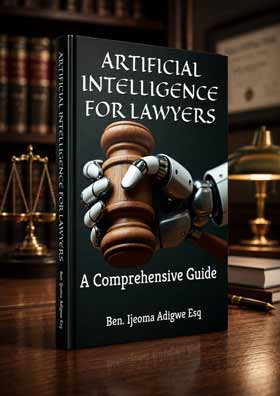 The book also examines Nigeria's legal ecosystem, focusing on the LPELR and NBA AI Guidelines. As a bonus, every purchase comes with a FREE eBook titled: How to Use the AI Features in LegalPedia and LawPavilion.
Ohio Books Ltd praises the publication, stating:
"....this is the only Nigerian book I know of on the topic."
How to Order:
📞 Call, Text, or WhatsApp: 08034917063 | 07055285878
📧 Email: benadigwe1@gmail.com
🌎 Website: www.benadigwe.com
Ebook Version: Access it directly online at https://selar.com/prv626
Authored by Ben Ijeoma Adigwe Esq., ACIarb (UK), LL.M, Dip. in Artificial Intelligence, Director at the Delta State Ministry of Justice, Asaba, Nigeria.
______________________________________________________________________
[A MUST HAVE] Evidence Act Demystified With Recent And Contemporary Cases And Materials
The book also examines Nigeria's legal ecosystem, focusing on the LPELR and NBA AI Guidelines. As a bonus, every purchase comes with a FREE eBook titled: How to Use the AI Features in LegalPedia and LawPavilion.
Ohio Books Ltd praises the publication, stating:
"....this is the only Nigerian book I know of on the topic."
How to Order:
📞 Call, Text, or WhatsApp: 08034917063 | 07055285878
📧 Email: benadigwe1@gmail.com
🌎 Website: www.benadigwe.com
Ebook Version: Access it directly online at https://selar.com/prv626
Authored by Ben Ijeoma Adigwe Esq., ACIarb (UK), LL.M, Dip. in Artificial Intelligence, Director at the Delta State Ministry of Justice, Asaba, Nigeria.
______________________________________________________________________
[A MUST HAVE] Evidence Act Demystified With Recent And Contemporary Cases And Materials

 Interested buyers are encouraged to place their orders and enquiries via:
0704 444 4777, 0704 444 4999, 0818 199 9888
Website: www.alexandernigeria.com
Interested buyers are encouraged to place their orders and enquiries via:
0704 444 4777, 0704 444 4999, 0818 199 9888
Website: www.alexandernigeria.com