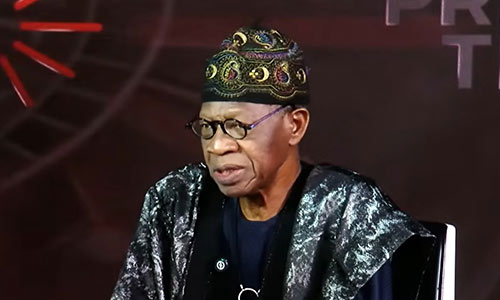
Former Nigerian Minister of Information and Culture, Alhaji Lai Mohammed, described the suspension of Twitter’s operations in Nigeria as one of the most harrowing decisions of his eight-year tenure, emphasizing it was purely in the national interest and not triggered by the deletion of ex-President Muhammadu Buhari’s tweet.

Mohammed, who served from 2015 to 2023 as Nigeria’s longest-serving information minister, was promoting his new memoir, Headlines and Soundbites: Media Moments That Defined an Administration. The book, launched on December 17 coinciding with what would have been Buhari’s 83rd birthday offers an insider’s chronicle of the Buhari era’s media highs, lows, policies, and crises.
“One of the most difficult decisions I took was suspending Twitter’s operation in Nigeria,” Mohammed recounted. “I had to take the decision in the national interest because a time came when Twitter became the platform of choice for all those who are destabilising the country. There are some decisions like that that you have to take, not because you like them. As a matter of fact, it won’t be popular if you administer some information.”
Dismissing public speculation, he clarified the ban’s trigger: “Honestly, that was not [Buhari’s deleted tweet]. And you find it in this book. I went to President Buhari and I asked him, Sir, we need to suspend service of Twitter. And he asked why. He said, is it because they deleted my tweet? I said, no sir, and I gave him instances and examples.”
Mohammed positioned himself as a longtime proponent of social media regulation, predating the 2021 ban. “I’d been an advocate of regulating social media for a very long time, if you remember. I started by advocacy… by visiting media houses. I started by trying to work with them. But it was clear in my mind that an unregulated social media could be a disaster. Actually, that was not the trigger. If you monitored me between 2016 and 2023, I was always on the issue of social media, and I kept saying, I’m not trying to stifle free press. But we must regulate social media.”
The interview revisited the 2020 EndSARS protests, a flashpoint that drew global scrutiny and forced Mohammed into intense crisis mode. He staunchly defended the administration’s response, including his sharp rebuke of CNN’s reporting on the Lekki Toll Gate incident.
“You mentioned the issue of CNN. And honestly, that pushback, I still stand by it. Nobody ever said nobody died during EndSARS. People died even in Abuja. They died in Lagos. They died in Kano. But what we were saying is that CNN was not at the tollgate. CNN relied on second- and third-hand information.”
Using a folksy analogy, he added: “If a man has a goat and the goat does not come home one night, he will go out and look for that goat. Now, five years on today, nobody has come to tell us that my son or my ward went to the tollgate and didn’t come back. We never said there was no [violence]. People died in Alausa, people died… many places during EndSARS. In fact, 37 policemen were killed, six soldiers were killed. It’s what we kept making [clear]: Listen, EndSARS was unfortunate, it was tragic, but that there was a massacre at the tollgate is fake news.”
The protests’ toll extended personally: “During EndSARS, one of the toughest moments in my life was when my family met. They had a meeting and they asked me to resign. They were bullied online, they were bullied offline, their businesses… They’d had enough. They said, look, wait a minute, we are not benefiting from this thing. So why are you exposing us? And I had to sit them down and tell them, it’s not as easy as that. There are things I know, there are things that I see that you cannot see.”
Mohammed framed his role as a high-wire act between quelling misinformation and upholding transparency. “One of the jobs of a communicator, one of the biggest challenges, is how do you prevent fake news and misinformation from overshadowing the real facts? But I would also imagine, how do you prevent government overbearingness over what potentially is news that is important for the public in the country?”
He insisted actions prioritized Nigeria over political survival: “For a government, the national interest, it’s the overriding interest… Honestly, when you are out there, you hardly ever think about self-preservation… Towards the last two years of my office as minister, I couldn’t wait for it to end. When you talk about self-preservation against whom? Being minister, you always know that there’s an end to a tenure… We never saw preserving the administration as a priority. We saw preserving Nigeria as a priority because there’s a country called Nigeria.”
Real threats like Boko Haram, banditry, farmer-herder clashes, and IPOB, he noted, amplified social media’s risks: “Twitter [and others] became the platform of choice for all of them… We had real-life challenges. We had Boko Haram. We had banditry… Those are challenges we had.”
Drawing on his decade as an opposition spokesperson, Mohammed detailed proactive strategies: “For eight years, I was on the beat. For eight years, I tried to communicate government to the people, get feedback from them, and also take that feedback to government. And we did it in many forms. We organized town hall meetings… I, as a minister, used to meet every fortnight with bureau chiefs… We were meeting every month, myself, Garba Shehu, Femi Adesina, with the minister of defense, the minister of police affairs, chief of army staff, and we were inviting title editors. And we were discussing issues that were not meant for publication, so we could build confidence.”
He stressed adaptability: “What struck me most is… when you are made a minister, there is no textbook. There is no guide. You just need to be very inventive, you have to be very resourceful, you have to be very bold… You must be ahead of the news. It must be ahead of journalists.”
Vivid examples included racing to Dapchi after the 2018 kidnapping of over 100 schoolgirls “I didn’t even wait for journalists. I went there myself… because I wanted to take possession of the narrative”—and inviting #BringBackOurGirls activists on Air Force sorties over Sambisa Forest: “When I saw that this issue… was getting toxic, I engaged them… I persuaded them. And they agreed… So that by the time they came back from that trip, they were convinced… They issued a statement saying that the Air Force component of the geometry was doing its best to find these girls.”
Other triumphs chronicled: rescuing the National Theatre from decay, thwarting the $9.6 billion P&ID scam via public opinion and courts, and countering claims the military failed to reclaim territories like Konduga and Bama from insurgents.
A chapter pays homage to Buhari as “mentor, friend, and boss.” Anecdotes humanize him: pre-presidency lunches where Buhari teased Mohammed’s fasting “Lai, tell me the truth, how many people have you killed? Why are you atoning every day by fasting?” and a post-cabinet quip mandating ministers to resign if eyeing elections: “If anybody wants to be a president or anybody wants to be a governor, you should please resign… Let them go and campaign.”
On legacy, amid mixed views: “I think posterity will be kind to him. When I came in, in 2015, certain parts of this country… were not even accessible… Of the 20 local governments in Borno State then, only seven were with the federal government, 13 were under the complete control of Boko Haram… When you look at that and what he left, you would begin to appreciate.”
He differentiated threats: “Boko Haram is religiously inspired. Banditry is about resources. It’s materially inspired… It has absolutely nothing to do with ethnicity or religion.” On Katsina banditry: “The earliest recorded history… was in 1891… The issue of inclusion and governance, the issue of effectiveness of governance” are key.
“This book… is actually my own personal effort to write a piece of Nigerian history from a vantage point of the longest-serving minister for information and culture… I found it a duty and an obligation to let Nigerians know, let the world know what actually goes on… behind the headlines and the soundbites.”
Central themes: insider stories for full historical understanding, posterity, public education, and inspiring leaders—successes alongside “failures” like family pressures. “Nigerian contemporary history would not be fully understood unless those who have been inside are allowed and encouraged to tell their own stories.”
Humorously addressing his moniker: “You see, this comes with territory. I never took it personally… One day, one of my grandkids… said, Grandpa, tell me the truth. Why did they call you Liar Muhammad?”
 Reimagine your practice with the power of AI “...this is the only Nigerian book I know of on the topic.” — Ohio Books Ltd
Authored by Ben Ijeoma Adigwe, Esq., ACIArb (UK), LL.M, Dip. in Artificial Intelligence, Director, Delta State Ministry of Justice, Asaba, Nigeria.
Bonus:
Get a FREE eBook titled “How to Use the AI in Legalpedia and Law Pavilion” with every purchase.
Reimagine your practice with the power of AI “...this is the only Nigerian book I know of on the topic.” — Ohio Books Ltd
Authored by Ben Ijeoma Adigwe, Esq., ACIArb (UK), LL.M, Dip. in Artificial Intelligence, Director, Delta State Ministry of Justice, Asaba, Nigeria.
Bonus:
Get a FREE eBook titled “How to Use the AI in Legalpedia and Law Pavilion” with every purchase.
How to Order: 📞 Call, Text, or WhatsApp: 08034917063 | 07055285878 📧 Email: benadigwe1@gmail.com 🌐 Website: www.benadigwe.com
Ebook Version: Access directly online at: https://selar.com/prv626
_______________________________________________________________________ [A MUST HAVE] Evidence Act Demystified With Recent And Contemporary Cases And Materials
 ______________________________________________________________________
“Bridging Theory And Courtroom Practice” — Hagler Sunny Okorie, Nathaniel Ngozi Ikeocha Unveil ‘Functional’ Tort Law Book For Nigerian Legal System
______________________________________________________________________
“Bridging Theory And Courtroom Practice” — Hagler Sunny Okorie, Nathaniel Ngozi Ikeocha Unveil ‘Functional’ Tort Law Book For Nigerian Legal System
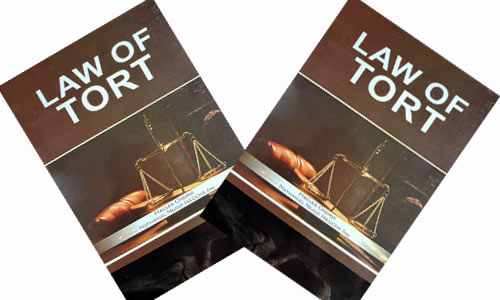 The book, titled The Law of Torts in Nigeria: A Functional Approach, authored by Professor Hagler Sunny Okorie Ph.D and Ikeocha, Nathaniel Ngozi Esq, offers law students, practitioners, and academics a comprehensive guide to understanding and applying tort law in Nigerian courts. Interested buyers can place orders via the following contact numbers: 08028636615, 08037667945, 08032253813, or +234 902 196 2209.