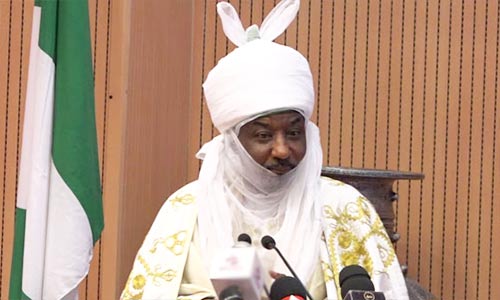
The 16th Emir of Kano and former Central Bank of Nigeria (CBN) Governor, Muhammadu Sanusi II, has criticised the Tinubu administration for continuing massive borrowing despite the removal of the petrol subsidy, a reform expected to expand fiscal space for the government.

Speaking on Tuesday at the Oxford Global Think Tank Leadership Conference and Book Launch in Abuja, Sanusi questioned why the government resorts to borrowing while savings from subsidy removal should provide “more fiscal space.” He acknowledged the administration’s decision to remove fuel subsidy and unify multiple exchange rates as “painful but necessary” reforms but warned that these measures would fail without fiscal discipline and transparent spending.
“If you stop paying subsidies but continue borrowing more, it means you’ve filled one hole only to dig another. The real challenge now is the quality of government spending and the management of the revenues saved,” he said.
Sanusi, who served as CBN governor between 2009 and 2014, attributed Nigeria’s economic difficulties to years of policy inconsistency and populist politics. He recalled warning against subsidy unsustainability in 2012, noting that political considerations delayed reform, a problem inherited by subsequent administrations.
The Emir also lamented excessive government spending, asking: “Why do we need 48 ministers? Why do we need convoys of vehicles? Why are we still borrowing even after removing subsidies?” He stressed the need for institutional reform, accountability, and curbing waste at all levels of government.
Sanusi further criticised the culture of “praise-singing” around leaders, warning that sycophancy stifles honest counsel. “Those who tell leaders the truth are seen as enemies, while those who praise them are rewarded,” he said, urging officials to prioritise integrity and competence over flattery.
He recounted the 2012 attempt by the Jonathan administration to remove the fuel subsidy, explaining that Boko Haram insurgency and security concerns forced a compromise despite the economic logic supporting removal. Sanusi highlighted the excessive costs absorbed by the government under previous subsidy structures, which included crude oil, refining, transportation, interest, and exchange rate differentials.
Renowned economist and Stanbic IBTC Bank founder, Dr. Atedo Peterside, also commended the Tinubu administration for subsidy removal but emphasised that the real gains depend on proper governance. “The real test is what is being done with that revenue in their hands. Is it used to help eliminate poverty and get the economy functioning, or to fund unnecessary perks?” he said. Peterside urged the government to focus on inclusive economic policies and transparency to ensure long-term benefits.
Minister of Finance and Coordinating Minister of the Economy, Mr. Wale Edun, defended the administration’s reforms, noting that they are already producing results. He highlighted initiatives providing direct financial assistance to 15 million households via digital payments and a work-based development programme targeting all 8,809 wards in Nigeria’s 764 local governments. Edun stressed that these measures aim to ensure that macroeconomic growth translates to tangible benefits for citizens at the grassroots level.
The conference also featured contributions from global figures, including WTO Director-General Dr. Ngozi Okonjo-Iweala, who underscored the importance of courageous leadership and institutional reforms for economic resilience.
Abia State Governor Dr. Alex Otti noted that Africa’s development depends on leadership discipline, investment in human capital, and proper utilisation of natural resources. Former Ekiti State Governor Dr. Kayode Fayemi blamed the Jonathan administration for lacking the political courage to implement subsidy removal despite support from governors and stakeholders. He contrasted this with Tinubu’s decisive action to end the fuel subsidy from the outset of his administration, while cautioning that managing the consequences of bold economic reforms remains critical.
The conference, which gathered top policymakers, economists, and global leaders, highlighted the need for fiscal prudence, transparency, and accountable governance as the pillars for translating policy reforms into meaningful economic gains for Nigerians.
[A MUST HAVE] Evidence Act Demystified With Recent And Contemporary Cases And Materials

Available now for NGN 40,000 at ASC Publications, 10, Boyle Street, Onikan, Lagos. Beside High Court, TBS. Email publications@ayindesanni.com or WhatsApp +2347056667384. Purchase Link: https://paystack.com/buy/evidence-act-complete-annotation
______________________________________________________________________ “Enhance Legal Practice With Authoritative Reports” — Alexander Payne Offers Comprehensive Law Reports, Spanning Over A Century Of Nigerian Jurisprudence Interested buyers are encouraged to place their orders and enquiries via:
0704 444 4777, 0704 444 4999, 0818 199 9888
Website: www.alexandernigeria.com
Interested buyers are encouraged to place their orders and enquiries via:
0704 444 4777, 0704 444 4999, 0818 199 9888
Website: www.alexandernigeria.com