By Hassan Sadisu Imam
The current legal crisis in Rivers State epitomizes a disconcerting pattern of conflicting orders emanating from judges of coordinate jurisdiction. This latest episode recalls the tumultuous events of May 2024, when a trifecta of judges—Justice Mohammed Liman, Justice S. Amobeda, and Justice Amina Aliyu—issued conflicting orders in the highly publicized Kano emirship dispute. The ramifications of that controversy rippled through the political landscape of Kano, casting a glaring spotlight on the judiciary’s role in exacerbating political strife.
Despite the apparent breach of judicial decorum, not a single judge chose to recuse themselves from their respective cases, nor did the National Judicial Council (NJC) impose any disciplinary actions. In the aftermath, the then-Chief Justice Olukayode Ariwoola convened a meeting with the heads of the Federal High Court and the Kano State High Court to address the conflicting rulings. However, the damage was irreparable. No sanctions were enacted, leaving Kano in a state of disarray with two rival Emirs governing separate jurisdictions—a grim testament to judicial overreach.
On July 11, 2024, the Supreme Court delivered a landmark judgment affirming the financial autonomy of Nigeria’s 774 local governments, condemning the dissolution of elected local councils by state governors. In a suit initiated by the Attorney General of the Federation and Minister of Justice, Mr. Lateef Fagbemi (SAN), a seven-member panel of the Supreme Court, led by Justice Mohammed Garba, firmly opposed the position of the state governments, mandating that allocations earmarked for local governments must be disbursed to democratically elected councils.
Section 1 of the 1999 Constitution establishes the supremacy of the Constitution, binding all persons and authorities, including Nigerian courts. Furthermore, Section 287(1) mandates that decisions of the Supreme Court must be enforced nationwide by all subordinate courts. The judgments of the Supreme Court, regardless of whether they are perceived as right or wrong, stand beyond the reach of challenge or dismissal by any court or individual in Nigeria; they can only be subjected to criticism.
In the wake of this significant ruling, the Federal Government, through the Nigeria Governors’ Forum (NGF), convened and agreed to implement the judgment after three months, ostensibly to afford local government areas without elected officials the opportunity to comply.
In Rivers State, Justice I. Igwe of the High Court directed the Rivers State Independent Electoral Commission (RSIEC) to conduct forthcoming local government elections using the 2023 voters’ register compiled by the Independent National Electoral Commission (INEC). He mandated that the Nigeria Police Force and the Nigeria Security and Civil Defence Corps provide necessary protection during the election process. Conversely, just six days prior to the elections, Justice Lifu of the Federal High Court in Abuja issued an injunction restraining INEC from releasing the voters’ register to RSIEC for the scheduled October 5, 2024, local government elections.
In his ruling on September 4, 2024, Justice Igwe affirmed that the defendants were bound by Section 7(1) of the Constitution and Section 5(A) of the RSIEC Law Number 2 of 2018 to facilitate the conduct of local government polls. He cited the recent federal mandate requiring states without democratically elected local governments to conduct elections within three months, following the Supreme Court’s judgment on local government autonomy. Justice Igwe urged all necessary arrangements to be made to ensure the elections proceeded as announced by RSIEC.
In stark contrast, Justice Lifu’s injunction barred INEC from releasing the voters’ register to RSIEC and prohibited the Inspector General of Police (IGP) and the Department of State Services (DSS) from providing security for the upcoming elections. This juxtaposition of conflicting orders lays bare the profound disarray within the judicial landscape of Rivers State.
The newly appointed Chief Justice of Nigeria, Justice Kudirat Kekere-Ekun, has acknowledged that the issue of forum shopping by some lawyers is rampant and has contributed to the proliferation of conflicting orders from courts of coordinate jurisdiction. Following the retirement of Justice Ariwoola, there was an air of optimism that Justice Kekere-Ekun would herald a new era of judicial discipline. However, mere weeks into her tenure, a fresh wave of judicial
contradictions have erupted, this time in Rivers State. The conflicting rulings by Justice Peter Lifu of the Federal High Court in Abuja and Justice Chigozie Igwe of the Rivers State High Court regarding local council elections have rekindled fears that Nigeria’s judiciary is losing its grasp on impartiality and authority.
At its core, the concept of Godfatherism stands as the antithesis of the essence of people’s power in politics. The persistent, often acrimonious, disputes between “godfathers” and their “godsons” are a well-documented chapter in Nigerian political history. The current situation in Rivers State represents a modern manifestation of this age-old struggle. Those embroiled in such conflicts would do well to heed the cautionary tales that history has woven: godfathers rarely end well, as their influence is often marked by immorality, iniquity, and ignobility. Disputes between godfathers and their godsons typically stem from a toxic blend of greed, selfishness, and an insatiable desire to monopolize public resources and political patronage. Tragically, the same godson who rebels against a godfather often seeks to ascend to the very throne he once contested, perpetuating a cycle of betrayal and moral decay.
Conflicting orders and ex parte injunctions issued by judges of coordinate jurisdiction, especially in politically sensitive cases, have long been a topic of concern. The recent events in Rivers State have elevated this discourse to a critical level, compelling legal scholars and practitioners alike to confront the implications of such judicial discord.
The intersection of political power and legal authority in Nigeria raises grave concerns about judicial integrity, fostering a pervasive public perception that court rulings are more susceptible to political manipulation than to the pursuit of truth. The issuance of conflicting orders by courts of coordinate jurisdiction constitutes a profound challenge to the integrity of the judicial process, eroding the certainty and consistency essential for the rule of law to flourish. When courts endowed with equal authority deliver divergent rulings on identical matters, they create a legal paradox that undermines public confidence in the judiciary and jeopardizes the principle of judicial coherence.
Conclusion
In a society where the law is meant to serve as a bastion of order and justice, the specter of conflicting judicial rulings looms large, casting shadows over the rule of law and the public’s trust in the legal system. To restore faith in the judiciary, a concerted effort is required to uphold the principles of consistency, impartiality, and integrity. Only then can Nigeria’s legal landscape hope to transcend the mire of conflicting orders and emerge as a beacon of justice, safeguarding the rights and welfare of its citizens.
About the author;
Hassan Sadisu Imam is a dedicated lawyer at Limelight Attorneys LLP, with a profound passion for constitutional law. He has authored a diverse array of articles addressing a wide range of contemporary legal issues.
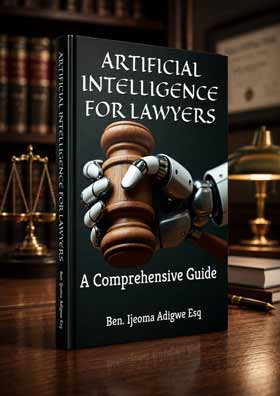 The book also examines Nigeria's legal ecosystem, focusing on the LPELR and NBA AI Guidelines. As a bonus, every purchase comes with a FREE eBook titled: How to Use the AI Features in LegalPedia and LawPavilion.
Ohio Books Ltd praises the publication, stating:
"....this is the only Nigerian book I know of on the topic."
How to Order:
📞 Call, Text, or WhatsApp: 08034917063 | 07055285878
📧 Email: benadigwe1@gmail.com
🌎 Website: www.benadigwe.com
Ebook Version: Access it directly online at https://selar.com/prv626
Authored by Ben Ijeoma Adigwe Esq., ACIarb (UK), LL.M, Dip. in Artificial Intelligence, Director at the Delta State Ministry of Justice, Asaba, Nigeria.
_______________________________________________________________________
“Enhance Legal Practice With Authoritative Reports” — Alexander Payne Offers Comprehensive Law Reports, Spanning Over A Century Of Nigerian Jurisprudence
The book also examines Nigeria's legal ecosystem, focusing on the LPELR and NBA AI Guidelines. As a bonus, every purchase comes with a FREE eBook titled: How to Use the AI Features in LegalPedia and LawPavilion.
Ohio Books Ltd praises the publication, stating:
"....this is the only Nigerian book I know of on the topic."
How to Order:
📞 Call, Text, or WhatsApp: 08034917063 | 07055285878
📧 Email: benadigwe1@gmail.com
🌎 Website: www.benadigwe.com
Ebook Version: Access it directly online at https://selar.com/prv626
Authored by Ben Ijeoma Adigwe Esq., ACIarb (UK), LL.M, Dip. in Artificial Intelligence, Director at the Delta State Ministry of Justice, Asaba, Nigeria.
_______________________________________________________________________
“Enhance Legal Practice With Authoritative Reports” — Alexander Payne Offers Comprehensive Law Reports, Spanning Over A Century Of Nigerian Jurisprudence
 Interested buyers are encouraged to place their orders and enquiries via:
0704 444 4777, 0704 444 4999, 0818 199 9888
Website: www.alexandernigeria.com
Interested buyers are encouraged to place their orders and enquiries via:
0704 444 4777, 0704 444 4999, 0818 199 9888
Website: www.alexandernigeria.com